adenosine brands
3 registered brands containing adenosine in Kenya.
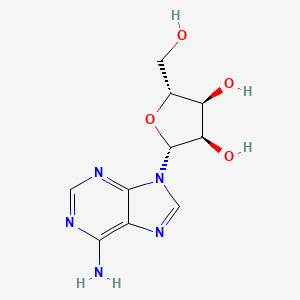
2D structure
Adenosine
PubChem CID 60961Molecular formula: C10H13N5O4
Agonism of adenosine receptors A1 and A2 reduces conduction time in the atrioventricular node of the heart. Conduction time is decreased by inducing potassium efflux and inhibiting calcium influx through channels in nerve cells, leading to hyperpolarization and and increased threshold for calcium dependent action potentials. Decreased conduction time leads to an antiarrhythmic effect. Inhibition of calcium influx, reduces the activity of adenylate cyclase, relaxing vascular smooth muscle. Relaxed vascular smooth muscle leads to increased blood flow through normal coronary arteries but not stenotic arteries, allowing thallium-201 to be more readily uptaken in normal coronary arteries. Adenosine is an endogenous nucleoside present in all cells of the body. Adenosine may exert its pharmacologic effects by activation of purine (cell-surface A1 and A2 adenosine) receptors; relaxation of vascular smooth muscle may be mediated by reduction in calcium uptake through inhibition of slow inward calcium current and activation of adenylate cyclase in smooth muscle cells. Adenosine may reduce vascular tone by modulation of sympathetic neurotransmission. Adenosine has negative chronotropic, dromotropic, and inotropic effects on the heart. The drug slows conduction time through the AV node and can interrupt AV nodal reentry pathways, leading to restoration of normal sinus rhythm in patients with PSVT, including that associated with Wolff-Parkinson-White syndrome. Adenosine is a potent vasodilator in most vascular beds, except in renal afferent arterioles and hepatic veins where it produces vasoconstriction. Adenosine is thought to exert its pharmacological effects through activation of purine receptors (cell-surface A1 and A2 adenosine receptors). Although the exact mechanism by which adenosine receptor activation relaxes vascular smooth muscle is not known, there is evidence to support both inhibition of the slow inward calcium current reducing calcium uptake, and activation of adenylate cyclase through A2 receptors in smooth muscle cells. Adenosine may also lessen vascular tone by modulating sympathetic neurotransmission. The intracellular uptake of adenosine is mediated by a specific transmembrane nucleoside transport system. Once inside the cell, adenosine is rapidly phosphorylated by adenosine kinase to adenosine monophosphate, or deaminated by adenosine deaminase to inosine. These intracellular metabolites of adenosine are not vasoactive. Myocardial uptake of thallium-201 is directly proportional to coronary blood flow. Since Adenoscan significantly increases blood flow in normal coronary arteries with little or no increase in stenotic arteries, Adenoscan causes relatively less thallium-201 uptake in vascular territories supplied by stenotic coronary arteries ie, a greater difference is seen after Adenoscan between areas served by normal and areas served by stenotic vessels than is seen prior to Adenoscan. ... Current evidence suggests that ADO-metabolizing enzymes such as ecto-5'-nucleotidase or ADO deaminase, as well as enzymes that degrade ATP to adenosine, play an important role in the vasoconstrictor signals sent from the macula densa to the afferent arterioles when tubuloglomerular feedback is activated; increased ADO concentration induced by temporal infusion of AngII results in downregulation of A2 ADO receptors, leading to a predominant effect of A1 receptors; the alteration in the ADO receptors balance further contributes to the synergic interaction between ADO and AngII. ... The ADO-metabolizing enzymes have become important regulators of the effects of ADO on the tone of the afferent and efferent arterioles. As AngII is able to increase de-novo renal ADO content through decrease of ADO-metabolizing enzymes, accumulation of ADO induces downregulation of ADO A2 receptor population without modifying ADO A1 receptor, thereby enhancing the constrictive effects of AngII in the renal vasculature. For more Mechanism of Action (Com
Source: PubChem (NCBI) · compound 60961
| Product | Manufacturer | Status | Country |
|---|---|---|---|
| ADENOSINE SOLUTION FOR INJECTION 6MG/2ML 6MG/2ML |
Goodman Agencies | Registered | Kenya |
| ADENOSINE SOLUTION FOR INJECTION 6MG/2ML 6MG/2ML |
Goodman Agencies | Registered | Kenya |
| CARDESINE 6MG/2ML SOLUTION FOR INJECTION EACH 1ML SOLUTION CONTAINS: ADENOSINE USP 3MG |
Evka Consultz | Registered | Kenya |