azathioprine brands
5 registered brands containing azathioprine in Kenya.
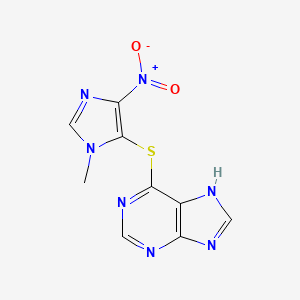
2D structure
Azathioprine
PubChem CID 2265Molecular formula: C9H7N7O2S
Azathioprine's mechanism of action is not entirely understood but it may be related to inhibition of purine synthesis, along with inhibition of B and T cells. 6-thioguanine triphosphate, a metabolite of azathioprine, modulates activation of rac1 when costimulated with CD28, inducing T cell apoptosis. This may be mediated through rac1's action on mitogen-activated protein kinase, NF-kappaB. Following exposure to nucleophiles ... azathioprine is cleaved to 6-mercaptopurine which, in turn, is converted to additional metabolites that inhibit de novo purine synthesis. 6-Thio-IMP, a fraudulent nucleotide, is converted to 6-thio-GMP and finally to 6-thio-GTP, which is incorporated into DNA and gene translation is inhibited. Cell proliferation is prevented, inhibiting a variety of lymphocyte functions. Azathioprine (AZA), one of the antimetabolite drugs, is a purine analog that is more potent than the prototype 6-mercaptopurine, as an inhibitor of cell replication. Immunosuppression likely occurs because of the ability of the drug to inhibit purine biosynthesis. ... Although T-cell functions are the primary targets for this drug, inhibition of /(natural killer cells)/ NK function and macrophage activities has also been reported. Azathioprine inhibits DNA synthesis and, as a purine antimetabolite, exerts its effect on activated lymphocytes, which requires purines during their proliferative phase. It inhibits both cellular and humoral responses, but does not interfere with phagocytosis or interferon production. It is a nonspecific cytotoxic agent. Its immunosuppressive effect is believed to be due to mercaptopurine, to which it is metabolized. The exact mechanism of immunosuppressive action is unknown since the exact mechanism of the immune response itself is complex and not completely understood. The immunosuppressive effects of azathioprine involve a greater suppression of delayed hypersensitivity and cellular cytotoxicity tests than of antibody responses. Azathioprine antagonizes purine metabolism and may inhibit synthesis of DNA, RNA, and proteins; it may also interfere with cellular metabolism and inhibit mitosis. For more Mechanism of Action (Complete) data for AZATHIOPRINE (6 total), please visit the HSDB record page.
Source: PubChem (NCBI) · compound 2265
| Product | Manufacturer | Status | Country |
|---|---|---|---|
| AZAFRINE 50MG |
Veteran Pharmaceuticals | Registered | Kenya |
| AZIOPRIN TABLETS BP 50MG |
Metro Pharmaceuticals | Registered | Kenya |
| AZORAN 50MG |
Wessex Pharmaceuticals | Registered | Kenya |
| IMURAN 50MG TABLETS 50MG |
Beta Healthcare | Registered | Kenya |
| UNIPRINE 50MG |
United Pharma | Registered | Kenya |