biotin brands
5 registered brands containing biotin in Zambia.
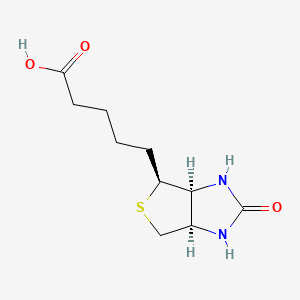
2D structure
Biotin
PubChem CID 171548Molecular formula: C10H16N2O3S
Biotin is necessary for the proper functioning of enzymes that transport carboxyl units and fix carbon dioxide, and is required for various metabolic functions, including gluconeogenesis, lipogenesis, fatty acid biosynthesis, propionate metabolism, and catabolism of branched-chain amino acids. In human tissues biotin is a cofactor for the enzymatic carboxylation of four substrates: pyruvate, acetyl coenzyme A (CoA), propionyl CoA, and beta-methylcrotonyl CoA. As such, it plays an important role in both carbohydrate and fat metabolism. Carbon dioxide fixation occurs in a two-step reaction, the first involving binding of carbon dioxide to the biotin moiety of the holoenzyme, and the second involving transfer of the biotin-bound carbon dioxide to an appropriate acceptor. Biotin functions in carbon dioxide fixation reactions in intermediate metabolism, transferring the carboxyl group to acceptor molecules. It acts similarly in decarboxylation reactions. Biotin is essential in human metabolism for its part in the previously described enzymatic steps, in catalyzing deamination of amino acids, and in oleic acid synthesis. Biotin is a cofactor for the enzymatic carboxylation of pyruvate, acetyl coenzyme A (CoA), propionyl CoA, and beta-methylcrotonyl CoA, and, therefore, plays an important role in carbohydrate and fat metabolism. Protein folding in the endoplasmic reticulum (ER) depends on Ca2+; uptake of Ca2+ into the ER is mediated by sarco/endoplasmic reticulum Ca2+-ATPase 3 (SERCA3). The 5'-flanking region of the SERCA3 gene (ATP2A3) contains numerous binding sites for the transcription factors Sp1 and Sp3. Biotin affects the nuclear abundance of Sp1 and Sp3, which may act as transcriptional activators or repressors. Here we determined whether biotin affects the expression of the SERCA3 gene and, thus, protein folding in human lymphoid cells. Jurkat cells were cultured in media containing 0.025 nmol/L biotin (denoted "deficient") or 10 nmol/L biotin ("supplemented"). The transcriptional activity of the full-length human SERCA3 promoter was 50% lower in biotin-supplemented cells compared to biotin-deficient cells. Biotin-dependent repressors bind to elements located 731 to 1312 bp upstream from the transcription start site in the SERCA3 gene. The following suggest that low expression of SERCA3 in biotin-supplemented cells impaired folding of secretory proteins in the ER, triggering unfolded protein response: (i) sequestration of Ca2+ in the ER decreased by 14 to 24% in response to biotin supplementation; (ii) secretion of interleukin-2 into the extracellular space decreased by 75% in response to biotin supplementation; (iii) the nuclear abundance of stress-induced transcription factors increased in response to biotin supplementation; and (iv) the abundance of stress-related proteins such ubiquitin activating enzyme 1, growth arrest and DNA damage 153 gene, X-box binding protein 1 and phosphorylated eukaryotic translation initiation factor 2alpha increased in response to biotin supplementation. Collectively, this study suggests that supplements containing pharmacological doses of biotin may cause cell stress by impairing protein folding in the ER. Evidence is emerging that biotin participates in processes other than classical carboxylation reactions. Specifically, novel roles for biotin in cell signaling, gene expression, and chromatin structure have been identified in recent years. Human cells accumulate biotin by using both the sodium-dependent multivitamin transporter and monocarboxylate transporter 1. These transporters and other biotin-binding proteins partition biotin to compartments involved in biotin signaling: cytoplasm, mitochondria, and nuclei. The activity of cell signals such as biotinyl-AMP, Sp1 and Sp3, nuclear factor (NF)-kappaB, and receptor tyrosine kinases depends on biotin supply. Consistent with a role for biotin and its catabolites in modulating these cell signals, greater than 2000 biotin-dependent genes have
Source: PubChem (NCBI) · compound 171548
| Product | Manufacturer | Status | Country |
|---|---|---|---|
| Broiler Boost Multivitamin Powder for feed |
Kela | Registered/Compliant | Zambia |
| EGG-BOOST Oral Powder Oral Powder |
Teleios Pharma | Registered/Compliant | Zambia |
| Introvit-B complex Solution for Injection |
Interchemie Werken De Adelaar | Registered/Compliant | Zambia |
| Kaovit Feed Additive Powder for feed |
Farmers Centre | Registered/Compliant | Zambia |
| Zagrosol Aminogen Oral Liquid Solution for Oral Use |
Zagro Singapore | Registered/Compliant | Zambia |