biscodyl brands
1 registered brand containing biscodyl in Kenya.
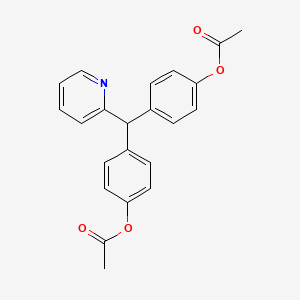
2D structure
biscodyl
PubChem CID 2391Molecular formula: C22H19NO4
Bisacodyl is deacetylated to the active bis-(p-hydroxyphenyl)-pyridyl-2-methane (BHPM) by an intestinal deacetylase. BHPM can stimulate parasympathetic nerves in the colon directly to increase motility and secretions. Bisacodyl stimulates adenylate cyclase, increasing cyclic AMP, leading to active transport of chloride and bicarbonate out of cells. Sodium ions, potassium ions, and water passively leave the cell; while sodium and chloride ions are unable to be reabsorbed. Water is also be transported from the luminal side of cells into the vasculature by aquaporin 3. Bisacodyl decreases expression of aquaporin 3, preventing water from moving into the vasculature, which may contribute to increased water in the colon. Bisacodyl directly stimulates parasympathetic nerves in the colon, stimulating contraction of longitudinal smooth muscle but not circular smooth muscle. Bisacodyl is a stimulant laxative, ... acting directly on the colonic mucosa-where it stimulates sensory nerve endings to produce parasympathetic reflexes resulting in increased peristaltic contractions of the colon. The contact action of the drug is restricted to the colon, and motility of the small intestine is not appreciably influenced. /Bisacodyl/ increases water retention in the stool by coating surfaces of stool and intestines with a water-immisicible film. Lubricant effect eases passage of contents through intestines. Emulsification of lubricant tends to enhance its ability to soften stool mass. /Laxatives/ Recent studies show that these drugs alter fluid and electrolyte absorption producing net intestinal fluid accumulation and laxation. Some of these drugs may directly stimulate active intestinal ion secretion. Increased concentrations of cyclic 3',5'-adenosine monophosphate (cAMP), occurring in colonic mucosa cells following administration of stimulant laxatives, may alter the permeability of these cells and mediate active ion secretion thereby producing net fluid accumulation and laxative action. /Stimulant Laxatives/ Bisacodyl caused dose-dependent contractions in isolated guinea pig ileum & taenia coli which was not prevented by atropine or pheniramine. It prevented acetylcholine- & histamine-induced contractions. Bisacodyl-induced contractions were not caused by a decrease in endogenous cyclic amp level. However, both endogenous cyclic amp & verapamil (a calcium transport inhibitor) inhibited bisacodyl-induced contractions, suggesting site of action on calcium-dependent contractile system of smooth muscle cells. Intestinal secretagogues as well as the laxative, bisacodyl, raise the K+ efflux rate across the mucosal border by 200-300%. Results suggest that laxatives may increase rate of K+ secretion into the colonic lumen by raising the K+ permeability of the mucosal border.
Source: PubChem (NCBI) · compound 2391
| Product | Manufacturer | Status | Country |
|---|---|---|---|
| CONLAX 10 SUPPOSITORY BISCODYL 10MG |
Theralife Pharma | Registered | Kenya |