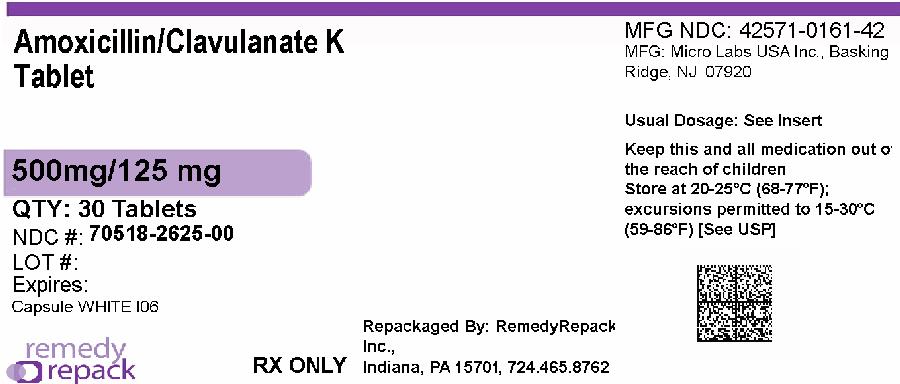
(clavulanate · DailyMed)
AMOXICLAV-DENK 1000/125
AMOXICLAV TRIHYDRATE CLAVULANATE POTASSIUM
What it does
Amoxiclav is a combination antibiotic used to treat various infections caused by bacteria.
Commonly used for: bacterial infections, pneumonia, urinary tract infections, skin infections …
Read more in plain English ↓Plain-language summary for general understanding - not medical advice. Always follow your pharmacist/doctor.
Ask about this medicine
Answers come only from this medicine's registration record, BNF monograph and interaction data - not medical advice.
Hard to find? We help patients in Kenya source rare medicines. We don't sell or dispense medicines - licensed pharmacies do.
Source this medicineRegistration & product details
Source: Pharmacy and Poisons Board · fetched 2026-01-28 20:53:48 · updated 2026-07-26 11:44:26
About amoxiclav
Amoxiclav is a combination antibiotic used to treat various infections caused by bacteria.
What it treats
- bacterial infections
- pneumonia
- urinary tract infections
- skin infections
- ear infections
How it works
Amoxiclav works by stopping the growth of bacteria, helping the body to fight off infections.
Who it's for
It is for adults and children who have bacterial infections that can be treated with antibiotics.
AI-assisted summary grounded in BNF data - general information only, not medical advice. Always confirm with your pharmacist or doctor.
About clavulanate
Clavulanate is a medication that helps fight bacterial infections, often used alongside other antibiotics.
What it treats
- bacterial infections
- infections caused by certain bacteria
How it works
Clavulanate works by inhibiting the enzymes that bacteria use to resist antibiotics, making the antibiotics more effective.
Who it's for
It is for patients who have bacterial infections that require treatment, especially when other antibiotics may not work.
Cautions
- • Avoid using with other drugs that can harm the liver.
AI-assisted summary grounded in BNF data - general information only, not medical advice. Always confirm with your pharmacist or doctor.
Clinical monograph: amoxiclav
Amoxiclav, a combination of amoxicillin and clavulanic acid, is a broad-spectrum antibiotic used to treat various infections caused by susceptible bacteria. Amoxicillin is a penicillin antibiotic that works by inhibiting bacterial cell wall synthesis, while clavulanic acid is a beta-lactamase inhibitor that protects amoxicillin from degradation by beta-lactamase enzymes produced by resistant bacteria. This combination enhances the efficacy of amoxicillin against a wider range of bacteria, making it effective in treating infections that might otherwise be resistant to amoxicillin alone.
Indications
- Acute otitis media
- Sinusitis
- Pneumonia
Mechanism of action
Amoxicillin exerts its antibacterial effect by binding to penicillin-binding proteins (PBPs) located inside the bacterial cell wall, leading to inhibition of peptidoglycan synthesis, which is essential for bacterial cell wall structural integrity. This results in cell lysis and death of the bacteria. Clavulanic acid inhibits beta-lactamase enzymes, which are responsible for the hydrolysis of beta-lactam antibiotics, thus protecting amoxicillin from degradation and allowing it to exert its effect more effectively against beta-lactamase-producing bacteria.
Pharmacodynamics
The pharmacodynamics of amoxiclav is characterized by its time-dependent killing mechanism. The efficacy of amoxicillin is influenced by the duration of time that plasma concentrations remain above the minimum inhibitory concentration (MIC) for the target organism. Clavulanic acid increases the spectrum of activity of amoxicillin, allowing for the treatment of infections caused by organisms that would be resistant to amoxicillin alone. The combination is effective against a wide range of Gram-positive and Gram-negative bacteria.
Pharmacokinetics
Amoxiclav is well absorbed from the gastrointestinal tract, with peak plasma concentrations occurring approximately 1-2 hours after oral administration. It is widely distributed in body tissues and fluids, including the lungs, skin, and urine. The presence of food can affect the absorption of amoxicillin but does not significantly affect clavulanic acid. Both components are primarily eliminated via renal excretion, with approximately 50-70% of a dose excreted unchanged in the urine. The half-life of amoxicillin is about 1 hour, while clavulanic acid has a slightly longer half-life.
Contra-indications
- History of hypersensitivity to amoxicillin, clavulanic acid, or any other component of the formulation
- Severe liver impairment
- History of cholestatic jaundice or hepatic dysfunction associated with amoxicillin/clavulanic acid
Adverse effects
- Nausea
- Vomiting
- Diarrhea
- Rash
- Allergic reactions
- Hepatic dysfunction
- Clostridium difficile-associated diarrhea
- Anemia
- Thrombocytopenia
Interactions
- Probenecid may increase the plasma concentration of amoxicillin
- Anticoagulants may have enhanced effects when used concurrently
- Methotrexate clearance may be reduced, leading to increased toxicity
Precautions
- Use with caution in patients with renal impairment
- Monitor liver function in patients with a history of liver disease
- Caution in patients with a history of allergy to penicillins or cephalosporins
- Monitor for signs of superinfection with prolonged use
Pregnancy
Amoxiclav is generally considered safe to use during pregnancy. However, it should only be used if clearly needed and after assessment of risks versus benefits.
Breast-feeding
Amoxiclav is excreted in breast milk in small amounts. Caution is advised, and benefits should be weighed against potential risks.
Storage
Store at room temperature away from moisture and heat. Keep out of reach of children.
Formulations
- Tablets
- Oral suspension
- Injection
AI-synthesized from BNF references - general information only, not a substitute for professional medical advice or the current BNF. Verify doses with a pharmacist.
Clinical monograph: clavulanate
BNF-referencedClavulanate is a beta-lactam compound that is primarily used as a beta-lactamase inhibitor. It is often combined with penicillin antibiotics, such as amoxicillin, to enhance their effectiveness against bacteria that produce beta-lactamase enzymes, which can render these antibiotics ineffective. Clavulanate itself has limited antibacterial activity but plays a crucial role in overcoming bacterial resistance mechanisms.
Indications
- Bacterial infections caused by beta-lactamase producing organisms
- Community-acquired pneumonia
- Respiratory tract infections
- Urinary tract infections
- Skin and soft tissue infections
Dosage
Children: Paediatric dosing of clavulanate should be determined based on the specific indication and the formulation used. Refer to the BNF for
Adults: The usual adult dose of clavulanate varies depending on the specific antibiotic it is combined with, generally ranging from 125 mg to 250 mg, taken every 8 hours when combined with amoxicillin.
Mechanism of action
Clavulanate works by irreversibly binding to the active site of beta-lactamase enzymes. By inhibiting these enzymes, clavulanate protects beta-lactam antibiotics from degradation, allowing them to exert their antibacterial effects effectively. This mechanism enhances the spectrum of activity of the co-administered antibiotic, thereby improving clinical outcomes in infections caused by beta-lactamase producing organisms.
Pharmacodynamics
Clavulanate exhibits a time-dependent antibacterial effect, characterized by its ability to maintain effective concentrations against beta-lactamase producing bacteria. Its pharmacodynamic properties are mainly influenced by its interaction with beta-lactam antibiotics, enhancing their efficacy in treating infections. The overall effect is a synergistic relationship that increases the potency of the antibiotic treatment.
Pharmacokinetics
Clavulanate is usually administered orally or parenterally, and it is rapidly absorbed from the gastrointestinal tract. It reaches peak plasma concentrations within 1 to 2 hours after administration. The drug is widely distributed in body tissues, with a volume of distribution indicative of good tissue penetration. Clavulanate undergoes hepatic metabolism, primarily by conjugation, and is excreted largely in the urine as metabolites. The elimination half-life is approximately 1 hour, necessitating frequent dosing for optimal therapeutic effect.
Contra-indications
- Hypersensitivity to clavulanate or any component of the formulation
- History of jaundice or hepatic impairment related to previous use of beta-lactam antibiotics
Adverse effects
- Diarrhea
- Nausea
- Vomiting
- Rash
- Hepatic dysfunction
- Allergic reactions
Interactions
- Probenecid may increase concentrations of clavulanate
- Anticoagulants may have altered effects due to changes in gut flora
Precautions
- Monitor liver function during prolonged therapy
- Use cautiously in patients with renal impairment
- Assess for history of allergy to penicillins or cephalosporins
Pregnancy
Clavulanate is classified as category B. Animal studies have not shown teratogenic effects, but adequate and well-controlled studies in pregnant women are lacking.
Breast-feeding
Clavulanate is excreted in breast milk. Caution is advised when administering to nursing mothers.
Storage
Store in a cool, dry place away from direct light. Keep out of reach of children.
Formulations
- Clavulanate potassium 125 mg/5 mL
- Clavulanate potassium 250 mg/5 mL
AI-synthesized from BNF references - general information only, not a substitute for professional medical advice or the current BNF. Verify doses with a pharmacist.
Molecular reference: clavulanate
PubChem CID 16204478Molecular formula: C8H8NO5-
Biological pathways
Source: PubChem (NCBI) · pathways from PathBank, Reactome, WikiPathways & PharmGKB.
This drug in other countries
The same active ingredient registered across other registries we cover - including different brands.
- AC-CLAV 1000 TABLETS (Each film coated tablet contains Amoxicillin and Cluvalanate Potassium 1000mg · Kiux Pharma
- AC-CLAV 625 TABLETS (Each film coated tablet contains Amoxicillin and Clavulanate Potassium 625 · Kiux Pharma
- ACICLAVCARE 1G TABLETS (Each film-coated tablet contains Amoxicillin trihydrate / Potassium clavulanate 1g) · East African Overseas
- ACINET 1.2G INJECTION (Each vial contains Amoxicillin Sodium/Potassium Clavulanate 1g/0.2g · East African Creasteas
- ACINET 228.5MG/5ML DRY SUSPENSION (Each 5ml of reconstituted suspension contains Amoxicillin Trihydrate/Potassium Clavulanate 200mg/28.5mg) · Indchemie Health Specialities
- ACINET 457MG/5ML DRY SUSPENSION (Each 5ml of reconstituted suspension contains Amoxicillin Trihydrate/Potassium Clavulanate 400mg/57mg) · Indchemie Health Specialities