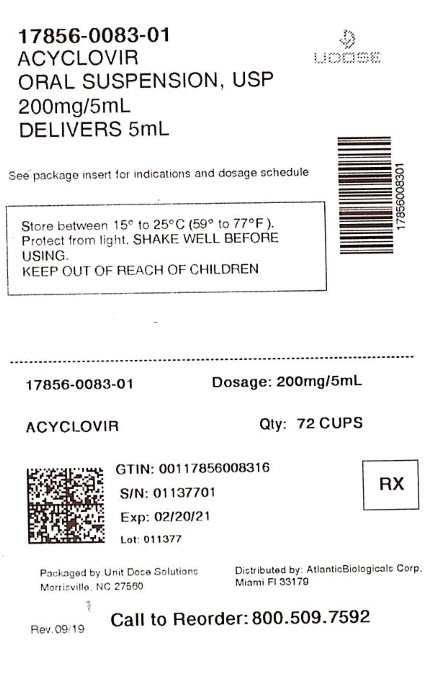
(acyclovir · DailyMed)
ANTIVIR 250 INJECTION
ACYCLOVIR SODIUM INJECTION 250MG 10ML
What it does
Acyclovir is an antiviral medicine used to treat infections caused by certain types of viruses.
Commonly used for: cold sores (herpes labialis), genital herpes (herpes genitalis), shingles (herpes zoster), chickenpox (varicella)
Read more in plain English ↓Plain-language summary for general understanding - not medical advice. Always follow your pharmacist/doctor.
Ask about this medicine
Answers come only from this medicine's registration record, BNF monograph and interaction data - not medical advice.
Hard to find? We help patients in Kenya source rare medicines. We don't sell or dispense medicines - licensed pharmacies do.
Source this medicineRegistration & product details
Source: Pharmacy and Poisons Board · fetched 2026-01-28 20:05:31 · updated 2026-08-03 04:05:45
About this medicine
Acyclovir is an antiviral medicine used to treat infections caused by certain types of viruses.
What it treats
- cold sores (herpes labialis)
- genital herpes (herpes genitalis)
- shingles (herpes zoster)
- chickenpox (varicella)
How it works
Acyclovir works by stopping the growth of the virus, helping to reduce the severity and duration of the infection.
Who it's for
Acyclovir is for people who have viral infections like cold sores, genital herpes, shingles, or chickenpox.
AI-assisted summary grounded in BNF data - general information only, not medical advice. Always confirm with your pharmacist or doctor.
Clinical monograph: acyclovir
BNF-referencedAcyclovir is a synthetic purine nucleoside analogue with antiviral activity primarily against herpes simplex viruses (HSV-1 and HSV-2) and varicella-zoster virus (VZV). It works by inhibiting viral DNA synthesis, leading to the termination of viral replication. Acyclovir is commonly used in the treatment of various herpesvirus infections, including genital herpes, shingles, and chickenpox.
Indications
- Herpes simplex virus infections (HSV-1 and HSV-2)
- Varicella-zoster virus infections (shingles and chickenpox)
- Prevention of herpes virus infections in immunocompromised patients
Dosage
Children: Refer to BNF for Children for appropriate dosing information, as paediatric doses vary based on age, weight, and specific indication.
Adults: For the treatment of herpes simplex infections, the typical adult dose may be 200 mg taken five times daily for 5 days. In cases of severe infections, intravenous acyclovir may be administered at a dose of 5-10 mg/kg every 8 hours, adjusted based on renal function.
Mechanism of action
Acyclovir is phosphorylated by viral thymidine kinase to form acyclovir monophosphate, which is then converted to acyclovir diphosphate and subsequently to acyclovir triphosphate by various cellular enzymes. Acyclovir triphosphate exhibits a higher affinity for viral DNA polymerase than for cellular DNA polymerase, allowing it to incorporate into viral DNA and cause chain termination or competitive inhibition of the enzyme, thus halting viral replication.
Pharmacodynamics
As a deoxynucleoside analog, acyclovir inhibits viral DNA polymerase, preventing the replication of herpesviruses. Its selectivity for viral over cellular enzymes contributes to its therapeutic efficacy and safety profile, offering a wide therapeutic window with a lower risk of overdose in healthy individuals.
Pharmacokinetics
Acyclovir is absorbed orally with variable bioavailability. It is widely distributed in body tissues and fluids, including the central nervous system. The drug is primarily eliminated by renal excretion, with a half-life of approximately 2.5 to 3 hours in patients with normal renal function. Dosage adjustments may be necessary in patients with renal impairment.
Contra-indications
- Hypersensitivity to acyclovir or any component of the formulation
Adverse effects
- Nausea
- Diarrhea
- Headache
- Dizziness
- Fatigue
- Renal toxicity
- Neurotoxicity (e.g., tremors, confusion)
Interactions
- Probenecid may decrease renal clearance of acyclovir, increasing its plasma concentration
- Zidovudine may increase the risk of hematologic toxicity when used with acyclovir
Precautions
- Renal impairment may require dosage adjustment
- Caution in patients with dehydration or renal dysfunction to prevent nephrotoxicity
- Monitor for neurological side effects, particularly in cases of rapid infusion
Pregnancy
Acyclovir is classified as a category B drug. Animal studies have not shown any harm to the fetus, but there are no adequate and well-controlled studies in pregnant women. Use only if clearly needed.
Breast-feeding
Acyclovir is excreted in breast milk, but the amounts are generally considered to be low. Caution is advised when administering to nursing mothers.
Storage
Store at room temperature, away from moisture and heat. Protect from light.
Formulations
- Acyclovir 200 mg tablets
- Acyclovir 400 mg tablets
- Acyclovir 800 mg tablets
- Acyclovir 5 mg/ml powder for injection
- Acyclovir 5% cream for topical use
AI-synthesized from BNF references - general information only, not a substitute for professional medical advice or the current BNF. Verify doses with a pharmacist.
Molecular reference: acyclovir
PubChem CID 135398513Molecular formula: C8H11N5O3
Mechanism of action
Acyclovir is becomes acyclovir monophosphate due to the action of viral thymidine kinase. Acyclovir monophosphate is converted to the diphosphate form by guanylate kinase. Acyclovir diphosphate is converted to acyclovir triphosphate by nucleoside diphosphate kinase, pyruvate kinase, creatine kinase, phosphoglycerate kinase, succinyl-CoA synthetase, phosphoenolpyruvate carboxykinase and adenylosuccinate synthetase. Acyclovir triphosphate has higher affinity for viral DNA polymerase than cellular DNA polymerase and incorporates into the DNA where the missing 2' and 3' carbons causes DNA chain termination. In other cases acyclovir triphosphate competes so strongly for viral DNA polymerase that other bases cannot associate with the enzyme, inactivating it. Acyclovir is a synthetic purine nucleoside analogue with in vitro and in vivo inhibitory activity against herpes simplex virus types 1 (HSV-1), 2 (HSV-2), and varicella-zoster virus (VZV). The inhibitory activity of acyclovir is highly selective due to is affinity for the enzyme thymidine kinase (TK) encoded by HSV and VZV. This viral enzyme converts acyclovir into acyclovir monophosphate, a nucleotide analogue. The monophosphate is further converted into diphosphate by cellular guanylate kinase adn into triphosphate by a number of cellualr enzymes. In vitro, acyclovir triphosphate stops replication of herpes viral DNA. Acyclovir inhibits viral DNA synthesis ... . Its selectivity of action depends on interaction with two distinct viral proteins. Cellular uptake and initial phosphorylation are facilitated by HSV thymidine kinase. The affinity of acyclovir for HSV thymidine kinase is about 200-fold greater than for the mammalian enzyme. Cellular enzymes convert the monophosphate to acyclovir triphosphate, which is present in 40- to 100-fold higher concentrations in HSV-infected than in uninfected cells, and competes for endogenous deoxyguanosine triphosphate (dGTP). The immunosuppressive agent mycophenolate mofetil potentiates the antiherpes activity of acyclovir and related agents by depleting intracellular dGTP pools. Acyclovir triphosphate competitively inhibits viral DNA polymerases and, to a much smaller extent, cellular DNA polymerases. Acyclovir triphosphate also is incorporated into viral DNA, where it acts as a chain terminator because of the lack of 3'-hydroxyl group. By a mechanism termed suicide inactivation, the terminated DNA template containing acyclovir binds the enzyme and leads to irreversible inactivation of the DNA polymerase. The concentration of the endogenous neurotoxin quinolinic acid (QA) is increased in the central nervous system of mice with herpes simplex encephalitis. /The authors/ have previously shown that the antiherpetic agent acyclovir (AC) has the ability to reduce QA-induced neuronal damage in rat brain, by attenuating lipid peroxidation. The mechanism by which QA induces lipid peroxidation includes the enhancement of the iron (Fe)-mediated Fenton reaction and the generation of free radicals, such as the superoxide anion (O(2)(-)). Thus, the present study determined whether AC has the ability to reduce Fe(2+)-induced lipid peroxidation, O(2)(-) generation and QA-induced superoxide anion generation, and to bind free Fe. O(2)(-) and Fe(2+) are also cofactors of the enzymes, indoleamine-2,3-dioxygenase (IDO) and 3-hydroxyanthranilate-3,4-dioxygenase (3-HAO) respectively. These enzymes catalyse steps in the biosynthesis of QA; thus, the effect of AC on their activity was also investigated. AC significantly attenuates Fe(2+)-induced lipid peroxidation and O(2)(-) generation. AC reduces O(2)(-) generation in the presence of QA and strongly binds Fe(2+) and Fe(3+). It also reduces the activity of both IDO and 3-HAO, which could be attributed to the superoxide anion scavenging and iron binding properties, respectively, of this drug.
Pharmacodynamics
Acyclovir is a deoxynucleoside analog that inhibits the action of viral DNA polymerase and DNA replication of different herpesvirus. Acyclovir has a wide therapeutic window as overdose is rare in otherwise healthy patients.
Biological pathways
Source: PubChem (NCBI) · pathways from PathBank, Reactome, WikiPathways & PharmGKB.
This drug in other countries
The same active ingredient registered across other registries we cover - including different brands.
- ACIVIR-200-DT 200MG DISPERSIBLE TABLET
- ACIVIR-5%- 5% W/W CREAM
- ACYCLOVIR 200MG TABLET
- ACYCLOVIR 200MG TABLET
- ACYCLOVIR 200MG TABLET
- ACYCLOVIR 400MG TABLET
- ACOVIR · Hetero Labs
- ACYCLOVIR · Varichem Pharmaceuticals
- ACYCLOVIR · Varichem Pharmaceuticals
- ACYCLOVIR · Varichem Pharmaceuticals
- ADCO-ACYCLOVIR · Adcock Ingram
- ALOVIR · Hetero Labs
- Acyclvir tablets · Kausikh Therapeutics
- Alovir 400 Tablets · Hetero Labs
- Alovir 800 tablets · Hetero Labs Ltd
- Davir Cream · Dawa Kenya
- Kamvir tablets · Aveo Pharmaceuticals
- Novirax cream · Drug International
- Acyclovir
- Avorax · Xepa-Soul Pattinson
- Cyclovax · Remedica
- Cyclovir · Zydus Lifesciences
- HERPORIG · Next Wave
- Medovir