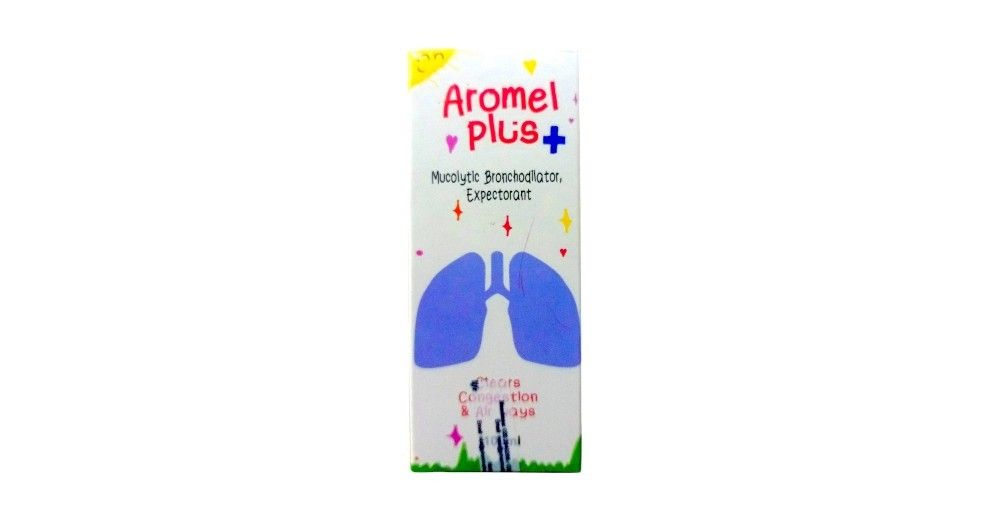
AROMEL PLUS SYRUP
TERBUTALINE SULPHATE BP AMBROXAL HYDROCHLORIDE BP GUAIFENESIN BP SODIUM CITRATE BP LEVOMENTHOL BP
What it does
Ambroxal is a medication used to help clear mucus from the airways.
Commonly used for: chronic bronchitis, chronic obstructive pulmonary disease (COPD), cough with mucus
Read more in plain English ↓Plain-language summary for general understanding - not medical advice. Always follow your pharmacist/doctor.
Ask about this medicine
Answers come only from this medicine's registration record, BNF monograph and interaction data - not medical advice.
Hard to find? We help patients in Kenya source rare medicines. We don't sell or dispense medicines - licensed pharmacies do.
Source this medicineRegistration & product details
Source: Pharmacy and Poisons Board · fetched 2026-01-28 20:56:53 · updated 2026-07-26 11:47:32
About ambroxal
Ambroxal is a medication used to help clear mucus from the airways.
What it treats
- chronic bronchitis
- chronic obstructive pulmonary disease (COPD)
- cough with mucus
How it works
It works by thinning and loosening mucus in the airways, making it easier to cough up.
Who it's for
It's for people with respiratory conditions that involve mucus buildup.
AI-assisted summary grounded in BNF data - general information only, not medical advice. Always confirm with your pharmacist or doctor.
About guaifenesin
Guaifenesin is a medicine that helps loosen mucus in the airways, making it easier to cough up and clear out. It is commonly used to relieve chest congestion caused by colds or other respiratory conditions.
What it treats
- chest congestion
- cough due to colds
- respiratory conditions
How it works
Guaifenesin works by thinning and loosening mucus in the airways, which helps you to cough it up more easily.
Who it's for
It is suitable for adults and children who are experiencing mucus buildup due to respiratory issues.
AI-assisted summary grounded in BNF data - general information only, not medical advice. Always confirm with your pharmacist or doctor.
About levomenthol
Levomenthol is a natural compound often used for its cooling and soothing effects.
What it treats
- muscle pain
- joint pain
- cough relief
- skin irritation
How it works
Levomenthol creates a cooling sensation on the skin or in the throat, which helps to relieve discomfort.
Who it's for
It is suitable for adults and children who need relief from mild pain or irritation.
AI-assisted summary grounded in BNF data - general information only, not medical advice. Always confirm with your pharmacist or doctor.
About terbutaline
Terbutaline is a medication that helps relax the muscles in the airways, making it easier to breathe.
What it treats
- asthma
- chronic obstructive pulmonary disease (COPD)
- bronchospasm
How it works
It works by relaxing the muscles around the airways, which helps to open them up and improves airflow.
Who it's for
This medication is for individuals who have breathing difficulties due to conditions like asthma or COPD.
Cautions
- • Be careful if you are taking other medications that lower potassium levels in the blood.
AI-assisted summary grounded in BNF data - general information only, not medical advice. Always confirm with your pharmacist or doctor.
Clinical monograph: Terbutalinesulfate
BNF-referencedTerbutaline sulfate is a selective beta-2 adrenergic agonist primarily used in the management of asthma and other conditions associated with reversible airways obstruction. It works by relaxing the smooth muscles of the bronchial passages, leading to bronchodilation and improved airflow. Terbutaline can be administered via inhalation, orally, or by injection, with inhalation being the preferred route in many cases due to its rapid onset and localized effect.
Indications
- Asthma
- Chronic Obstructive Pulmonary Disease (COPD)
- Exacerbation of reversible airways obstruction
- Prevention of exercise-induced bronchospasm
- Uncomplicated premature labor (under specialist supervision)
Dosage
Adults: Initially 2.5 mg 3 times a day for 1–2 weeks, then increased to
Mechanism of action
Terbutaline exerts its effects by selectively stimulating beta-2 adrenergic receptors located in the smooth muscle of the airways. This activation leads to the activation of adenylate cyclase, resulting in increased levels of cyclic AMP (cAMP). Elevated cAMP levels promote relaxation of the bronchial smooth muscle, leading to bronchodilation. Additionally, terbutaline may inhibit the release of mediators from mast cells, reducing bronchoconstriction and inflammation.
Pharmacodynamics
The pharmacodynamic profile of terbutaline includes rapid onset of action, typically within 5 to 15 minutes when inhaled, and a duration of action of approximately 3 to 6 hours. It provides symptomatic relief from bronchospasm associated with asthma and chronic obstructive pulmonary disease (COPD). The drug is also noted for its tocolytic effects, as it can inhibit uterine contractions, making it useful in managing premature labor.
Pharmacokinetics
Terbutaline is well absorbed following inhalation and oral administration, with peak plasma concentrations occurring within 1 to 3 hours. It exhibits a volume of distribution of approximately 3 L/kg, indicating extensive tissue distribution. The drug is metabolized primarily in the liver and has a half-life of about 3 to 5 hours. Terbutaline is excreted mainly in urine, both as unchanged drug and metabolites. Its pharmacokinetic profile may be affected by factors such as age, liver function, and concomitant medications.
Adverse effects
- Tachycardia
- Palpitations
- Tremors
- Headache
- Nausea
- Dizziness
- Hypokalemia
- Hyperglycemia
Interactions
- Beta-blockers may reduce the effectiveness of terbutaline
- Corticosteroids may enhance the effect of terbutaline
- Concomitant use with other sympathomimetics may increase cardiovascular side effects
Precautions
- Use with caution in patients with cardiovascular disorders
- Caution in patients with diabetes due to potential hyperglycemia
- Monitor potassium levels in patients at risk of hypokalemia
- Monitor for paradoxical bronchospasm
Pregnancy
Terbutaline should be used during pregnancy only if the potential benefit justifies the potential risk to the fetus.
Breast-feeding
Terbutaline is excreted in breast milk; caution should be exercised when administering to nursing mothers.
Storage
Store in a cool, dry place away from direct sunlight. Keep out of reach of children.
Formulations
- Tablets: 2.5 mg and 5 mg
- Nebuliser solution: 0.5 mg/ml
- Injection: 0.5 mg/1 ml
AI-synthesized from BNF references - general information only, not a substitute for professional medical advice or the current BNF. Verify doses with a pharmacist.
Clinical monograph: Levomenthol
BNF-referencedLevomenthol is a compound derived from menthol, primarily used for its topical cooling and analgesic effects. It is commonly found in various topical formulations aimed at alleviating discomfort associated with conditions such as pruritus and acne. Its cooling sensation is attributed to its ability to activate cold-sensitive receptors in the skin, providing symptomatic relief.
Indications
- Pruritus
- Eczema
- Acne
- Rosacea
Dosage
Children: For children aged 12-17 years, apply up to 3 grams 3-4 times a day, ensuring coverage is less than 10% of body surface area.
Adults: Apply thinly to the affected area 1-2 times a day. Maximum application should cover less than 10% of body surface area, with a total daily maximum of 12 grams.
Mechanism of action
Levomenthol primarily activates the cold-sensitive TRPM8 receptors in the skin. This stimulation leads to a feeling of coolness by inhibiting calcium ion currents in neuronal membranes. Additionally, menthol may exhibit analgesic properties through kappa-opioid receptor agonism, further contributing to its pain-relieving effects.
Pharmacodynamics
Levomenthol is a covalent organic compound that can be synthesized or extracted from peppermint and other mint oils. It induces a cooling sensation when applied topically, inhaled, or ingested, by stimulating cold-sensitive receptors located in the skin. Notably, this effect occurs without a decrease in actual skin temperature, making it useful in topical formulations for managing discomfort.
Pharmacokinetics
Levomenthol is absorbed through the skin upon topical application. Its effects are localized, and it does not significantly enter systemic circulation when used as directed. The onset of action is typically rapid, providing immediate symptomatic relief from conditions like itching and irritation.
Contra-indications
- Severe heart disease
- Severe hepatic impairment
- Glaucoma
- Urinary retention
- History of mania or arrhythmias
Adverse effects
- Drowsiness
- Dizziness
- Headache
- Nausea
- Vomiting
- Dry mouth
- Dry eyes
- Diarrhea
- Constipation
- Skin reactions
- Altered taste
- Blurred vision
- Suicidal behaviors
Interactions
- Tricyclic antidepressants
- Other central nervous system depressants
Precautions
- Avoid application to large areas of the skin
- Use caution in patients with a history of psychiatric disorders
- Caution advised for driving and skilled tasks due to potential somnolence or dizziness
Pregnancy
Manufacturer advises use only if potential benefit outweighs risk.
Breast-feeding
Manufacturer advises use only if potential benefit outweighs risk.
Storage
Store in a cool, dry place, protected from light.
Formulations
- AquaSoothe 1% cream (Menthol 10 mg per 1 gram)
- AquaSoothe 2% cream (Menthol 20 mg per 1 gram)
- Arjun 0.5% cream (Menthol 5 mg per 1 gram)
- Arjun 1% cream (Menthol 10 mg per 1 gram)
- Dermacool 0.5% cream (Menthol 5 mg per 1 gram)
- Dermacool 1% cream (Menthol 10 mg per 1 gram)
- Menthoderm 0.5% cream (Menthol 5 mg per 1 gram)
- Menthoderm 1% cream (Menthol 10 mg per 1 gram)
- Menthoderm 2% cream (Menthol 20 mg per 1 gram)
- Menthoderm 5% cream (Menthol 50 mg per 1 gram)
AI-synthesized from BNF references - general information only, not a substitute for professional medical advice or the current BNF. Verify doses with a pharmacist.
Clinical monograph: ambroxal
Ambroxal is a mucolytic agent commonly used in the management of respiratory conditions characterized by excessive mucus production. It enhances mucociliary clearance, thereby facilitating easier expectoration of mucus. Ambroxal is often used in formulations for cough syrup and is known for its role in treating conditions such as chronic bronchitis and asthma.
Indications
- Chronic bronchitis
- Asthma
- Chronic obstructive pulmonary disease (COPD)
- Mucus hypersecretion
Dosage
Children: Refer to the BNF for Children for specific paediatric dosing recommendations based on age and weight.
Adults: Refer to relevant clinical guidelines or the BNF for specific adult dosing recommendations based on condition and formulation.
Mechanism of action
Ambroxal works by breaking down the mucopolysaccharide fibers in mucus, reducing its viscosity and promoting secretion clearance. It stimulates the production of serous mucus, which helps to thin the mucus, making it easier to expel. Additionally, ambroxal may enhance the activity of ciliated epithelial cells in the respiratory tract, further aiding in mucus clearance.
Pharmacodynamics
Ambroxal exhibits a rapid onset of action, typically within hours of administration. Its mucolytic effects improve respiratory function and alleviate symptoms associated with obstructive airway diseases. The drug has anti-inflammatory properties, contributing to the reduction of airway inflammation, which can enhance overall respiratory health.
Pharmacokinetics
Ambroxal is well absorbed following oral administration, with peak plasma concentrations occurring approximately 1-3 hours post-dose. It has a bioavailability of about 70%, and its effects can last several hours. Ambroxal is primarily metabolized in the liver and has a half-life of approximately 10 hours. The drug is excreted mainly through the kidneys, with about 90% of the dose eliminated as metabolites.
Adverse effects
- Nausea
- Vomiting
- Diarrhea
- Gastrointestinal discomfort
- Allergic reactions
Precautions
- Use with caution in patients with a history of hypersensitivity to Ambroxol or other components of the formulation.
- Patients with severe liver or kidney impairment should use Ambroxol under medical supervision.
Pregnancy
Ambroxol should be used during pregnancy only if the potential benefit justifies the potential risk to the fetus. Consult with a healthcare provider.
Breast-feeding
Ambroxol is excreted in breast milk. Caution is advised when administering to nursing mothers.
Storage
Store in a cool, dry place away from direct sunlight. Keep out of reach of children.
Formulations
- Oral solution
- Syrup
- Tablets
- Effervescent tablets
AI-synthesized from BNF references - general information only, not a substitute for professional medical advice or the current BNF. Verify doses with a pharmacist.
Clinical monograph: guaifenesin
BNF-referencedGuaifenesin is an expectorant classified as a mucolytic agent that facilitates the clearance of mucus from the respiratory tract. It is commonly used to relieve coughs associated with colds and other respiratory conditions by loosening phlegm and reducing mucus viscosity, thereby making coughs more productive.
Indications
- Cough associated with respiratory tract infections
- Cough due to bronchial asthma
- Acute bronchitis
- Chronic obstructive pulmonary disease (COPD)
- Sinusitis
Dosage
Children: For children aged 6 to 12 years, the typical dosage is 100-200 mg every 4 hours as needed, not exceeding 1.2 g in 24 hours. For children aged 2 to 6 years, the dosage is generally 50-100 mg every 4 hours as needed, not exceeding 600 mg in 24 hours. Refer to the BNF for Children for specific dosing recommendations.
Adults: The usual adult dosage for guaifenesin is 200-400 mg every 4 hours as needed, not exceeding 2.4 g in 24 hours.
Mechanism of action
Guaifenesin is believed to work by increasing mucus secretion and acting as an irritant to gastric vagal receptors, which stimulates efferent parasympathetic reflexes. This leads to glandular exocytosis of less viscous mucus. Additionally, it may enhance respiratory tract fluid, thereby reducing the viscosity of secretions and improving ciliary action for more efficient mucus clearance.
Pharmacodynamics
As an expectorant, guaifenesin enhances the output of bronchial secretions and phlegm by decreasing their adhesiveness and surface tension. This results in an increased flow of less viscous gastric secretions, promoting ciliary action and converting unproductive coughs into more productive ones. Although it may also exhibit mild anticonvulsant and muscle relaxant properties, these effects are less well established.
Pharmacokinetics
Guaifenesin is rapidly absorbed from the gastrointestinal tract and reaches peak plasma concentrations within one hour of administration. It is metabolized in the liver, and its elimination half-life is approximately one hour. The drug is primarily excreted in the urine, mostly as metabolites.
Adverse effects
- Nausea
- Vomiting
- Dizziness
- Headache
- Rash
Precautions
- Use with caution in patients with chronic cough due to asthma, smoking, or emphysema
- Ensure adequate hydration while using
Pregnancy
Guaifenesin is categorized as pregnancy category C. Use only if the potential benefit justifies the potential risk to the fetus.
Breast-feeding
Guaifenesin is excreted in breast milk. Caution should be exercised when administered to breastfeeding women.
Storage
Store in a cool, dry place away from direct sunlight. Keep out of reach of children.
Formulations
- Oral syrup
- Tablets
- Extended-release capsules
AI-synthesized from BNF references - general information only, not a substitute for professional medical advice or the current BNF. Verify doses with a pharmacist.
Clinical monograph: terbutaline
BNF-referencedTerbutaline is a selective beta-2 adrenergic receptor agonist used primarily as a bronchodilator in the management of asthma and other conditions involving reversible airway obstruction. It works by relaxing the smooth muscle in the airways, facilitating easier breathing. Terbutaline is particularly beneficial for patients experiencing bronchospasm associated with asthma, bronchitis, and emphysema.
Indications
- Bronchospasm
- Asthma
- Chronic bronchitis
- Emphysema
Dosage
Children: Refer to the BNF for Children for specific paediatric dosing recommendations.
Adults: Refer to the BNF for specific dosing guidelines.
Mechanism of action
Terbutaline exerts its effects through selective agonism of beta-2 adrenergic receptors located in the bronchioles. This activation leads to the stimulation of adenylyl cyclase, which increases the levels of intracellular cyclic adenosine monophosphate (cAMP). The rise in cAMP reduces intracellular calcium concentrations, leading to the activation of protein kinase A. This enzyme inactivates myosin light-chain kinase and activates myosin light-chain phosphatase, ultimately resulting in the relaxation of smooth muscle within the bronchioles.
Pharmacodynamics
As a beta-2 adrenergic receptor agonist, terbutaline is indicated for the relief of bronchospasm in conditions such as asthma, chronic bronchitis, and emphysema. It has a rapid onset of action and a relatively short duration of effect, typically requiring administration up to three times daily in its inhaled form. The therapeutic window for terbutaline is wide, making it generally safe within prescribed doses.
Pharmacokinetics
Terbutaline is rapidly absorbed when administered via inhalation, allowing for quick therapeutic action. The drug undergoes extensive first-pass metabolism when taken orally, which may affect its bioavailability. It is primarily metabolized in the liver and has a half-life that supports frequent dosing. Excretion occurs mainly via the kidneys, with metabolites detectable in urine.
Contra-indications
- Hypersensitivity to terbutaline or any of its components
- Severe hypersensitivity to sympathomimetic amines
- Tachyarrhythmias
- Cardiac arrhythmias
Adverse effects
- Tremor
- Tachycardia
- Palpitations
- Headache
- Nausea
- Dizziness
- Muscle cramps
- Hypokalemia
Interactions
- Beta-blockers may reduce the effectiveness of terbutaline
- Concomitant use with other sympathomimetics may increase the risk of cardiovascular side effects
- Monoamine oxidase inhibitors (MAOIs) can potentiate the effects of terbutaline
Precautions
- Use with caution in patients with cardiovascular disorders
- Monitor potassium levels in patients with significant hypokalemia
- Caution in patients with diabetes mellitus as beta agonists may induce hyperglycemia
Pregnancy
Use during pregnancy only if the potential benefit justifies the potential risk to the fetus. Category C.
Breast-feeding
Terbutaline is excreted in human milk, and caution should be exercised when administered to a nursing woman.
Storage
Store below 25 degrees Celsius. Protect from light and moisture. Keep out of reach of children.
Formulations
- Inhalation aerosol
- Oral tablets
- Injection
AI-synthesized from BNF references - general information only, not a substitute for professional medical advice or the current BNF. Verify doses with a pharmacist.
Molecular reference: Levomenthol
PubChem CID 16666Molecular formula: C10H20O
Mechanism of action
Menthol primarily activates the cold-sensitive TRPM8 receptors in the skin. Menthol, after topical application, causes a feeling of coolness due to stimulation of 'cold' receptors by inhibiting Ca++ currents of neuronal membranes. It may also yield analgesic properties via kappa-opioid receptor agonism.
Pharmacodynamics
Menthol is a covalent organic compound made synthetically or obtained from peppermint or other mint oils. Menthol induces a cooling sensation on the skin upon inhalation, oral ingestion, or topical application by stimulating the cold-sensitive receptors expressed on the skin, without actually causing a drop in the skin temperature.
Biological pathways
Source: PubChem (NCBI) · pathways from PathBank, Reactome, WikiPathways & PharmGKB.
Molecular reference: Terbutalinesulfate
PubChem CID 91810535Molecular formula: C12H19NO6S
Source: PubChem (NCBI) · pathways from PathBank, Reactome, WikiPathways & PharmGKB.
Molecular reference: guaifenesin
PubChem CID 3516Molecular formula: C10H14O4
Mechanism of action
Although the exact mechanism of action of guaifenesin may not yet be formally or totally elucidated, it is believed that expectorants like guaifenesin function by increasing mucus secretion. Moreover, it is also further proposed that such expectorants may also act as an irritant to gastric vagal receptors, and recruit efferent parasympathetic reflexes that can elicit glandular exocytosis that is comprised of a less viscous mucus mixture. Subsequently, these actions may provoke coughing that can ultimately flush difficult to access, congealed mucopurulent material from obstructed small airways to facilitate a temporary improvement for the individual. Consequently, while it is generally proposed that guaifenesin functions as an expectorant by helping to loosen phlegm (mucus) and thin bronchial secretions to rid the bronchial passageways of bothersome mucus and make coughs more productive, there has also been research to suggest that guaifenesin possesses and is capable of demonstrating anticonvulsant and muscle relaxant effects to some degree possibly by acting as an NMDA receptor antagonist. Guaifenesin is thought to act as an expectorant by increasing the volume and reducing the viscosity of secretions in the trachea and bronchi. Thus it may increase the efficiency of the cough reflex and facilitate removal of the secretions; however, objective evidence for this is limited and conflicting. By increasing respiratory tract fluid, guaifenesin reduces the viscosity of tenacious secretions and acts as an expectorant. Guaifenesin, a commonly used agent for the treatment of cough, is termed an expectorant since it is believed to alleviate cough discomfort by increasing sputum volume and decreasing its viscosity, thereby promoting effective cough. Despite its common usage, relatively few studies, yielding contrasting results, have been performed to investigate the action and efficacy of guaifenesin. To evaluate the effect of guaifenesin on cough reflex sensitivity. Randomized, double-blind, placebo-controlled trial. Fourteen subjects with acute viral upper respiratory tract infection (URI) and 14 healthy volunteers. On 2 separate days, subjects underwent capsaicin cough challenge 1 to 2 hr after receiving a single, 400-mg dose (capsules) of guaifenesin or matched placebo. Measurements and results: The concentration of capsaicin inducing five or more coughs (C(5)) was determined. Among subjects with URI, mean (+/- SEM) log C(5) after guaifenesin and placebo were 0.92 +/- 0.17 and 0.66 +/- 0.14, respectively (p = 0.028). No effect on cough sensitivity was observed in healthy volunteers. /The/ results demonstrate that guaifenesin inhibits cough reflex sensitivity in subjects with URI, whose cough receptors are transiently hypersensitive, but not in healthy volunteers. Possible mechanisms include a central antitussive effect, or a peripheral effect by increased sputum volume serving as a barrier shielding cough receptors within the respiratory epithelium from the tussive stimulus.
Pharmacodynamics
Guaifenesin is categorized as an expectorant that acts by enhancing the output of phlegm (sputum) and bronchial secretions via decreasing the adhesiveness and surface tension of such material. Furthermore, guaifenesin elicits an increased flow of less viscous gastric secretions that subsequently promote ciliary action - all actions that ultimately change dry, unproductive coughing to coughs that are more productive and less frequent. Essentially, by decreasing the viscosity and adhesiveness of such secretions, guaifenesin enhances the efficacy of mucociliary activity in removing accumulated secretions from the upper and lower airway.
Source: PubChem (NCBI) · pathways from PathBank, Reactome, WikiPathways & PharmGKB.
Molecular reference: terbutaline
PubChem CID 5403Molecular formula: C12H19NO3
Mechanism of action
Terbutaline is a selective beta-2 adrenergic receptor agonist. Agonism of these receptors in bronchioles activates adenylyl cyclase, increasing intracellular cyclic adenosine monophosphate (cAMP). Increased cAMP decreases intracellular calcium, activating protein kinase A, inactivating myosin light-chain kinase, activating myosin light-chain phosphatase, and finally relaxing smooth muscle in the bronchiole.
Pharmacodynamics
Terbutaline is a beta-2 adrenergic receptor agonist indicated to treat reversibly bronchospasm in asthmatic patients with bronchitis and emphysema. It has a short duration as the inhaled form is taken up to three times daily, and the therapeutic window is wide.
Biological pathways
Source: PubChem (NCBI) · pathways from PathBank, Reactome, WikiPathways & PharmGKB.
This drug in other countries
The same active ingredient registered across other registries we cover - including different brands.
- ASCORIL COMBINATION PRODUCT SYRUP
- ASMARIL_EXPECTORANT COMBINATION PRODUCT SYRUP
- BENYLIN_CHILDRENS_WET_COUGH 100MG/10ML SYRUP
- BENYLIN_WET_COUGH_MENTHOL_MUCUS_RELIEF 200MG/10ML SYRUP
- BENYLIN_WET_COUGH_MUCUS_RELIEF 200MG/10ML SYRUP
- BROMSAL COMBINATION PRODUCT SYRUP
- ADULT MALIN PLUS COUGH · M&g Pharmaceuticals
- ASCOREX EXPECTORANT · Glenmark Pharmaceuticals
- ASPANOL ALL-IN-ONE SYRUP (Each 5ml contains Guaifenesin BP/ Paracetamol/ Phenylephrine Hydrochloride BP 200mg · Kinapharma
- ASPANOL PRODUCTIVE COUGH SYRUP SYRUP (Each 5ml contains Guaifenesin BP/ Bromhexine Hydrochloride BP/ Phenylephrine Hydrochloride BP 100mg/4mg/30mg) · Kinapharma
- BENYLIN WET COUGH MENTHOL · Johnson & Johnson
- BLUKOF ADULT CHESTY COUGH SYRUP · Prowill Pharmaceuticals