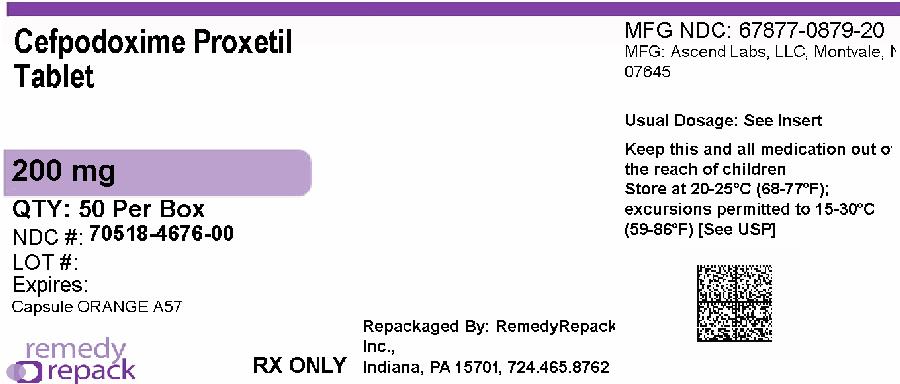
(cefpodoxime · DailyMed)
Auropodox 200
Cefpodoxime Proxetil 200 mg,Lactose Monohydrate mg,Maize starch mg
What it does
Cefpodoxime is an antibiotic used to treat bacterial infections.
Commonly used for: bacterial infections, respiratory tract infections, skin infections, urinary tract infections
Read more in plain English ↓Plain-language summary for general understanding - not medical advice. Always follow your pharmacist/doctor.
Ask about this medicine
Answers come only from this medicine's registration record, BNF monograph and interaction data - not medical advice.
Medicine sourcing is available in Kenya only. We don't sell or dispense medicines - licensed pharmacies do.
Sourcing - Kenya onlyRegistration & product details
Source: Tanzania Medicines and Medical Devices Authority · fetched 2026-03-11 23:47:46 · updated 2026-10-01 03:00:46
About cefpodoxime
Cefpodoxime is an antibiotic used to treat bacterial infections.
What it treats
- bacterial infections
- respiratory tract infections
- skin infections
- urinary tract infections
How it works
Cefpodoxime works by stopping the growth of bacteria, helping the body to fight off infections.
Who it's for
Cefpodoxime is for adults and children who have certain bacterial infections.
AI-assisted summary grounded in BNF data - general information only, not medical advice. Always confirm with your pharmacist or doctor.
About lactose
Lactose is a sugar found in milk and dairy products. It is often used as an excipient in medications.
What it treats
- lactose intolerance
- as a filler in tablets and capsules
How it works
Lactose helps improve the texture and stability of medications and is sometimes used as a sweetener.
Who it's for
Individuals who require lactose as part of their medication or those who consume dairy products.
Cautions
- • May cause digestive issues in people with lactose intolerance.
AI-assisted summary grounded in BNF data - general information only, not medical advice. Always confirm with your pharmacist or doctor.
About maize
Maize is a common food ingredient that provides energy and nutrients.
What it treats
- nutrition
- energy source
How it works
Maize is a carbohydrate-rich food that the body uses for energy.
Who it's for
Suitable for most people, including adults and children.
AI-assisted summary grounded in BNF data - general information only, not medical advice. Always confirm with your pharmacist or doctor.
About proxetil
Proxetil is a medication used to manage certain mental health conditions.
What it treats
- depression
- anxiety disorders
How it works
Proxetil works by helping to balance chemicals in the brain that affect mood and emotions.
Who it's for
This medication is for adults who are experiencing symptoms of depression or anxiety.
AI-assisted summary grounded in BNF data - general information only, not medical advice. Always confirm with your pharmacist or doctor.
About starch
Starch is a carbohydrate that serves as a source of energy and is often used in various food products.
What it treats
- energy source
- dietary supplement
How it works
Starch is broken down by the body into glucose, which provides energy for daily activities.
Who it's for
Starch can be used by anyone needing extra energy in their diet, particularly those with increased energy needs.
AI-assisted summary grounded in BNF data - general information only, not medical advice. Always confirm with your pharmacist or doctor.
Clinical monograph: cefpodoxime
BNF-referencedCefpodoxime is a third-generation cephalosporin antibiotic that is effective against a wide range of Gram-positive and Gram-negative bacteria. It is particularly noted for its stability against beta-lactamase enzymes, which makes it a suitable option for treating infections caused by organisms resistant to other penicillins and cephalosporins. However, it is not effective against certain bacteria such as Pseudomonas aeruginosa, Enterococcus, and Bacteroides fragilis.
Indications
- Respiratory tract infections
- Urinary tract infections
- Skin and soft tissue infections
- Otitis media
Dosage
Children: Refer to the BNF for Children for specific paediatric dosing recommendations.
Adults: Refer to the BNF for specific dosing guidelines.
Mechanism of action
Cefpodoxime exerts its bactericidal effect by inhibiting cell wall synthesis. The active metabolite binds preferentially to penicillin-binding protein 3, which leads to the inhibition of peptidoglycan production, the main component of bacterial cell walls. This mechanism is particularly effective against various Gram-positive and Gram-negative bacteria, enhancing its therapeutic utility in treating infections.
Pharmacodynamics
Cefpodoxime demonstrates effectiveness against most Gram-positive and Gram-negative bacteria, with notable exceptions including Pseudomonas aeruginosa, Enterococcus, and Bacteroides fragilis. Its ability to remain stable in the presence of beta-lactamase enzymes allows it to target bacteria that are otherwise resistant to beta-lactam antibiotics.
Pharmacokinetics
Cefpodoxime is well absorbed after oral administration, with its bioavailability enhanced by the presence of food. It is distributed widely in body tissues and fluids, with a significant volume of distribution. Cefpodoxime is primarily eliminated via renal excretion, with a half-life sufficient for twice-daily dosing in most cases. The active metabolite contributes to the antimicrobial activity and is also eliminated through renal pathways.
Adverse effects
- Diarrhea
- Nausea
- Vomiting
- Rash
- Allergic reactions
- Elevated liver enzymes
Precautions
- Use with caution in patients with renal impairment
- Monitor for signs of superinfection
- Assess for history of penicillin allergy
Pregnancy
Cefpodoxime is classified as pregnancy category B. Animal studies have not demonstrated a risk to the fetus, but there are no adequate and well-controlled studies in pregnant women. It should be used during pregnancy only if clearly needed.
Breast-feeding
Cefpodoxime is excreted in breast milk. Caution is advised when administering to nursing mothers, as adverse effects on the infant are possible.
Storage
Store at room temperature, away from moisture and heat. Keep out of reach of children.
Formulations
- Tablets
- Oral suspension
AI-synthesized from BNF references - general information only, not a substitute for professional medical advice or the current BNF. Verify doses with a pharmacist.
Clinical monograph: lactose
BNF-referencedLactose is a disaccharide sugar composed of galactose and glucose, primarily found in milk and dairy products. It serves as a source of energy and is metabolized by the enzyme lactase. In individuals with lactase deficiency, lactose can lead to gastrointestinal symptoms such as bloating, diarrhea, and abdominal pain.
Indications
- Lactose intolerance
- As a filler or excipient in pharmaceutical formulations
Dosage
Children: Refer to the BNF for Children for specific dosing information based on age and clinical context.
Adults: Refer to the BNF for specific dosing information based on clinical context.
Mechanism of action
Lactose is metabolized in the intestine by the enzyme lactase into its constituent monosaccharides, glucose and galactose. In individuals with lactase deficiency, unabsorbed lactose passes into the colon, where it is fermented by bacteria, leading to gas production and osmotic effects that contribute to diarrhea.
Pharmacodynamics
The pharmacodynamics of lactose are primarily related to its effects on gastrointestinal function. In healthy individuals, lactose is effectively broken down into glucose and galactose, which are absorbed and utilized for energy. In individuals with lactose intolerance, the unabsorbed lactose can cause osmotic diarrhea and colonic fermentation, leading to discomfort and symptoms associated with lactose intolerance.
Pharmacokinetics
Lactose is not absorbed in the gastrointestinal tract until it is hydrolyzed into glucose and galactose by lactase. The absorption of glucose and galactose occurs in the small intestine. The half-life is not applicable as lactose is not typically administered as a medication but is rather ingested as a natural component of food. Its metabolism primarily occurs in the intestine.
Adverse effects
- Bloating
- Diarrhea
- Abdominal pain
- Flatulence
Precautions
- Use with caution in patients with lactose intolerance.
- Consider potential for gastrointestinal upset in sensitive individuals.
Pregnancy
Lactose is generally considered safe for use during pregnancy. However, consult a healthcare professional for individual advice.
Breast-feeding
Lactose is safe to use while breastfeeding, as it is a natural sugar present in breast milk.
Storage
Store in a cool, dry place, away from direct sunlight.
Formulations
- Powder
- Granules
- Tablets
- Syrup
AI-synthesized from BNF references - general information only, not a substitute for professional medical advice or the current BNF. Verify doses with a pharmacist.
Clinical monograph: maize
Maize, also known as corn, is a cereal grain first domesticated by indigenous peoples in southern Mexico about 10,000 years ago. It is a staple food in many parts of the world and is used for human consumption, animal feed, and as a raw material in various industrial processes. Maize is rich in carbohydrates, particularly starch, and provides essential nutrients such as vitamins B and E, magnesium, and dietary fiber.
Indications
- Nutritional support
- Source of carbohydrates
- Dietary fiber source
- Animal feed
Dosage
Children: As with adults, there are no specific dosing recommendations for maize for children. It can be introduced into the diet in age-appropriate forms and quantities, keeping in mind the overall dietary balance.
Adults: There are no specific dosing recommendations for maize as it is typically consumed as part of a balanced diet. It can be included in daily meals in various forms such as whole kernels, flour, or as part of dishes.
Mechanism of action
Maize primarily acts as a source of energy due to its high carbohydrate content. The complex carbohydrates in maize are broken down into glucose, which is then utilized by the body for energy production. It also contributes to dietary fiber intake, which can aid in digestive health and regulation of blood sugar levels.
Pharmacodynamics
The consumption of maize influences blood glucose and insulin levels due to its carbohydrate content. It has a relatively low glycemic index when consumed in whole form, which can help in managing blood sugar levels. The dietary fiber present in maize can also promote satiety and aid in weight management.
Pharmacokinetics
The digestion of maize begins in the mouth with salivary amylase breaking down starches into simpler sugars. In the stomach and small intestine, enzymes further break down these carbohydrates. The resultant glucose is absorbed into the bloodstream, where it is transported to cells for energy production. The absorption rate can vary based on the form of maize consumed (e.g., whole kernels versus processed forms).
Pregnancy
Maize is generally considered safe for consumption during pregnancy as it is a staple food and provides essential nutrients.
Breast-feeding
Maize is safe to consume while breastfeeding and can provide important nutrients to both the mother and the infant.
Storage
Store in a cool, dry place, away from moisture and pests. Properly sealed containers can help prolong shelf life.
Formulations
- Whole maize grains
- Maize flour (cornmeal)
- Maize starch
- Maize oil
AI-synthesized from BNF references - general information only, not a substitute for professional medical advice or the current BNF. Verify doses with a pharmacist.
Clinical monograph: proxetil
Proxetil is an antidepressant belonging to the class of selective serotonin reuptake inhibitors (SSRIs). It is primarily utilized for the treatment of major depressive disorder and is thought to have a favorable side effect profile compared to older antidepressants. It works by increasing serotonin levels in the brain, which helps to improve mood and alleviate symptoms of depression.
Indications
- Major depressive disorder
- Generalized anxiety disorder
- Obsessive-compulsive disorder
- Panic disorder
- Post-traumatic stress disorder
Dosage
Children: Refer to the BNF for Children for appropriate dosing recommendations, as pediatric dosing may differ significantly from adult dosing.
Adults: Refer to the specific prescribing information for dosing guidance as it may vary based on individual patient factors and clinical judgment.
Mechanism of action
Proxetil functions as a selective serotonin reuptake inhibitor (SSRI), which means it inhibits the reuptake of serotonin (5-HT) in the presynaptic neuron. By blocking the serotonin transporter (SERT), it increases the availability of serotonin in the synaptic cleft, enhancing serotonergic neurotransmission. This mechanism is believed to contribute to its antidepressant effects.
Pharmacodynamics
The pharmacodynamics of proxetil involve the modulation of serotonin levels in the central nervous system. The increase in serotonin availability leads to improved mood, reduction in anxiety, and overall enhancement of emotional well-being. The onset of therapeutic effects may take several weeks, and the drug is generally well tolerated, with common side effects including gastrointestinal disturbances and changes in sexual function.
Pharmacokinetics
Proxetil is absorbed rapidly after oral administration, with peak plasma concentrations occurring within several hours. It undergoes extensive first-pass metabolism, primarily in the liver, which affects its bioavailability. The drug is metabolized by cytochrome P450 enzymes, and its elimination half-life is generally around 24 hours, allowing for once-daily dosing. It is excreted mainly in urine, with a small amount excreted as unchanged drug.
Contra-indications
- Hypersensitivity to proxetil or any of its components
- Severe hepatic impairment
- Concurrent use with monoamine oxidase inhibitors (MAOIs)
Adverse effects
- Nausea
- Diarrhea
- Dizziness
- Somnolence
- Dry mouth
- Insomnia
- Sexual dysfunction
Interactions
- Caution when used with other central nervous system depressants
- May increase the effects of anticoagulants
- Potential interaction with other serotonergic drugs, increasing the risk of serotonin syndrome
Precautions
- Use with caution in patients with a history of seizures
- Monitor for worsening of depression or emergence of suicidal thoughts
- Consider potential for withdrawal symptoms upon discontinuation
Pregnancy
Proxetil should be used during pregnancy only if the potential benefit justifies the potential risk to the fetus. Consult clinical guidelines for further information.
Breast-feeding
Proxetil is excreted in breast milk. Caution is advised when administering to nursing mothers.
Storage
Store at room temperature, away from moisture and direct sunlight. Keep out of reach of children.
Formulations
- Oral tablets
- Oral solution
AI-synthesized from BNF references - general information only, not a substitute for professional medical advice or the current BNF. Verify doses with a pharmacist.
Clinical monograph: starch
Starch is a polysaccharide carbohydrate consisting of a large number of glucose units joined by glycosidic bonds. It is a major energy source in the human diet and is found in numerous food sources such as grains, legumes, and tubers. In a clinical setting, starch can also be used as an excipient in various pharmaceuticals and is sometimes utilized in enteral nutrition formulations.
Indications
- Nutritional supplementation
- Energy source in enteral nutrition
- Excipient in pharmaceutical formulations
Dosage
Children: Refer to specific guidelines or product inserts for dosing information, as it can vary based on the context of use.
Adults: Refer to specific guidelines or product inserts for dosing information, as it can vary based on the context of use.
Mechanism of action
Starch is broken down into glucose units by enzymes such as amylase during digestion. The glucose is then absorbed in the intestines and utilized for energy production in the body's cells. This pathway involves hydrolysis of the glycosidic bonds, converting starch into simpler sugars.
Pharmacodynamics
Starch primarily serves as an energy source. Its digestion and absorption lead to an increase in blood glucose levels, which provides energy for metabolic processes. In this context, it plays a crucial role in maintaining energy homeostasis in the body.
Pharmacokinetics
Starch is not absorbed in its polymeric form; it must first be enzymatically hydrolyzed into simpler sugars such as maltose and glucose. The digestion and absorption of starch occur predominantly in the small intestine, with glucose being readily absorbed into the bloodstream. The rate of absorption can vary depending on the type of starch and its physical form.
Adverse effects
- Allergic reactions
- Gastrointestinal discomfort
- Diarrhea
- Constipation
Precautions
- Use with caution in individuals with known allergies to starch or starch derivatives
- Monitor for gastrointestinal symptoms in patients with a history of digestive disorders
Pregnancy
Starch is generally considered safe for use during pregnancy. However, it should be consumed in moderation as part of a balanced diet.
Breast-feeding
Starch is deemed safe for nursing mothers when used in moderation as part of a balanced diet.
Storage
Store in a cool, dry place away from moisture and direct sunlight.
Formulations
- Powder
- Granules
- Tablets
- Suspensions
AI-synthesized from BNF references - general information only, not a substitute for professional medical advice or the current BNF. Verify doses with a pharmacist.
Molecular reference: cefpodoxime
PubChem CID 6335986Molecular formula: C15H17N5O6S2
Mechanism of action
Cefpodoxime is active against a wide spectrum of Gram-positive and Gram-negative bacteria. Cefpodoxime is stable in the presence of beta-lactamase enzymes. As a result, many organisms resistant to penicillins and cephalosporins, due to their production of beta-lactamase, may be susceptible to cefpodoxime. Cefpodoxime is inactivated by certain extended spectrum beta-lactamases. The bactericidal activity of cefpodoxime results from its inhibition of cell wall synthesis. The active metabolite of cefpodoxime binds preferentially to penicillin binding protein 3, which inhibits production of peptidoglycan, the primary constituent of bacterial cell walls.
Pharmacodynamics
Cefpodoxime is shown to be effective against most Gram positive and Gram negative bacteria, except <i>Pseudomonas aeruginosa</i>, <i>Enterococcus</i>, and <i>Bacteroides fragilis</i>.
Source: PubChem (NCBI) · pathways from PathBank, Reactome, WikiPathways & PharmGKB.
Molecular reference: lactose
PubChem CID 6134Molecular formula: C12H22O11
Source: PubChem (NCBI) · pathways from PathBank, Reactome, WikiPathways & PharmGKB.
This drug in other countries
The same active ingredient registered across other registries we cover - including different brands.
- AUROPODOX 100 (CEFPODOXIME PROXETIL TABLETS 100 MG) · Simba Pharmaceuticals
- AUROPODOX 200 (CEFPODOXIME PROXETIL TABLETS 200 MG) · Simba Pharmaceuticals
- AUROPODOX 40 · Simba Pharmaceuticals
- CACEF 200 · Phillips Therapeutics
- CACEF 50 · Phillips Therapeutics
- CEFAZ 200 · Syner-med Pharmaceuticalsltd
- ADVACEDOX 100MG TABLETS (Each film coated tablet contains Cefpodoxime Proxetil 100mg) · Lark Laboratories
- CIDOX 200 TABLETS (Each film coated tablet contains cetpodoxime Proxetil · Innova Captab
- CIDOX 50mg/5ml ORAL SUSPENSION formerly Cidox DS (Each 5ml contains Cefpodoxime Proxetil 50mg/5ml) · Innova Captab
- COLIVIT-DEX WSP · Dex Iberica
- GYNOBALANCE PESSARIES (Each pessary contains Lactose Monohydrate 1200mg) · Arihantaman Lifecare
- ORELOX TABLETS (Each film coated tablet contains Ceftriaxone Proxetil 200mg) · Opella Healthcare