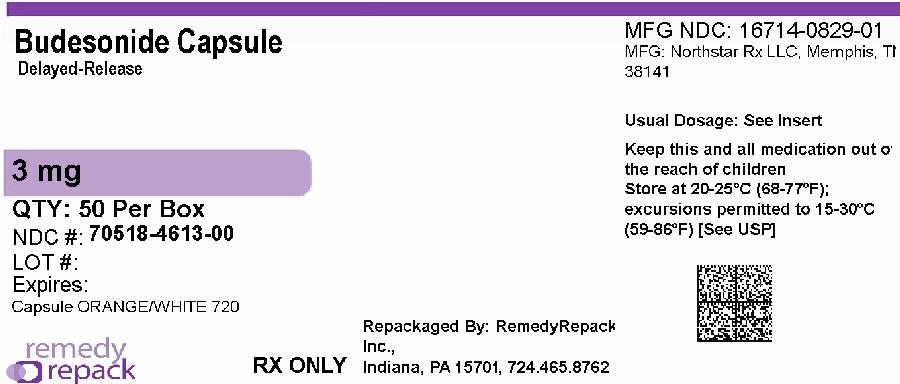
(budesonide · DailyMed)
BUDECORT RESPULES 0.5 MG
BUDESONIDE BP
What it does
Budesonide is a corticosteroid used to reduce inflammation in the body.
Commonly used for: asthma, chronic obstructive pulmonary disease (COPD), inflammatory bowel disease (IBD)
Read more in plain English ↓Plain-language summary for general understanding - not medical advice. Always follow your pharmacist/doctor.
Ask about this medicine
Answers come only from this medicine's registration record, BNF monograph and interaction data - not medical advice.
Hard to find? We help patients in Kenya source rare medicines. We don't sell or dispense medicines - licensed pharmacies do.
Source this medicineRegistration & product details
Source: Pharmacy and Poisons Board · fetched 2026-01-28 21:00:39 · updated 2026-07-26 13:42:49
Drug Interactions
43Pharmacodynamic Warnings
Budesonide appears in TABLE 17: Drugs that reduce serum potassium
Severe (2)
Budesonide - increases exposure
Grapefruit juice moderately increases the exposure to oral corticosteroids (budesonide). Avoid.
Mifamurtide - decreases efficacy
Corticosteroidsarepredictedtodecreasetheefficacyof mifamurtide.Avoid.rTheoretical
Moderate (21)
Budesonide - decreases exposure
Cenobamate is predicted to decrease the exposure to oral corticosteroids (budesonide). Adjust dose.
Budesonide - decreases exposure
Mitotane is predicted to decrease the exposure to corticosteroids (budesonide, deflazacort, dexamethasone, fludrocortisone, hydrocortisone, methylprednisolone, prednisolone, triamcinolone). Monitor an
Budesonide - decreases exposure
Rifampicin is predicted to decrease the exposure to corticosteroids (budesonide, deflazacort, dexamethasone, fludrocortisone, hydrocortisone, methylprednisolone, prednisolone, triamcinolone). Monitor
Corticosteroids - increases exposure
Dronedarone is predicted to increase the exposure to corticosteroids (methylprednisolone). Monitor and adjust dose.
Corticosteroids - increases concentration
Miconazole is predicted to increase the concentration of corticosteroids (methylprednisolone). Monitor and adjust dose.
Unknown (20)
Aspirin - decreases concentration
Corticosteroids are predicted to decrease the concentration of aspirin (high-dose) and aspirin (high-dose) increases the risk of gastrointestinal bleeding when given with corticosteroids.
Budesonide - increases exposure
Cobicistat is predicted to increase the exposure to corticosteroids (betamethasone, budesonide, ciclesonide, deflazacort, dexamethasone, fludrocortisone, fluticasone, hydrocortisone, methylprednisolon
Budesonide - increases exposure
Idelalisib is predicted to increase the exposure to corticosteroids (betamethasone, budesonide, ciclesonide, deflazacort, dexamethasone, fludrocortisone, fluticasone, hydrocortisone, methylprednisolon
Budesonide - increases exposure
Clarithromycin is predicted to increase the exposure to corticosteroids (betamethasone, budesonide, ciclesonide, deflazacort, dexamethasone, fludrocortisone, fluticasone, hydrocortisone, methylprednis
Choline Salicylate - decreases concentration
Corticosteroids are predicted to decrease the concentration of cholinesalicylate. Ciclesonide → see corticosteroids Ciclosporin → see TABLE 2 p. 1517 (nephrotoxicity), TABLE 16 p. 1521 (increased seru
Data from BNF 85 (British National Formulary). This is not a substitute for professional medical advice. Matched via: exact
About this medicine
Budesonide is a corticosteroid used to reduce inflammation in the body.
What it treats
- asthma
- chronic obstructive pulmonary disease (COPD)
- inflammatory bowel disease (IBD)
How it works
It works by calming down the immune response and reducing swelling and irritation in the airways or intestines.
Who it's for
It is for people with conditions like asthma, COPD, or certain bowel diseases.
Drug class
Corticosteroids
Cautions
- • Be careful if you are taking other medications that lower potassium levels.
AI-assisted summary grounded in BNF data - general information only, not medical advice. Always confirm with your pharmacist or doctor.
Clinical monograph: Budesonide
BNF-referencedBudesonide is a glucocorticoid corticosteroid used primarily for its anti-inflammatory effects in various chronic bowel disorders, such as Crohn's disease and ulcerative colitis. It is also utilized in asthma management and can be administered via oral, rectal, or inhalation routes.
Indications
- Chronic bowel disorders
- Crohn's disease affecting the ileum or ascending colon
- Ulcerative colitis
- Asthma management
Dosage
Children: For children 1-17 years: 3 mg three times a day for up to 8 weeks for Crohn's disease; 1 enema daily for 4 weeks for ulcerative colitis in children 12-17 years.
Adults: For Crohn's disease: 9 mg once daily for up to 8 weeks; for ulcerative colitis: 1 enema daily for 4 weeks. Dosage may vary, so refer to specific guidelines.
Mechanism of action
Budesonide exerts its effects by binding to corticosteroid receptors, modulating the expression of genes involved in inflammatory processes. This action leads to a significant reduction in inflammation and immune response.
Pharmacodynamics
As a potent anti-inflammatory agent, budesonide reduces the activity of inflammatory mediators and inhibits the recruitment of inflammatory cells to sites of inflammation, thus alleviating symptoms associated with conditions like asthma and inflammatory bowel disease.
Pharmacokinetics
Budesonide is rapidly absorbed after administration, with a significant first-pass metabolism resulting in a lower systemic exposure. It has a half-life of approximately 2-3 hours, and its effects can be prolonged due to its local action in the gut when used for bowel disorders.
Adverse effects
- Insomnia
- Stomatitis
- Taste disorders
- Diarrhoea
- Muscle twitching
- Oedema
- Anaemia
- Decreased appetite
- Ataxia
- Lymphadenopathy
- Macrocytosis
- Aseptic meningitis
- Severe cutaneous adverse reactions (SCARs)
- Parotitis
- Nephrotic syndrome
- Pseudomembranous enterocolitis
- Blood disorders
Interactions
- Grapefruit juice (severe - increases exposure)
- Cenobamate (moderate - decreases exposure)
- Mitotane (moderate - decreases exposure)
- Rifampicin (moderate - decreases exposure)
- Cobicistat (unknown - increases exposure)
- Idelalisib (unknown - increases exposure)
- Clarithromycin (unknown - increases exposure)
Precautions
- Caution in hepatic impairment
- Caution in renal impairment
- Monitor blood counts and liver function tests
Pregnancy
Theoretical risk of neonatal haemolysis; adequate folate supplements advised.
Breast-feeding
Small amounts may appear in milk; theoretical risk of neonatal haemolysis, especially in G6PD-deficient infants.
Storage
Store in a cool, dry place, protected from light.
Formulations
- Budenofalk® Capsules
- Entocort® Capsules
- Entocort® Enema
- Oral suspension
AI-synthesized from BNF references - general information only, not a substitute for professional medical advice or the current BNF. Verify doses with a pharmacist.
Molecular reference: Budesonide
PubChem CID 5281004Molecular formula: C25H34O6
Mechanism of action
The short term effects of corticosteroids are decreased vasodilation and permeability of capillaries, as well as decreased leukocyte migration to sites of inflammation. Corticosteroids binding to the glucocorticoid receptor mediates changes in gene expression that lead to multiple downstream effects over hours to days. Glucocorticoids inhibit neutrophil apoptosis and demargination; they inhibit phospholipase A2, which decreases the formation of arachidonic acid derivatives; they inhibit NF-Kappa B and other inflammatory transcription factors; they promote anti-inflammatory genes like interleukin-10. Lower doses of corticosteroids provide an anti-inflammatory effect, while higher doses are immunosuppressive. High doses of glucocorticoids for an extended period bind to the mineralocorticoid receptor, raising sodium levels and decreasing potassium levels. To investigate the roles of signal transduction and activator of transcription 6 (STAT6) and orosomucoid 1-like 3 (ORMDL3) in airway remodeling among asthmatic mice and to observe the effects of budesonide (BUD) on their expression, thirty mice were randomly divided into control, asthma, and BUD intervention group. The mice were sensitized and challenged with ovalbumin (OVA) to establish a mouse model of asthma. The BUD intervention group received aerosol inhalation of BUD dissolved in normal saline 30 minutes before each OVA challenge, while normal saline was used instead of OVA solution in the control group. The pathological changes in the airway were observed by hematoxylin-eosin staining and Masson staining. The interleukin-13 (IL-13) level in lung homogenate was measured by enzyme-linked immunosorbent assay. The mRNA expression of STAT6 and ORMDL3 was measured by RT-PCR. The asthma group showed more pathological changes in the airway than the control and BUD intervention groups, and the BUD intervention group had reduced pathological changes in the airway compared with the asthma group. The asthma and BUD intervention groups had significantly higher IL-13 levels and mRNA expression of STAT6 and ORMDL3 than the control group (P<0.05), and these indices were significantly higher in the asthma group than in the BUD intervention group (P<0.05). The Pearson correlation analysis showed that STAT6 mRNA expression was positively correlated with ORMDL3 mRNA expression (r=0.676, P=0.032). STAT6 and ORMDL3 may be involved in the airway remodeling of mice, and BUD can reduce airway remodeling in asthmatic mice, possibly by down-regulating mRNA expression of STAT6 and ORMDL3. Mucus hypersecretion from airway epithelium is a characteristic feature of severe asthma. Glucocorticoids (GCs) may suppress mucus production and diminish the harmful airway obstruction. We investigated the ability of GCs to suppress mRNA expression and protein synthesis of a gene encoding mucin, MUC5AC, induced by transforming growth factor (TGF)-alpha in human mucoepidermoid carcinoma (NCI-H292) cells and the molecular mechanisms underlying the suppression. We determined if GCs such as dexamethasone (DEX), budesonide (BUD), and fluticasone (FP) could suppress MUC5AC production induced by a combination of TGF-alpha and double-strand RNA, polyinosinic-polycytidylic acid (polyI:C). MUC5AC mRNA expression and MUC5AC protein production were evaluated. The signaling pathways activated by TGF-alpha and their inhibition by GCs were tested using a phosphoprotein assay and MUC5AC promoter assay. DEX significantly suppressed the expression of MUC5AC mRNA and MUC5AC protein induced by TGF-alpha. The activation of the MUC5AC promoter by TGF-alpha was significantly inhibited by DEX. DEX did not affect activation of downstream pathways of the EGF receptor or mRNA stability of MUC5AC transcripts. DEX, BUD, and FP suppressed MUC5AC protein expression induced by a combination of TGF-alpha and polyI:C in a dose-dependent manner. GCs inhibited MUC5AC production induced by TGF-alpha alone or a combination of TGF-alpha and polyI
Pharmacodynamics
Budesonide is a glucocorticoid used to treat respiratory and digestive conditions by reducing inflammation. It has a wide therapeutic index, as dosing varies highly from patient to patient. Patients should be counselled regarding the risk of hypercorticism and adrenal axis suppression.
Biological pathways
Source: PubChem (NCBI) · pathways from PathBank, Reactome, WikiPathways & PharmGKB.
This drug in other countries
The same active ingredient registered across other registries we cover - including different brands.
- BUDANASE-200 · Biodeal Pharmaceuticals
- Budecort 100 CFC Free · Cipla
- Budecort 200 CFC Free · Cipla
- Budecort Respules 0.5 mg · Cipla Ltd
- Bunase 200 · Macleods Pharmaceuticals
- Foracort · Cipla
- BUDESONE 2OO INHALATION · Midos Care Pharmaceuticals
- FORACORT 100 INHALER (Each actuation contains Formoterol Fumarate Dihydrate/Budesonide 6mcg/100mcg) · Cipla Ltd
- FORACORT 200 INHALER (Each actuation contains Formoterol Fumarate Dihydrate/Budesonide 6mcg/200mcg) · India
- FORACORT 400 INHALER (Each actuation contains Formoterol Fumarate Dihydrate/Budesonide 6mcg/400mcg) · Cipla Ltd
- FORB INHALER ( Budesonide/Formoterol Fumarate 100mcg /6mcg) · Midas-Care Pharmaceuticals
- FORB INHALER ( Budesonide/Formoterol Fumarate 400mcg / 6mcg) · Midas-Care Pharmaceuticals
- AEROMIDE
- BREZTRI AEROSPHERE
- BUDETRAM 160:4,5 INHALER
- BUDETRAM 80:4,5 INHALER
- BUDICO 0,25 mg/ml
- BUDICO 0,5 mg/ml
- Avacort - BF100/6 Inhalation powder pre-dispensed · Elpen Pharmaceutical Co.
- Avacort - BF200/6 Inhalation powder pre-dispensed · Elpen Pharmaceutical Co.
- Avacort - BF400/12 Inhalation powder pre-dispensed · Elpen Pharmaceutical Co.
- Budecort 0.5mg Respules · Cipla Ltd
- Bunase 200 · Macleods
- Foracort 100 inhaler · Cipla
- AVACORT-BF 100/6 · Elpen Pharmaceuticals
- AVACORT-BF 200/6 · Elpen Pharmaceuticals
- AVACORT-BF 400/12 · Elpen Pharmaceuticals
- BUNASE 200 · Macleods Pharmaceuticals
- MDICORVAL 200/6 · Mdi Pharma
- MDIOCORVAL 100/6 · Mdi Pharma