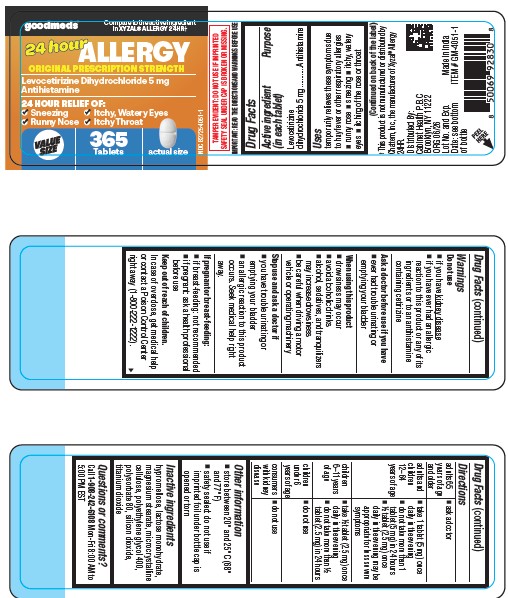
(levocetirizine · DailyMed)
CACHMONT LC 2.5/4MG/5ML SYRUP
LEVOCETIRIZINE DIHYDROCHLORIDE & MONTELEKAST
What it does
Levocetirizine is an antihistamine that helps relieve allergy symptoms.
Commonly used for: allergic rhinitis (hay fever), chronic urticaria (hives)
Read more in plain English ↓Plain-language summary for general understanding - not medical advice. Always follow your pharmacist/doctor.
Ask about this medicine
Answers come only from this medicine's registration record, BNF monograph and interaction data - not medical advice.
Medicine sourcing is available in Kenya only. We don't sell or dispense medicines - licensed pharmacies do.
Sourcing - Kenya onlyRegistration & product details
Source: Pharmacy and Medicines Regulatory Authority · fetched 2026-04-21 17:37:44 · updated 2026-09-22 04:33:04
About levocetirizine
Levocetirizine is an antihistamine that helps relieve allergy symptoms.
What it treats
- allergic rhinitis (hay fever)
- chronic urticaria (hives)
How it works
It works by blocking the effects of histamine, a substance in the body that causes allergic symptoms.
Who it's for
It is for adults and children who suffer from allergies.
AI-assisted summary grounded in BNF data - general information only, not medical advice. Always confirm with your pharmacist or doctor.
About montelekast
Montelukast is a medication used to help manage and prevent asthma and relieve symptoms of seasonal allergies.
What it treats
- asthma
- seasonal allergies (hay fever)
- exercise-induced asthma
How it works
Montelukast works by blocking substances in the body that cause inflammation and tightening of the airways, helping to improve breathing.
Who it's for
Montelukast is suitable for adults and children who need help controlling their asthma or allergy symptoms.
AI-assisted summary grounded in BNF data - general information only, not medical advice. Always confirm with your pharmacist or doctor.
Clinical monograph: Levocetirizinehydrochloride
BNF-referencedLevocetirizine hydrochloride is a third-generation antihistamine primarily used for the symptomatic relief of allergic conditions such as seasonal allergic rhinitis and chronic idiopathic urticaria. It is known for its non-sedating properties, making it preferable for patients who require management of allergy symptoms without significant sedation or psychomotor impairment.
Indications
- Seasonal allergic rhinitis
- Chronic idiopathic urticaria
Dosage
Children: For children aged 6 to 11 years, the dose is 30 mg twice daily. For children aged 12 to 17 years, the dose is 120 mg once daily.
Adults: For adults, the recommended dose is 180 mg once daily.
Mechanism of action
Levocetirizine is an active enantiomer of cetirizine and functions as a selective antagonist of the peripheral H1 receptor. By blocking the action of histamine, a key mediator in allergic responses, it reduces symptoms such as sneezing, itching, and runny nose. It also prevents the activation of sensory neurons, thereby mitigating pruritus and swelling associated with allergic reactions.
Pharmacodynamics
Levocetirizine exhibits antihistaminic effects with a rapid onset of action. Its affinity for peripheral H1 receptors allows it to effectively reduce the symptoms of allergic rhinitis and urticaria. While it is termed 'non-sedating', some degree of sedation may still occur in sensitive individuals, although this is generally minimal compared to first-generation antihistamines.
Pharmacokinetics
Levocetirizine is well absorbed after oral administration, with peak plasma concentrations typically reached within 0.9 hours. The drug has a volume of distribution of approximately 0.4 L/kg and is primarily excreted unchanged in urine. It has a half-life of about 8 hours, allowing for once-daily dosing. In patients with renal impairment, dose adjustments may be necessary due to altered drug clearance.
Contra-indications
- Acute porphyrias
Adverse effects
- Asthenia
- Constipation
- Drowsiness
- Dry mouth
- Abdominal pain
- Aggression
- Agitation
- Angioedema
- Appetite increased
- Arthralgia
- Depression
- Diarrhoea
- Dizziness
- Fatigue
- Hallucination
- Hepatitis
- Myalgia
- Nausea
- Oedema
- Palpitations
- Paraesthesia
- Seizure
- Skin reactions
- Sleep disorders
- Suicidal ideation
- Syncope
- Tachycardia
- Taste altered
- Tremor
- Urinary disorders
- Vertigo
- Vision disorders
- Vomiting
- Weight increased
Interactions
- Other antihistamines
- Alcohol (may increase sedation)
- CNS depressants
Precautions
- Caution in renal impairment
- Patients should be advised about potential drowsiness affecting driving and skilled tasks
Pregnancy
Most manufacturers of antihistamines advise avoiding their use during pregnancy; however, there is no evidence of teratogenicity.
Breast-feeding
Most antihistamines are present in breast milk in varying amounts; although not known to be harmful, most manufacturers advise avoiding their use in mothers who are breastfeeding.
Storage
Store in a cool, dry place away from light. Keep out of reach of children.
Formulations
- Oral suspension
- Oral solution
- Tablets
AI-synthesized from BNF references - general information only, not a substitute for professional medical advice or the current BNF. Verify doses with a pharmacist.
Clinical monograph: levocetirizine
BNF-referencedLevocetirizine is a second-generation antihistamine primarily used to alleviate symptoms associated with allergic reactions, such as allergic rhinitis and chronic urticaria. It is known for its selectivity for the H1 histamine receptor, resulting in fewer sedative effects compared to first-generation antihistamines. Levocetirizine is typically administered once daily due to its long duration of action.
Indications
- Allergic rhinitis
- Chronic urticaria
Dosage
Children: For children aged 6 to 11 years, the recommended dose is 5 mg once daily. For children aged 2 to 5 years, the dose is 1.25 mg once daily.
Adults: The usual dose for adults is 5 mg once daily.
Mechanism of action
Levocetirizine selectively inhibits histamine H1 receptors. This action prevents histamine from activating the receptor and causing effects such as smooth muscle contraction, increased permeability of vascular endothelium, histidine uptake in basophils, stimulation of cough receptors, and stimulation of flare responses in the nervous system.
Pharmacodynamics
As a second-generation histamine H1 antagonist, levocetirizine effectively reduces various allergic symptoms. It possesses a long duration of action, allowing for once-daily dosing. The therapeutic index is favorable, with studies showing that the maximal nonlethal dose is significantly higher than the therapeutic dose. Caution is advised for activities requiring full alertness and in patients predisposed to urinary retention.
Pharmacokinetics
Levocetirizine is well absorbed after oral administration, with peak plasma concentrations typically reached within approximately 1 hour. It has a volume of distribution of about 0.4 L/kg and is primarily excreted unchanged in the urine. The elimination half-life is approximately 8 to 9 hours, allowing for once-daily dosing.
Contra-indications
- Hypersensitivity to levocetirizine or any of its components
- Severe renal impairment
Adverse effects
- Drowsiness
- Fatigue
- Dry mouth
- Headache
- Gastrointestinal disturbances
Interactions
- CNS depressants may enhance sedative effects
- Alcohol may increase sedation
Precautions
- Caution in patients with a history of urinary retention
- Caution in patients with severe renal impairment
- Avoid operating machinery or driving until you know how levocetirizine affects you
Pregnancy
Levocetirizine should be used in pregnancy only if the potential benefit justifies the potential risk to the fetus.
Breast-feeding
Levocetirizine is excreted in breast milk; caution should be exercised when administering to nursing mothers.
Storage
Store at room temperature, away from moisture and heat.
Formulations
- Tablets
- Oral solution
AI-synthesized from BNF references - general information only, not a substitute for professional medical advice or the current BNF. Verify doses with a pharmacist.
Clinical monograph: montelekast
Montelukast is a selective leukotriene receptor antagonist used primarily in the management of asthma and allergic rhinitis. It works by inhibiting the action of leukotrienes, which are inflammatory mediators that contribute to bronchoconstriction, airway edema, and mucus production. Montelukast is administered orally and is often used as a preventive treatment in patients with chronic asthma, as well as for the relief of symptoms associated with seasonal allergies.
Indications
- Asthma
- Exercise-induced bronchoconstriction
- Allergic rhinitis
- Seasonal allergic rhinitis
Dosage
Children: Refer to the BNF for Children for specific dosing information.
Adults: Refer to the BNF for specific dosing information.
Mechanism of action
Montelukast selectively binds to the cysteinyl leukotriene receptor 1 (CysLT1), inhibiting the action of leukotrienes such as LTC4, LTD4, and LTE4. This blockade prevents the bronchoconstrictive, pro-inflammatory, and mucus-secreting effects of these leukotrienes, leading to reduced airway inflammation and improved breathing in asthmatic patients.
Pharmacodynamics
The pharmacodynamic effects of montelukast include a decrease in bronchoconstriction, reduction in airway edema, and decreased mucus secretion. These effects contribute to improved pulmonary function and a reduction in asthma symptoms, such as wheezing, cough, and shortness of breath. Montelukast has been shown to improve exercise-induced bronchoconstriction and can be used as an adjunct to inhaled corticosteroids in asthma management.
Pharmacokinetics
Montelukast is rapidly absorbed following oral administration, with peak plasma concentrations occurring within 2 to 4 hours. It has a bioavailability of approximately 64%, and its absorption is not significantly affected by food. Montelukast is highly protein-bound (approximately 99%) and is primarily metabolized by the cytochrome P450 system, particularly CYP2C8 and CYP3A4. The elimination half-life is approximately 2.7 to 5.5 hours, and the drug is excreted mainly in the feces, with a small percentage eliminated in urine.
Contra-indications
- Hypersensitivity to montelukast or any of its excipients
- Severe asthma attacks
Adverse effects
- Headache
- Dizziness
- Fatigue
- Gastrointestinal disturbances (nausea, vomiting, diarrhea)
- Mood changes (including agitation, anxiety, depression)
- Skin reactions (rash, pruritus)
- Elevated liver enzymes
Interactions
- Warfarin, which may increase the risk of bleeding
- Phenobarbital, which may decrease the effectiveness of montelukast
- Rifampicin, which can reduce montelukast levels
- Other medications metabolized by CYP450 enzymes
Precautions
- Use with caution in patients with hepatic impairment
- Monitor for changes in behavior or mood
- Not indicated for the treatment of acute asthma attacks
- Patients should be advised to continue their asthma therapy as prescribed
Pregnancy
Montelukast should be used during pregnancy only if the potential benefit justifies the potential risk to the fetus. Limited data available.
Breast-feeding
Montelukast is excreted in human milk. Caution should be exercised when administering to nursing mothers.
Storage
Store at room temperature, away from moisture and heat. Keep out of reach of children.
Formulations
- Tablets (10 mg)
- Chewable tablets (4 mg, 5 mg)
- Granules (4 mg)
AI-synthesized from BNF references - general information only, not a substitute for professional medical advice or the current BNF. Verify doses with a pharmacist.
Molecular reference: levocetirizine
PubChem CID 1549000Molecular formula: C21H25ClN2O3
Mechanism of action
Levocetirizine selectively inhibits histamine H<sub>1</sub> receptors. This action prevents histamine from activating this receptor and causing effects like smooth muscle contraction, increased permeability of vascular endothelium, histidine uptake in basophils, stimulation of cough receptors, and stimulation of flare responses in the nervous system.
Pharmacodynamics
Levocetirizine is a second generation histamine H<sub>1</sub> antagonist used to treat various allergic symptoms. It has a long duration of action as it is generally taken once daily, and a wide therapeutic window as animal studies show the maximal nonlethal dose is over 100x a normal dose. Patients are cautioned to avoid tasks that require complete alertness, avoid alertness, and use caution in patients with factors predisposing urinary retention.
Biological pathways
Source: PubChem (NCBI) · pathways from PathBank, Reactome, WikiPathways & PharmGKB.
Molecular reference: Levocetirizinehydrochloride
PubChem CID 67336450Molecular formula: C21H26Cl2N2O3
Source: PubChem (NCBI) · pathways from PathBank, Reactome, WikiPathways & PharmGKB.
This drug in other countries
The same active ingredient registered across other registries we cover - including different brands.
- ALCET SYRUP · Nextgen Pharmaceuticals
- ALERFREE SYRUP · National Pharmacy
- ALERFREE TABLET · National Pharmacy
- ALERFREE TABLET · National Pharmacy Limited
- ALERINIT · Pharmaco Healthcare
- ALLERLIN 5MG TABLET · Medox Pharmaceuticals
- BREATHEZY-L 10mg/5 mg TABLETS · Msn Lab
- LEVOCET-M TABLETS (Each tablet contains Levocetirizine/Montelukast -5mg/10mg) · Dm Pharma
- MONTE-GLOB TABLETS (Each film-coated tablet contains Montelukast Sodium BP 10mg/ Levocetirizine Hydrochloride 5mg) · Smayan Healthcare
- TELOVA SYRUP · Fredun Pharmaceuticals
- TELOVA TABLETS · Fredun Pharmaceutical