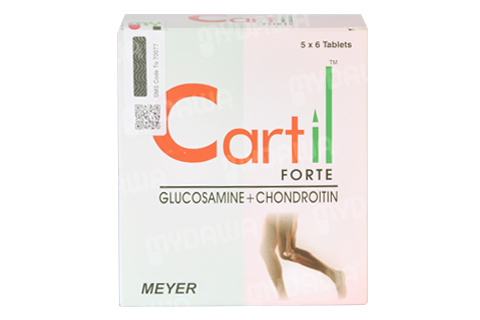
CARTIL FORTE TABLETS
GLUCOSAMINE SULPHATE POTASSIUM CHLORIDE U.S.P CHONDROITIN SULPHATE SODIUM U.S.P. VITAMIN D3 (AS STABILIZED) B.P VITAMIN B12 (AS STABILIZED) B.P. VITAMIN C (AS COATED) B.P. VITAMIN E ACETATE B.P. FOLIC ACID B.P. ZINC SULPHATE MONOHYDRATE U.S.P MANGANESE
What it does
Chondroitin is a natural substance found in cartilage, commonly used as a supplement to support joint health.
Commonly used for: joint pain, osteoarthritis
Read more in plain English ↓Plain-language summary for general understanding - not medical advice. Always follow your pharmacist/doctor.
Ask about this medicine
Answers come only from this medicine's registration record, BNF monograph and interaction data - not medical advice.
Hard to find? We help patients in Kenya source rare medicines. We don't sell or dispense medicines - licensed pharmacies do.
Source this medicineRegistration & product details
Source: Pharmacy and Poisons Board · fetched 2026-01-28 21:46:00 · updated 2026-03-23 04:31:05
Drug Interactions
11Severe (4)
Coumarins - increases anticoagulant effect
Glucosamine potentially increases the anticoagulant effect of coumarins (warfarin). Avoid. Anecdotal Glycerol phenylbutyrate
Vitamin - increases risk of vitamin a toxicity
TretinoinispredictedtoincreasetheriskofvitaminAtoxicity whengivenwithvitaminA.Avoid.rStudy Ribavirin e
Vitamin - increases risk of vitamin a toxicity
Retinoids(tretinoin)arepredictedtoincreasetheriskof vitaminAtoxicitywhengivenwithvitaminA.Avoid.r Study VitaminDsubstances . . . . . alfacalcidol.calcipotri..ol calcitriol colecalciferol ergocalcifero
Warfarin - increases anticoagulant effect
Glucosamine potentially increases the anticoagulant effect of warfarin. Avoid.
Moderate (1)
Vitamin - increases risk of toxicity
Retinoids (bexarotene) are predicted to increase the risk of toxicity when given with vitamin A. Adjust dose.
Unknown (6)
Acenocoumarol - decreases anticoagulant effect
Glucosamine potentially decreases the anticoagulant effect of acenocoumarol.
Coumarins - decreases anticoagulant effect
Glucosamine potentially decreases the anticoagulant effect of coumarins (acenocoumarol).
Vitamin - decreases effects
Carbamazepine is predicted to decrease the effects of vitamin D substances.
Vitamin - increases exposure
Cobicistat is predicted to increase the exposure to vitamin D substances (paricalcitol).
Vitamin - increases exposure
Idelalisib is predicted to increase the exposure to vitamin D substances (paricalcitol).
Vitamin - increases exposure
Clarithromycin is predicted to increase the exposure to vitamin D substances (paricalcitol).
Data from BNF 85 (British National Formulary). This is not a substitute for professional medical advice. Matched via: exact
About chondroitin
Chondroitin is a natural substance found in cartilage, commonly used as a supplement to support joint health.
What it treats
- joint pain
- osteoarthritis
How it works
Chondroitin helps maintain cartilage structure and may reduce pain and inflammation in the joints.
Who it's for
It is often used by individuals with joint issues, especially older adults or those with osteoarthritis.
AI-assisted summary grounded in BNF data - general information only, not medical advice. Always confirm with your pharmacist or doctor.
About folic
Folic acid is a type of B vitamin that helps your body produce and maintain new cells. It is essential for making DNA and other genetic material.
What it treats
- preventing folic acid deficiency
- helping in the development of the baby during pregnancy (especially in the early stages)
- treating certain types of anemia (low red blood cell count)
How it works
Folic acid works by helping the body create new cells and produce DNA, which is vital for growth and development.
Who it's for
Folic acid is for people who need extra folate, such as pregnant women or those with certain medical conditions.
AI-assisted summary grounded in BNF data - general information only, not medical advice. Always confirm with your pharmacist or doctor.
About glucosamine
Glucosamine is a supplement often used to support joint health and relieve discomfort.
What it treats
- osteoarthritis
- joint pain
How it works
Glucosamine is thought to help maintain cartilage and support joint function.
Who it's for
It is typically used by people suffering from joint issues, especially older adults or those with osteoarthritis.
AI-assisted summary grounded in BNF data - general information only, not medical advice. Always confirm with your pharmacist or doctor.
About manganese
Manganese is a trace mineral important for many bodily functions, including bone formation and metabolism.
What it treats
- nutritional support
- bone health
How it works
Manganese helps the body use certain nutrients and is involved in the formation of connective tissue, bones, and blood-clotting factors.
Who it's for
Adults and children who may have low manganese levels due to dietary deficiencies.
Cautions
- • Excessive intake can lead to toxicity.
- • Consult a healthcare provider if you have liver problems.
AI-assisted summary grounded in BNF data - general information only, not medical advice. Always confirm with your pharmacist or doctor.
About vitamin
Vitamins are essential nutrients that support various bodily functions and overall health.
What it treats
- nutritional deficiency
- general health maintenance
How it works
Vitamins support normal bodily functions, including metabolism, immune function, and cell repair.
Who it's for
Anyone needing to improve their nutrient intake or maintain good health.
AI-assisted summary grounded in BNF data - general information only, not medical advice. Always confirm with your pharmacist or doctor.
Clinical monograph: Glucosamine
BNF-referencedGlucosamine is a naturally occurring substance found in mucopolysaccharides, mucoproteins, and chitin. It serves as a precursor for glycosaminoglycans, which are crucial components of joint cartilage. Glucosamine is primarily used for the symptomatic relief of mild to moderate osteoarthritis of the knee. While it is thought to aid in rebuilding cartilage and reducing joint pain, the clinical evidence supporting its efficacy remains inconclusive.
Indications
- Symptomatic relief of mild to moderate osteoarthritis of the knee
Dosage
Children: Refer to the BNF for Children for
Adults: 200–400 mg daily, maximum 6.5 mg/kg per day, or 1250 mg once daily, or 1500 mg once daily dissolved in at least 250 mL of water; review treatment if no benefit after 2–3 months.
Mechanism of action
The mechanism of action of glucosamine in joint health is not entirely clear, but it is believed to involve several pathways. Glucosamine is a precursor for glycosaminoglycans, which are essential for cartilage integrity. It may also reduce inflammation by inhibiting interferon gamma and Nuclear factor kappa B subunit 65 (NF-κB p65), which could improve symptoms of arthritis and joint pain. Upon uptake by living cells, glucosamine reacts with ATP to form glucosamine-6-phosphate, further contributing to glycosaminoglycan synthesis.
Pharmacodynamics
Glucosamine is theorized to provide essential building blocks for the synthesis of glycosaminoglycans, potentially slowing the progression of osteoarthritis and alleviating joint pain. Although some studies have indicated modest improvements in joint pain and function among users, the overall evidence remains inconclusive. Glycosaminoglycans are critical for maintaining cartilage elasticity, strength, and flexibility, which are vital for joint health.
Pharmacokinetics
After oral administration, glucosamine is absorbed in the gastrointestinal tract and transported into the bloodstream, where it is metabolized into various forms, including glucosamine-6-phosphate. The exact pharmacokinetics, such as absorption rate and half-life, remain largely undefined, and much of the data is derived from animal studies. Further research is required to clarify its pharmacokinetic profiles in humans.
Adverse effects
- Constipation
- Diarrhoea
- Fatigue
- Gastrointestinal discomfort
- Headache
- Nausea
- Flushing
- Skin reactions
Interactions
- Glucosamine + warfarin: Severe (increases anticoagulant effect)
- Glucosamine + coumarins: Severe (increases anticoagulant effect)
- Glucosamine + acenocoumarol: Unknown (decreases anticoagulant effect)
- Glucosamine + coumarins: Unknown (decreases anticoagulant effect)
Precautions
- Asthma
- Impaired glucose tolerance
- Predisposition to cardiovascular disease
Pregnancy
Safety during pregnancy has not been established; consult with a healthcare provider.
Breast-feeding
Safety during breastfeeding has not been established; consult with a healthcare provider.
Storage
Store in a cool, dry place away from direct sunlight.
Formulations
- Alateris®
- Dolenio®
- Glusartel®
AI-synthesized from BNF references - general information only, not a substitute for professional medical advice or the current BNF. Verify doses with a pharmacist.
Clinical monograph: chondroitin
Chondroitin is a naturally occurring substance found in the connective tissues of animals, commonly used as a dietary supplement for joint health. It is often taken in combination with glucosamine for the management of osteoarthritis symptoms. Chondroitin is purported to help maintain cartilage structure, reduce pain, and improve joint function.
Indications
- Osteoarthritis
- Joint pain
- Cartilage repair
- Joint health maintenance
Dosage
Children: Refer to healthcare professionals for guidance on dosing in children, as specific pediatric dosing information is not well established.
Adults: Refer to specific product labeling and consult healthcare professionals for guidance on dosing, as dosages can vary based on formulations and clinical guidelines.
Mechanism of action
Chondroitin works primarily by providing the building blocks necessary for the synthesis of glycosaminoglycans, which are critical components of cartilage. It is thought to inhibit the enzymes that break down cartilage, thereby promoting cartilage repair while also exhibiting anti-inflammatory properties. Additionally, chondroitin may enhance the retention of water in the cartilage, improving its elasticity and resilience.
Pharmacodynamics
Chondroitin has been shown to modulate inflammatory responses within the joints and may help to improve joint mobility and reduce pain associated with osteoarthritis. Its effects on cartilage metabolism are believed to contribute to its therapeutic benefits, although the clinical efficacy may vary among individuals. The anti-inflammatory properties may also contribute to a reduction in joint swelling and discomfort.
Pharmacokinetics
Chondroitin is poorly absorbed from the gastrointestinal tract, with bioavailability ranging from 12% to 36%. It is distributed in the extracellular matrix of cartilage and other connective tissues. Metabolism of chondroitin is not well understood, but it is believed to be metabolized in the liver. The elimination half-life in humans is not well defined, and it is primarily excreted via urine as metabolites. The effects of food on its absorption are still under investigation.
Adverse effects
- Nausea
- Diarrhea
- Constipation
- Abdominal pain
- Headache
- Skin reactions
Interactions
- Anticoagulants (e.g., warfarin) - may increase the risk of bleeding
- NSAIDs - may affect the efficacy of these medications
Precautions
- Use with caution in patients with a history of bleeding disorders
- Caution is advised in patients undergoing surgery due to potential bleeding risk
- Patients with shellfish allergies should consult a physician as some chondroitin supplements are derived from marine sources
Pregnancy
There is insufficient reliable information regarding the safety of chondroitin during pregnancy. It is advisable to avoid use unless prescribed by a healthcare professional.
Breast-feeding
It is not known if chondroitin is excreted in human milk. Caution is advised for nursing mothers considering its use.
Storage
Store in a cool, dry place away from direct sunlight. Keep out of reach of children.
Formulations
- Capsule
- Tablet
- Powder
- Liquid
AI-synthesized from BNF references - general information only, not a substitute for professional medical advice or the current BNF. Verify doses with a pharmacist.
Clinical monograph: folic
BNF-referencedFolic acid, also known as Vitamin B9 or folate, is a water-soluble B-complex vitamin essential for numerous biochemical processes, including DNA and RNA synthesis. It plays a critical role in the synthesis of purines, pyrimidines, and the amino acid methionine, making it vital for normal cell division and growth. Folic acid is predominantly found in foods such as liver, kidney, yeast, and leafy green vegetables, and due to the body's inability to synthesize it, dietary intake or supplementation is necessary to prevent deficiencies. Folic acid is particularly important during periods of rapid cell proliferation, such as infancy and pregnancy, and has been associated with reduced risks of certain cancers.
Mechanism of action
Folic acid is biochemically inactive until it is converted into active forms, primarily tetrahydrofolic acid and methyltetrahydrofolate, by the enzyme dihydrofolate reductase (DHFR). These active forms are essential for maintaining normal erythropoiesis, synthesizing nucleic acids, interconverting amino acids, and generating formate. They participate in critical one-carbon transfer reactions necessary for DNA synthesis and methylation processes. Folic acid, in conjunction with vitamin B12, helps normalize elevated homocysteine levels by facilitating its remethylation to methionine, a process that is crucial for various metabolic pathways.
Pharmacodynamics
Folic acid is an essential cofactor for enzymes involved in nucleic acid synthesis and amino acid metabolism. It is particularly significant in preventing megaloblastic anemia, which arises from impaired DNA synthesis due to folate deficiency. The synthesis of thymidylate, necessary for DNA formation, is directly influenced by folate availability. Folic acid's role is especially crucial during periods of rapid cellular division, and it has protective effects against certain cancer developments. As humans cannot synthesize folic acid endogenously, adequate dietary intake is essential for maintaining normal physiological functions.
Pharmacokinetics
Folic acid is absorbed in the small intestine and is then converted into its active forms within the body. The bioavailability of folic acid is influenced by factors such as food composition and the presence of certain gastrointestinal conditions. Once absorbed, it is transported in the bloodstream, mainly as 5-methyltetrahydrofolate. The distribution of folate occurs within various tissues, with significant
Adverse effects
- Allergic reactions
- Gastrointestinal disturbances
- Skin rash
- Altered sleep patterns
Interactions
- Anticonvulsants may reduce the effectiveness of folic acid
- Methotrexate may interfere with folic acid metabolism
- Trimethoprim-sulfamethoxazole can enhance the effects of folic acid deficiency
Precautions
- Monitor for signs of anemia in patients with malabsorption syndromes
- Use cautiously in patients with a history of hypersensitivity to folic acid
- Assess for vitamin B12 deficiency before initiating treatment, as folic acid can mask symptoms
Pregnancy
Folic acid is essential during pregnancy to prevent neural tube defects and support fetal development. Supplementation is recommended before conception and during the first trimester.
Breast-feeding
Folic acid passes into breast milk, and adequate maternal intake is important to ensure sufficient levels for the nursing infant.
Storage
Store in a cool, dry place away from light. Keep out of reach of children.
Formulations
- Tablets
- Oral solutions
- Injectable forms
AI-synthesized from BNF references - general information only, not a substitute for professional medical advice or the current BNF. Verify doses with a pharmacist.
Clinical monograph: manganese
BNF-referencedManganese is a trace mineral that is essential for human health, playing a critical role in various physiological processes. It is involved in the formation of connective tissue, bones, blood clotting factors, and sex hormones. Additionally, manganese is a cofactor for several important enzymes, including those involved in metabolism and antioxidant defense. It is found in foods such as nuts, seeds, whole grains, and leafy vegetables.
Indications
- Manganese deficiency
- Bone health and development
- Antioxidant support
- Enzyme cofactor in metabolic processes
Dosage
Children: Refer to the BNF for Children for appropriate dosing recommendations.
Adults: Refer to specific clinical guidelines or the BNF for appropriate dosing recommendations.
Mechanism of action
Manganese serves as a cofactor for several enzymes, including manganese superoxide dismutase (MnSOD), which protects cells from oxidative stress by catalyzing the dismutation of superoxide radicals into oxygen and hydrogen peroxide. It also participates in the activation of enzymes involved in carbohydrate, fat, and protein metabolism.
Pharmacodynamics
Manganese plays a role in various biochemical pathways, particularly in the metabolism of amino acids, cholesterol, glucose, and carbohydrates. It is crucial for bone formation and the maintenance of cartilage. Manganese also aids in the synthesis of glycosyltransferases, which are important for the formation of glycoproteins and proteoglycans.
Pharmacokinetics
Manganese is absorbed primarily in the small intestine, with absorption efficiency influenced by dietary factors and the presence of competing minerals. It is transported in the bloodstream bound to proteins such as alpha-2-macroglobulin and transferrin. Manganese is stored in the liver, pancreas, and bones, and is excreted primarily through bile and to a lesser extent in urine. Its half-life in the human body is not well defined due to its trace nature and variable absorption.
Pregnancy
Manganese is classified as a dietary mineral that is essential for human health, but excessive intake should be avoided during pregnancy as it may affect fetal development.
Breast-feeding
Manganese is present in breast milk, and normal dietary intake is considered safe during breastfeeding. However, excessive supplementation should be avoided.
Storage
Store in a cool, dry place, away from direct light and moisture.
AI-synthesized from BNF references - general information only, not a substitute for professional medical advice or the current BNF. Verify doses with a pharmacist.
Clinical monograph: vitamin
BNF-referencedVitamins are organic compounds that are essential for various metabolic processes in the body. They play crucial roles in maintaining health, supporting the immune system, and promoting growth and development. Different vitamins have specific functions, and they are required in varying amounts depending on age, sex, and physiological conditions.
Indications
- Vitamin deficiency syndromes (e.g., scurvy for vitamin C deficiency, rickets for vitamin D deficiency)
- Support for immune function
- Antioxidant support
- Bone health maintenance
- Vision health
- Energy metabolism support
Dosage
Children: Refer to the BNF for Children for specific vitamin dosing guidelines, which depend on age and nutritional requirements.
Adults: Refer to specific vitamin guidelines as dosage varies significantly depending on the type of vitamin and individual needs.
Mechanism of action
Vitamins function primarily as coenzymes or precursors for coenzymes in enzymatic reactions. For instance, B vitamins are involved in energy metabolism, while vitamins A, C, D, E, and K support various physiological functions including vision, antioxidant activity, calcium regulation, and blood clotting. Each vitamin has a unique mechanism of action based on its structure and role in the body.
Pharmacodynamics
Vitamins exert their effects at the cellular level, influencing metabolic pathways, gene expression, and immune responses. For example, vitamin D regulates calcium and phosphate homeostasis, while vitamin A is crucial for vision and immune function. Deficiencies in vitamins can lead to a range of disorders, highlighting their importance in maintaining health.
Pharmacokinetics
The pharmacokinetics of vitamins vary widely. Fat-soluble vitamins (A, D, E, and K) are stored in liver and adipose tissues and can be released into circulation as needed. Water-soluble vitamins (B-complex and C) are not stored and must be consumed regularly, with excess amounts excreted in urine. Absorption rates, half-lives, and distribution can also differ based on the specific vitamin and individual metabolic factors.
Interactions
- tretinoin+vitamin: Severe (increases risk of vitamin toxicity)
- retinoids+vitamin: Severe (increases risk of vitamin toxicity)
- retinoids+vitamin: Moderate (increases risk of toxicity)
- carbamazepine+vitamin: Unknown (decreases effects)
- cobicistat+vitamin: Unknown (increases exposure)
- vitamin D substances+digoxin: Unknown (increases risk of toxicity)
- idelalisib+vitamin: Unknown (increases exposure)
- clarithromycin+vitamin: Unknown (increases exposure)
Pregnancy
Consult healthcare professional before use. Vitamin supplementation during pregnancy should be carefully managed to avoid hypervitaminosis.
Breast-feeding
Consult healthcare professional before use. Some vitamins can pass into breast milk and may affect the infant.
Storage
Store in a cool, dry place, away from direct sunlight. Ensure it is kept out of reach of children.
Formulations
- {'name': 'Vitamin A', 'form': 'Capsule', 'strength': '10000 IU'}
- {'name': 'Vitamin D', 'form': 'Tablet', 'strength': '1000 IU'}
- {'name': 'Vitamin E', 'form': 'Softgel', 'strength': '400 IU'}
AI-synthesized from BNF references - general information only, not a substitute for professional medical advice or the current BNF. Verify doses with a pharmacist.
Molecular reference: Glucosamine
PubChem CID 439213Molecular formula: C6H13NO5
Mechanism of action
The mechanism of action of glucosamine in joint health is unclear, however there are several possible mechanisms that contribute to its therapeutic effects. Because glucosamine is a precursor for glycosaminoglycans, and glycosaminoglycans are a major component of joint cartilage, glucosamine supplements may help to rebuild cartilage and treat the symptoms of arthritis. Some in vitro studies show evidence that glucosamine reduces inflammation via inhibition of interferon gamma and Nuclear factor kappa B subunit 65 (NF-κB p65), improving the symptoms of arthritis and joint pain. Clinical relevance is unknown at this time. When taken up by living cells, glucosamine reacts with ATP to form glucosamine-6-phosphate, the natural precursor of glycosaminoglycans (GAGs) that contain N-acetylglucosamine (keratan sulfate and Hyaluronan) and those that have N-acetylgalactosamine (heparan sulfate and chondroitin sulfate). These GAGs are polysaccharides composed of hexosamines and monosaccharides (e.g., galactose and glucuronic acid) arranged as a linear chain of repeating disaccharide units (such as the glucuronic acid and N-acetylgalactosamine-6-sulfate of chondroitin sulfate). With the exception of hyaluronan, GAGs do not exist alone in nature but are attached to specific "core" proteins, and the composite structures are called proteoglycans (protein-glycosaminoglycans). Both hyaluronan and many different kinds of proteoglycans (such as aggrecan, versican, and syndecan) are abundant throughout the body where they perform diverse functions.
Pharmacodynamics
The administration of glucosamine, in theory, provides a building block towards the synthesis of glycosaminoglycans, slowing the progression of osteoarthritis and relieving symptoms of joint pain. Studies to this date examining the efficacy of glucosamine sulfate have been inconclusive. Glycosaminoglycans contribute to joint cartilage elasticity, strength, and flexibility. A systematic review of various studies and guidelines determined that modest improvements were reported for joint pain and function in patients taking glucosamine. A consistent joint space narrowing was observed, but with an unclear clinical significance.
Biological pathways
Source: PubChem (NCBI) · pathways from PathBank, Reactome, WikiPathways & PharmGKB.
Molecular reference: folic
PubChem CID 135398658Molecular formula: C19H19N7O6
Mechanism of action
Folic acid, as it is biochemically inactive, is converted to tetrahydrofolic acid and methyltetrahydrofolate by dihydrofolate reductase (DHFR). These folic acid congeners are transported across cells by receptor-mediated endocytosis where they are needed to maintain normal erythropoiesis, synthesize purine and thymidylate nucleic acids, interconvert amino acids, methylate tRNA, and generate and use formate. Using vitamin B12 as a cofactor, folic acid can normalize high homocysteine levels by remethylation of homocysteine to methionine via methionine synthetase. Folic acid, after conversion to tetrahydrofolic acid, is necessary for normal erythropoiesis, synthesis of purine and thymidylates, metabolism of amino acids such as glycine and methionine, and the metabolism of histidine. The principal biochemical function of folates is the mediation of one-carbon transfer reactions. 5-Methyltetrahydrofolate donates a methyl group to homocystine, in the conversion of homocystine to L-methionine. ... 5,10-Methyltetrahydrofolate is regenerated from tetrahydrofolate via the enzyme serine hydroxymethyltransferase, a reaction, which in addition to producing 5,10-methyltetrahydrofolate, yields glycine. ... 5,10-methyltetrahydrofolate, supplies the one carbon group for the methylation of deoxyuridylic acid to form the DNA precursor thymidylic acid. This reaction is catalyzed by thymidylate synthase and the folate product of the reaction is dihydrofolate. Dihydrofolate is converted to tetrahydrofolate via the enzyme dihydrofolate reductase ...
Pharmacodynamics
Folic acid is a water-soluble B-complex vitamin found in foods such as liver, kidney, yeast, and leafy, green vegetables. Also known as folate or Vitamin B9, folic acid is an essential cofactor for enzymes involved in DNA and RNA synthesis. More specifically, folic acid is required by the body for the synthesis of purines, pyrimidines, and methionine before incorporation into DNA or protein. Folic acid is the precursor of tetrahydrofolic acid, which is involved as a cofactor for transformylation reactions in the biosynthesis of purines and thymidylates of nucleic acids. Impairment of thymidylate synthesis in patients with folic acid deficiency is thought to account for the defective deoxyribonucleic acid (DNA) synthesis that leads to megaloblast formation and megaloblastic and macrocytic anemias. Folic acid is particularly important during phases of rapid cell division, such as infancy, pregnancy, and erythropoiesis, and plays a protective factor in the development of cancer. As humans are unable to synthesize folic acid endogenously, diet and supplementation is necessary to prevent deficiencies. In order to function properly within the body, folic acid must first be reduced by the enzyme dihydrofolate reductase (DHFR) into the cofactors dihydrofolate (DHF) and tetrahydrofolate (THF). This important pathway, which is required for de novo synthesis of nucleic acids and amino acids, is disrupted by anti-metabolite therapies such as [DB00563] as they function as DHFR inhibitors to prevent DNA synthesis in rapidly dividing cells, and therefore prevent the formation of DHF and THF. In general, folate serum levels below 5 ng/mL indicate folate deficiency, and levels below 2 ng/mL usually result in megaloblastic anemia.
Biological pathways
Source: PubChem (NCBI) · pathways from PathBank, Reactome, WikiPathways & PharmGKB.
Molecular reference: manganese
PubChem CID 23930Molecular formula: Mn
Source: PubChem (NCBI) · pathways from PathBank, Reactome, WikiPathways & PharmGKB.
Molecular reference: vitamin
PubChem CID 266052Molecular formula: C14H15NO7
Source: PubChem (NCBI) · pathways from PathBank, Reactome, WikiPathways & PharmGKB.
This drug in other countries
The same active ingredient registered across other registries we cover - including different brands.
- .FORMULA 1 HEALTHY MEAL SHAKE MIX BANANA CREAM · Fine Foods
- ABIVIT DROPS · Accelius Global
- ACTIKID MAGIC BEANS JELLY BEANS · Amapharm
- ADVANCED EGG FORMULA POWDER · Advanced Agrovets Biotechnologies
- AJ WELLNESS IPACE CAPSULES · Renown Pharmaceuticals
- AJ WELLNESS IPACE CAPSULES · Renown Pharmaceuticals