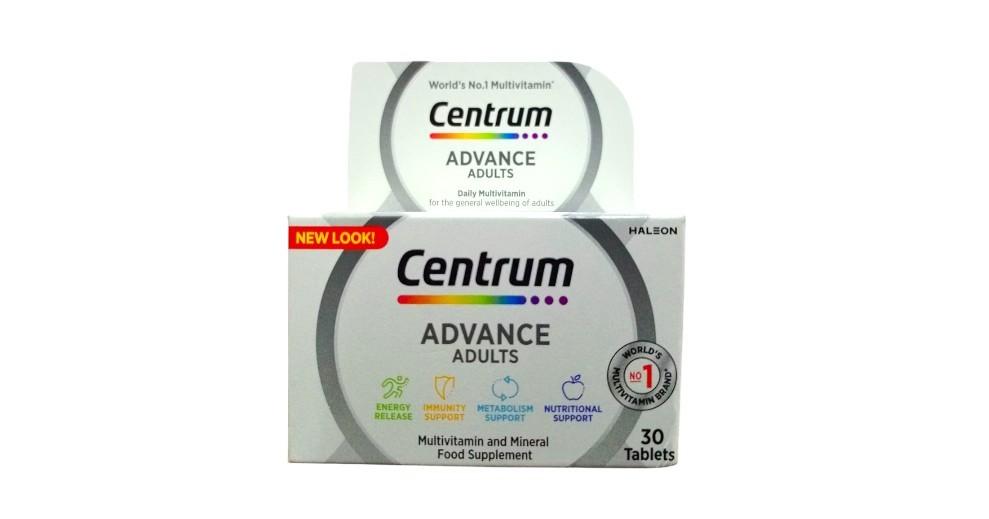
CENTRUM (TABLETS)
MULTI-VITAMINS
What it does
Multi-vitamins are dietary supplements that contain a combination of vitamins and minerals to help support your overall health.
Commonly used for: general health maintenance, nutritional support, deficiency prevention
Read more in plain English ↓Plain-language summary for general understanding - not medical advice. Always follow your pharmacist/doctor.
Ask about this medicine
Answers come only from this medicine's registration record, BNF monograph and interaction data - not medical advice.
Hard to find? We help patients in Kenya source rare medicines. We don't sell or dispense medicines - licensed pharmacies do.
Source this medicineRegistration & product details
Source: Pharmacy and Poisons Board · fetched 2026-01-28 21:13:17 · updated 2026-07-20 08:56:27
About this medicine
Multi-vitamins are dietary supplements that contain a combination of vitamins and minerals to help support your overall health.
What it treats
- general health maintenance
- nutritional support
- deficiency prevention
How it works
They provide essential nutrients that your body needs to function properly, which may be lacking in your diet.
Who it's for
They are suitable for people of all ages who may need extra vitamins and minerals.
AI-assisted summary grounded in BNF data - general information only, not medical advice. Always confirm with your pharmacist or doctor.
Clinical monograph: multivitamins
Multivitamins are dietary supplements containing a combination of vitamins, and often minerals, intended to provide nutrients that may be lacking in an individual's diet. They are commonly used to prevent or treat vitamin deficiencies due to poor diet, certain health conditions, or increased physiological needs. Multivitamins can contribute to overall health and well-being when taken as part of a balanced diet.
Indications
- Vitamin deficiency prevention
- Nutritional supplementation
- Support during pregnancy
- Support in elderly patients
- Immune system support
- General health and well-being
Dosage
Children: Refer to the BNF for Children for appropriate pediatric dosing, as this can vary based on age, dietary needs, and specific formulations of multivitamins.
Adults: Refer to specific product guidelines for dosing, as multivitamin formulations can vary widely. Generally, a typical adult multivitamin may be taken once daily, but this can depend on the specific formulation and the individual's nutritional needs.
Mechanism of action
Multivitamins provide essential vitamins and minerals that play critical roles in various biochemical processes in the body. For instance, B vitamins are involved in energy metabolism, vitamin C acts as an antioxidant, and vitamin D supports calcium absorption for bone health. The specific mechanism of action varies with each vitamin and mineral, as they contribute to enzymatic reactions, hormone production, and cellular functions.
Pharmacodynamics
The pharmacodynamics of multivitamins involves the physiological effects that these vitamins and minerals have on the body. Each vitamin and mineral has a unique role, such as supporting immune function, promoting growth and development, and mitigating oxidative stress. Adequate levels of these nutrients are essential for maintaining homeostasis and preventing deficiency-related diseases.
Pharmacokinetics
The pharmacokinetics of multivitamins can vary widely depending on the specific vitamins and minerals included. Water-soluble vitamins, such as B-complex and vitamin C, are typically absorbed in the intestines and excreted in urine when in excess. Fat-soluble vitamins, such as vitamins A, D, E, and K, are absorbed along with dietary fats and stored in body tissues, which can lead to toxicity if taken in excessive amounts. The bioavailability of these nutrients can be influenced by dietary factors, the presence of other nutrients, and individual metabolism.
Adverse effects
- Nausea
- Vomiting
- Diarrhea
- Constipation
- Allergic reactions
- Headache
Interactions
- Anticoagulants may have altered effects due to vitamin K
- Certain antibiotics may have reduced efficacy due to iron or calcium in multivitamins
- Absorption of some medications may be affected by the presence of fat-soluble vitamins
Precautions
- Use with caution in patients with renal impairment
- Monitor for potential overdose, particularly in children
- Consult a healthcare provider before use in patients with underlying health conditions
Pregnancy
Generally considered safe, but high doses of certain vitamins should be avoided. Consult a healthcare provider.
Breast-feeding
Usually safe, but high doses of certain vitamins should be avoided. Consult a healthcare provider.
Storage
Store in a cool, dry place away from direct sunlight, keep out of reach of children.
Formulations
- Tablets
- Capsules
- Chewable tablets
- Liquid formulations
AI-synthesized from BNF references - general information only, not a substitute for professional medical advice or the current BNF. Verify doses with a pharmacist.