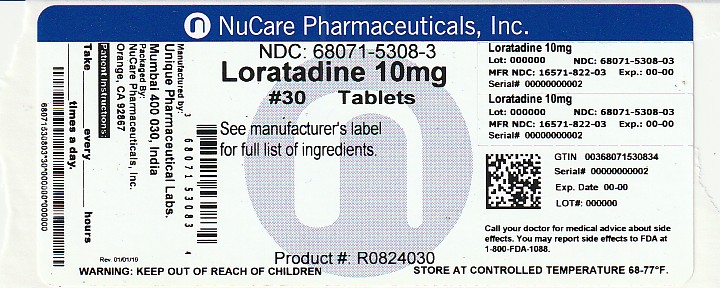
(loratadine · DailyMed)
Clarinase Repetabs
Loratadine 5 mg,Pseudoephedrine Sulphate 120 mg
What it does
Loratadine is an antihistamine that helps relieve allergy symptoms.
Commonly used for: seasonal allergies (hay fever), chronic hives (urticaria)
Read more in plain English ↓Plain-language summary for general understanding - not medical advice. Always follow your pharmacist/doctor.
Ask about this medicine
Answers come only from this medicine's registration record, BNF monograph and interaction data - not medical advice.
Medicine sourcing is available in Kenya only. We don't sell or dispense medicines - licensed pharmacies do.
Sourcing - Kenya onlyRegistration & product details
Source: Tanzania Medicines and Medical Devices Authority · fetched 2026-03-11 23:50:52 · updated 2026-09-24 03:00:47
Drug Interactions
2Severe (1)
Linezolid - increases risk of elevated blood pressure
Pseudoephedrine increases the risk of elevated blood pressure when given with linezolid. Avoid.
Unknown (1)
Pseudoephedrine - additive effect
Volatile halogenated anaesthetics (sevoflurane) can cause hypertension, as can pseudoephedrine. Avoid pseudoephedrine for several days before surgery.
Data from BNF 85 (British National Formulary). This is not a substitute for professional medical advice. Matched via: exact
About loratadine
Loratadine is an antihistamine that helps relieve allergy symptoms.
What it treats
- seasonal allergies (hay fever)
- chronic hives (urticaria)
How it works
It blocks the action of histamine, a substance in the body that causes allergic symptoms.
Who it's for
It is suitable for adults and children over the age of 2 who have allergies.
AI-assisted summary grounded in BNF data - general information only, not medical advice. Always confirm with your pharmacist or doctor.
About pseudoephedrine
Pseudoephedrine is a medicine commonly used to relieve nasal congestion caused by colds, allergies, or sinus infections.
What it treats
- nasal congestion
- sinusitis
- allergic rhinitis
How it works
It works by narrowing the blood vessels in the nasal passages, leading to reduced swelling and congestion.
Who it's for
Pseudoephedrine is suitable for adults and children over 12 years old who need relief from nasal congestion.
AI-assisted summary grounded in BNF data - general information only, not medical advice. Always confirm with your pharmacist or doctor.
Clinical monograph: Pseudoephedrinehydrochloride
BNF-referencedPseudoephedrine hydrochloride is a sympathomimetic amine that acts as a nasal decongestant. It is commonly used to relieve nasal congestion due to colds, allergies, or sinusitis. It works by constricting blood vessels in the nasal passages, leading to reduced swelling and congestion.
Indications
- Nasal congestion
- Sinusitis affecting the maxillary antrum
Dosage
Children: For children aged 6-11 years, the recommended dose is 30 mg 3-4 times a day. For children aged 12-17 years, the dose is 60 mg 3-4 times a day. Caution is advised in children under 6 years.
Adults: The typical adult dose is 60 mg every 4-6 hours, not exceeding 240 mg per day.
Mechanism of action
Pseudoephedrine acts primarily as a selective agonist of alpha-adrenergic receptors, which causes vasoconstriction of the nasal mucosa. This leads to a decrease in mucosal edema and congestion. It may also have some beta-adrenergic activity, contributing to bronchodilation.
Pharmacodynamics
The pharmacodynamic effects of pseudoephedrine include reduced nasal congestion and increased airflow through the nasal passages. Its action is dose-dependent, with higher doses leading to more pronounced effects. Side effects may include increased heart rate, hypertension, and CNS stimulation such as anxiety and insomnia.
Pharmacokinetics
Pseudoephedrine is well absorbed from the gastrointestinal tract, with peak plasma concentrations occurring within 1-2 hours after oral administration. It is metabolized primarily in the liver and has a half-life of approximately 5-8 hours. The drug is excreted mainly in the urine, with a portion being unchanged.
Contra-indications
- Severe hypertension
- Severe renal impairment
- Severe hepatic impairment
- Hyperthyroidism
- Angle closure glaucoma
- Use in children under 6 years of age is not recommended due to safety concerns
Adverse effects
- Anxiety
- Headache
- Insomnia
- Nausea
- Dizziness
- Dry mouth
- Increased heart rate (tachycardia)
- Hypertension
- Palpitations
- Rebound congestion
- Irritability
- Tremors
- Hallucinations
- Dermatitis
- Muscle weakness
- Vomiting
- Piloerection
Interactions
- Monoamine oxidase inhibitors (MAOIs) may enhance the hypertensive effects
- Other sympathomimetics may increase the risk of cardiovascular effects
- Caution with antihypertensive medications as pseudoephedrine may counteract their effectiveness
Precautions
- Use with caution in individuals with cardiovascular disease
- Caution in patients with diabetes due to potential hyperglycemia
- Monitor patients with a history of psychiatric disorders as it may exacerbate symptoms
- Use with caution in patients with a history of seizures
Pregnancy
Manufacturer advises avoidance due to potential risks such as defective closure of the abdominal wall in newborns after first trimester exposure.
Breast-feeding
Present in breast milk; manufacturer advises avoidance due to the potential for irritability and disturbed sleep in infants.
Storage
Store in a cool, dry place, away from direct sunlight. Keep out of reach of children.
Formulations
- Oral solution (e.g., Sudafed Decongestant 30mg/5ml liquid)
- Nasal drops (e.g., Galpseud 0.5% drops)
AI-synthesized from BNF references - general information only, not a substitute for professional medical advice or the current BNF. Verify doses with a pharmacist.
Clinical monograph: Loratadine
BNF-referencedLoratadine is a second-generation antihistamine used primarily for the symptomatic relief of allergic conditions such as seasonal allergic rhinitis and chronic idiopathic urticaria. It is known for its low sedative effects, making it suitable for individuals who need to avoid drowsiness while managing allergy symptoms.
Indications
- Seasonal allergic rhinitis
- Chronic idiopathic urticaria
Dosage
Children: Child 6–11 years: 30 mg twice daily. Child 12–17 years: 120 mg once daily for seasonal allergic rhinitis or 180 mg once daily for chronic idiopathic urticaria.
Adults: 120 mg once daily for seasonal allergic rhinitis or chronic idiopathic urticaria. Alternatively, 180 mg once daily may be prescribed depending on clinical judgement.
Mechanism of action
Loratadine exerts its effects by binding to H1 histamine receptors, which are found on various cell types, including epithelial, endothelial, and smooth muscle cells. It acts as an 'inverse agonist', stabilizing the inactive form of the H1 receptor and thereby preventing the actions of histamine, which is a key mediator in allergic responses. This mechanism effectively reduces the severity of symptoms associated with allergies.
Pharmacodynamics
Loratadine is selective for peripheral H1 receptors and does not significantly penetrate the central nervous system, resulting in minimal sedation and CNS depression. This pharmacodynamic profile helps to avoid common side effects associated with first-generation antihistamines, such as drowsiness and impaired psychomotor function.
Pharmacokinetics
Loratadine is well-absorbed after oral administration and undergoes extensive hepatic metabolism, primarily via cytochrome P450 enzymes. It has a long half-life, allowing for once-daily dosing. The drug is mainly excreted through urine and bile, with a small percentage eliminated unchanged. Dose adjustments may be necessary in individuals with renal impairment.
Contra-indications
- Acute porphyrias
Adverse effects
- Dizziness
- Drowsiness
- Headache
- Nausea
- Fatigue
- Abdominal pain
- Aggression
- Agitation
- Angioedema
- Appetite increased
- Arthralgia
- Depression
- Dyspnoea
- Hallucination
- Hepatitis
- Myalgia
- Oedema
- Palpitations
- Paraesthesia
- Seizure
- Skin reactions
- Suicidal ideation
- Syncope
- Tachycardia
- Taste altered
- Tremor
- Urinary disorders
- Vertigo
- Vision disorders
- Vomiting
- Weight increased
Interactions
- Other antihistamines
Precautions
- Patients and their carers should be advised that drowsiness can occur and may affect performance of skilled tasks such as cycling or driving.
- Avoid in patients with renal impairment if eGFR is less than 10 mL/minute/1.73 m2.
Pregnancy
Most manufacturers of antihistamines advise avoiding their use during pregnancy; however, there is no evidence of teratogenicity.
Breast-feeding
Most antihistamines are present in breast milk in varying amounts; although not known to be harmful, most manufacturers advise avoiding their use in mothers who are breast-feeding.
Storage
Store at room temperature, away from excessive heat and moisture.
Formulations
- Oral suspension
- Oral solution
- Tablet
AI-synthesized from BNF references - general information only, not a substitute for professional medical advice or the current BNF. Verify doses with a pharmacist.
Clinical monograph: pseudoephedrine
BNF-referencedPseudoephedrine is a sympathomimetic amine commonly used as a decongestant in the treatment of nasal congestion associated with colds, allergies, and sinusitis. It is an active isomer of ephedrine and works by stimulating alpha and beta adrenergic receptors, leading to vasoconstriction and reduced swelling of nasal mucosa. Pseudoephedrine also influences neurotransmitter transporters, providing additional effects on the central nervous system.
Indications
- Nasal congestion due to cold
- Allergic rhinitis
- Sinusitis
- Eustachian tube dysfunction
Dosage
Children: For children aged 6 to 12 years, the recommended dose is 30 mg every 6 hours, not exceeding 120 mg per day. For children aged 2 to 6 years
Adults: The typical adult dose is 60 mg every 4 to 6 hours, not exceeding 240 mg per day.
Mechanism of action
Pseudoephedrine acts mainly as an agonist of alpha adrenergic receptors and less strongly as an agonist of beta adrenergic receptors. The agonism produces vasoconstriction in the mucosa of the respiratory tract, leading to decreased nasal congestion. It also inhibits norepinephrine, dopamine, and serotonin transporters, which may contribute to its sympathomimetic effects such as increased arterial pressure and heart rate. Additionally, pseudoephedrine has anti-inflammatory actions through the inhibition of NF-kappa-B and other transcription factors.
Pharmacodynamics
Pseudoephedrine causes vasoconstriction resulting in a decongestant effect. Its sympathomimetic properties can lead to increased heart rate and blood pressure. The duration of action is typically short unless formulated as an extended-release product. Patients may experience central nervous system stimulation, which should be considered when prescribing.
Pharmacokinetics
Pseudoephedrine is well absorbed from the gastrointestinal tract, with peak plasma concentrations occurring approximately 1 to 2 hours after oral administration. The drug is metabolized in the liver, primarily by the cytochrome P450 system, and has a half-life of about 6 hours. It is excreted mainly through the kidneys, with about 55-70% of the dose eliminated unchanged in the urine.
Adverse effects
- Increased blood pressure
- Centrally mediated side effects such as insomnia
- Nervousness
- Dizziness
- Headache
- Dry mouth
Interactions
- pseudoephedrine + linezolid: Severe (increases risk of elevated blood pressure)
- volatile halogenated anesthetics + pseudoephedrine: Unknown (additive effect)
Precautions
- Use with caution in patients with hypertension
- Use with caution in patients with cardiovascular disease
- May exacerbate conditions like hyperthyroidism or diabetes
Pregnancy
Use only if clearly needed, as safety in pregnancy has not been established.
Breast-feeding
Use with caution; small amounts may pass into breast milk.
Storage
Store at room temperature, away from moisture and heat.
Formulations
- Oral tablets
- Extended-release oral tablets
- Liquid formulations
AI-synthesized from BNF references - general information only, not a substitute for professional medical advice or the current BNF. Verify doses with a pharmacist.
Molecular reference: Loratadine
PubChem CID 3957Molecular formula: C22H23ClN2O2
Mechanism of action
Histamine release is a key mediator in allergic rhinitis and urticaria. As a result, loratadine exerts it's effect by targeting H1 histamine receptors. Loratadine binds to H1 histamine receptors found on the surface of epithelial cells, endothelial cells, eosinophils, neutrophils, airway cells, and vascular smooth muscle cells among others. H1 histamine receptors fall under the wider umbrella of G-protein coupled receptors, and exist in a state of equilibrium between the active and inactive forms. Histamine binding to the H1-receptor facilitates cross linking between transmembrane domains III and V, stabilizing the active form of the receptor. On the other hand, antihistamines bind to a different site on the H1 receptor favouring the inactive form. Hence, loratadine can more accurately be classified as an "inverse agonist" as opposed to a "histamine antagonist", and can prevent or reduce the severity of histamine mediated symptoms. All of the available H1 receptor antagonists are reversible, competitive inhibitors of the interaction of histamine with H1 receptors. /H1 Receptor Antagonists/ H1 antagonists inhibit most responses of smooth muscle to histamine. /H1 Antagonists Receptors/ Within the vascular tree, the H1 antagonists inhibit both the vasoconstrictor effects of histamine and, to a degree, the more rapid vasodilator effects that are mediated by H1 receptors on endothelial cells. /H1 Receptor Antagonists/ H1 antagonists strongly block the action of histamine that results in increased capillary permeability and formation of edema and wheal. /H1 Receptor Antagonists/ For more Mechanism of Action (Complete) data for LORATADINE (6 total), please visit the HSDB record page.
Pharmacodynamics
Like other 2nd generation antihistamines, loratadine is selective for peripheral H1 receptors. Loratadine does not penetrate effectively into the central nervous system and has poor affinity for CNS H1-receptors. These qualities result in a lack of CNS depressant effects such as drowsiness, sedation, and impaired psychomotor function.
Biological pathways
Source: PubChem (NCBI) · pathways from PathBank, Reactome, WikiPathways & PharmGKB.
Molecular reference: pseudoephedrine
PubChem CID 7028Molecular formula: C10H15NO
Mechanism of action
Pseudoephedrine acts mainly as an agonist of alpha adrenergic receptors and less strongly as an agonist of beta adrenergic receptors. This agonism of adrenergic receptors produces vasoconstriction which is used as a decongestant and as a treatment of priapism. Pseudoephedrine is also an inhibitor of norepinephrine, dopamine, and serotonin transporters. The sympathomimetic effects of pseudoephedrine include an increase in mean arterial pressure, heart rate, and chronotropic response of the right atria. Pseudoephedrine is also a partial agonist of the anococcygeal muscle. Pseudoephedrine also inhibits NF-kappa-B, NFAT, and AP-1. THESE AGENTS /BRONCHODILATORS/ ACT ON BETA-2 RECEPTORS TO RELAX BRONCHIAL SMOOTH MUSCLE & PERIPHERAL VASCULATURE, APPARENTLY BY STIMULATING PRODN OF CYCLIC ADENOSINE-3.5-MONOPHOSPHATE (CAMP)... Pseudoephedrine acts on alpha-adrenergic receptors in the mucosa of the respiratory tract, producing vasoconstriction. The medication shrinks swollen nasal mucous membranes; reduces tissue hyperemia, edema, and nasal congestion; and increases nasal airway patency. Also, drainage of sinus secretions may be increased and obstructed eustachian ostia may be opened. The pharmacological properties of the ephedrine derivative pseudoephedrine were investigated at the nuclear level. Following intraperitoneal injection of Sprague Dawley rats with pseudoephedrine, Fos induction was measured in various brain areas by Western blots and immunocytochemistry. Pseudoephedrine induced Fos-like immunoreactivity in the nucleus accumbens and striatum in a time and concentration-dependent manner with maximal effect at 60 mg/kg 2 hr after injection. Immunocytochemical studies confirmed that the majority of the signal was detectable in the nucleus accumbens and striatum. Pre-injection with the D1 dopamine receptor antagonist SCH23390 partially and completely blocked pseudoephedrine-induced Fos-like immunoreactivity in the striatum and nucleus accumbens, respectively, suggesting that the action of pseudoephedrine is mediated via dopamine release and results in the activation of D1 dopamine receptors. With the exception of the higher doses required, the actions of pseudoephedrine were similar to those previously described for the psychostimulant amphetamine.
Pharmacodynamics
Pseudoephedrine causes vasoconstriction which leads to a decongestant effect. It has a short duration of action unless formulated as an extended release product. Patients should be counselled regarding the risk of central nervous system stimulation.
Biological pathways
Source: PubChem (NCBI) · pathways from PathBank, Reactome, WikiPathways & PharmGKB.
This drug in other countries
The same active ingredient registered across other registries we cover - including different brands.
- 123 COLD &FLU TABLETS · Agrilords
- ACTIFED COLD SYRUP · Haleon
- ACTIFED DRY COUGH & COLD SYRUP · Haleon
- ACTIFED EXPECTORANT · Haleon
- ACTIFED TABLETS · Haleon
- AERINAZE MODIFIED RELEASE TABLETS · Phillips Therapeutics
- ASPANOL DRY COUGH SYRUP · Kinapharma
- ASPANOL JUNIOR COUGH · Kinapharma
- ATIDINE-10 TABLET (Each tablet contains Loratadine 10mg) · Atoz Pharmaceuticals
- BENYLIN DAYTIME FLU TABLETS (Each tablet contains Ibuprofen/Pseudoephedrine 200mg/30mg) · Johnson & Johnson
- CHILD BEDIKOF COUGH · Enicar Pharmaceuticals
- CHILD CARE COUGH & COLD SYRUP · Letap Pharmaceuticals