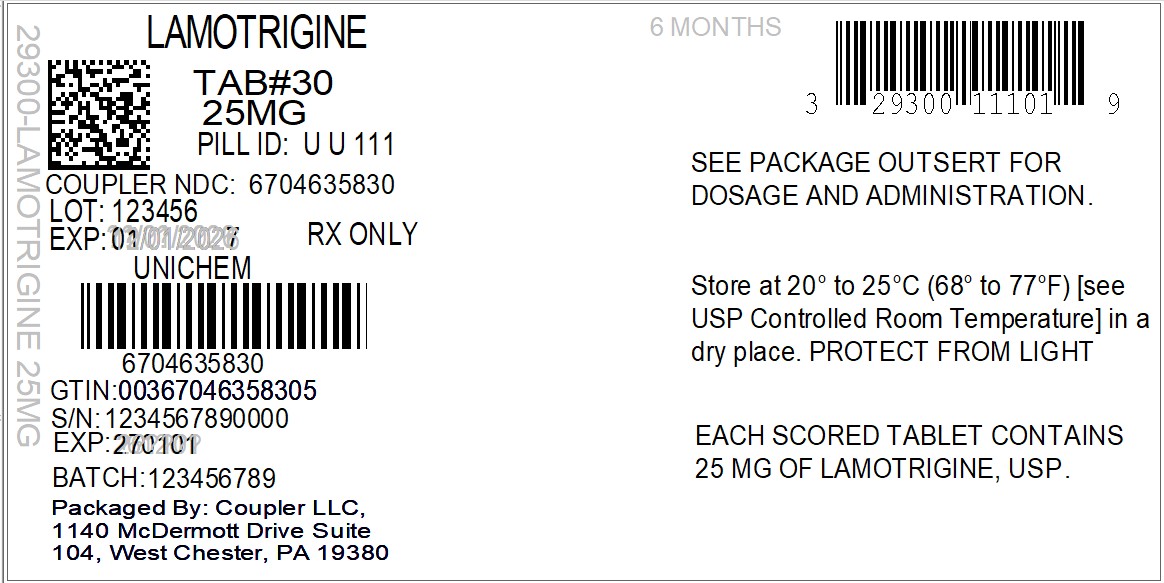
(lamotrigine · DailyMed)
LAMOTRIGINE 100 mg ACCORD
Lamotrigine
What it does
Lamotrigine is a medication primarily used to control seizures in epilepsy and to help stabilize mood in bipolar disorder.
Commonly used for: seizures (epilepsy), bipolar disorder
Read more in plain English ↓Plain-language summary for general understanding - not medical advice. Always follow your pharmacist/doctor.
Ask about this medicine
Answers come only from this medicine's registration record, BNF monograph and interaction data - not medical advice.
Medicine sourcing is available in Kenya only. We don't sell or dispense medicines - licensed pharmacies do.
Sourcing - Kenya onlyRegistration & product details
Source: South African Health Products Regulatory Authority · fetched 2026-04-15 21:30:10 · updated 2026-09-23 04:12:36
Drug Interactions
73Pharmacodynamic Warnings
Lamotrigine appears in TABLE 11: Drugs with CNS depressant effects
Severe (7)
Antiepileptics - decreases absorption
Iron chelators (dexrazoxane) might decrease the absorption of antiepileptics (fosphenytoin, phenytoin). Avoid.
Antiepileptics - decreases exposure
Lumacaftor is predicted to decrease the exposure to antiepileptics (carbamazepine, fosphenytoin, phenobarbital, phenytoin, primidone). Avoid.
Antiepileptics - decreases concentration
St John’s wort is predicted to decrease the concentration of antiepileptics (fosphenytoin, phenobarbital, phenytoin, primidone). Avoid.
Antiepileptics - increases risk of overheating and dehydration
Hydroxyzine potentially increases the risk of overheating and dehydration when given with antiepileptics (zonisamide). Avoid in children.
Antiepileptics - increases risk of overheating and dehydration
Haloperidol potentially increases the risk of overheating and dehydration when given with antiepileptics (zonisamide). Avoid in children.
Antiepileptics - decreases absorption
Dexrazoxane might decrease the absorption of antiepileptics (fosphenytoin, phenytoin). Avoid.
Antiepileptics - increases risk of overheating and dehydration
Oxybutynin potentially increases the risk of overheating and dehydration when given with antiepileptics (zonisamide). Avoid in children.
Moderate (26)
Antiepileptics - increases concentration
Intravenous chloramphenicol increases the concentration of antiepileptics (fosphenytoin, phenytoin) and antiepileptics (fosphenytoin, phenytoin) affect the concentration of intravenous chloramphenicol
Antiepileptics - decreases concentration
Diazoxide decreases the concentration of antiepileptics (fosphenytoin, phenytoin) and antiepileptics (fosphenytoin, phenytoin) are predicted to decrease the effects of diazoxide. Monitor concentration
Antiepileptics - increases concentration
Disulfiramincreasestheconcentrationofantiepileptics (fosphenytoin,phenytoin).Monitorconcentrationandadjust dose.rStudy →AlsoseeTABLE12p.1520
Antiepileptics - increases concentration
Fluorouracilincreasestheconcentrationofantiepileptics (fosphenytoin,phenytoin).Monitorconcentrationandadjust dose.rAnecdotal 1xidneppA|snoitcaretnI A1 https://www.facebook.c (Books-Courses-Medic
Antiepileptics - decreases concentration
Folates are predicted to decrease the concentration of antiepileptics (fosphenytoin, phenobarbital, phenytoin, primidone). Monitor concentration and adjust dose.
Unknown (40)
Antiepileptics - increases risk of overheating and dehydration
Acetazolamide potentially increases the risk of overheating and dehydration when given with antiepileptics (zonisamide). Avoid in children.
Antiepileptics - increases risk of visual disturbances
Alcohol potentially increases the risk of visual disturbances when given with antiepileptics (retigabine).
Antiepileptics - decreases exposure
Enzalutamide is predicted to slightly decrease the exposure to antiepileptics (brivaracetam).
Antiepileptics - decreases exposure
Apalutamidepotentiallydecreasestheexposureto antiepileptics(valproate).nTheoretical
Antiepileptics - increases concentration
Capecitabine increases the concentration of antiepileptics (fosphenytoin, phenytoin).
Data from BNF 85 (British National Formulary). This is not a substitute for professional medical advice. Matched via: class
About this medicine
Lamotrigine is a medication primarily used to control seizures in epilepsy and to help stabilize mood in bipolar disorder.
What it treats
- seizures (epilepsy)
- bipolar disorder
How it works
Lamotrigine works by stabilizing electrical activity in the brain, helping to prevent seizures and mood swings.
Who it's for
It is prescribed for people with epilepsy and those experiencing mood episodes related to bipolar disorder.
Drug class
Antiepileptics
Cautions
- • Be cautious if using other medications that can cause drowsiness or sedation.
AI-assisted summary grounded in BNF data - general information only, not medical advice. Always confirm with your pharmacist or doctor.
Clinical monograph: Lamotrigine
BNF-referencedLamotrigine is an antiepileptic medication primarily used for the treatment of epilepsy and bipolar disorder. It is indicated for monotherapy in focal seizures and primary and secondary generalized tonic-clonic seizures, as well as adjunctive therapy for seizures associated with Lennox-Gastaut syndrome. Lamotrigine stabilizes neuronal membranes and modulates neurotransmitter release, particularly inhibiting excitatory neurotransmitters like glutamate.
Indications
- Monotherapy of focal seizures
- Monotherapy of primary generalized tonic-clonic seizures
- Monotherapy of secondary generalized tonic-clonic seizures
- Adjunctive therapy in partial-onset seizures
- Seizures associated with Lennox-Gastaut syndrome
- Bipolar disorder management
Dosage
Adults: Initially, 25 mg once daily for 14 days, then increased to 50 mg once daily for a further 14 days, with adjustments of up to 100 mg every 7–14 days; maintenance dose of 100–200 mg daily in 1–
Mechanism of action
Lamotrigine exerts its effects by inhibiting voltage-sensitive sodium channels, which stabilizes neuronal membranes and reduces the release of presynaptic excitatory neurotransmitters. It selectively binds to inactive sodium channels, which suppresses sodium currents and contributes to its anticonvulsant properties. Additionally, lamotrigine displays weak binding to various receptors, including serotonin and adenosine receptors, contributing to its diverse pharmacological effects.
Pharmacodynamics
Lamotrigine effectively prevents seizures and mood symptoms by stabilizing presynaptic neuronal membranes, thus preventing the release of excitatory neurotransmitters such as glutamate that are implicated in seizure activity. Its metabolite can cause dose-dependent cardiovascular effects, such as prolongation of the PR interval and widening of the QRS complex, although this metabolite is present in trace amounts in humans.
Pharmacokinetics
Lamotrigine is well absorbed from the gastrointestinal tract, with peak plasma concentrations occurring about 1.5 to 3 hours after oral administration. It undergoes hepatic metabolism through glucuronidation, and its half-life can be affected by concurrent medications and hepatic function. The presence of enzyme inducers can significantly reduce its plasma concentration, while enzyme inhibitors can increase it, necessitating careful monitoring and dose adjustments.
Adverse effects
- Dizziness
- Headache
- Nausea
- Rash
- Insomnia
- Blurred vision
- Aseptic meningitis
- Toxic epidermal necrolysis
- Stevens-Johnson syndrome
Interactions
- Cenobamate may decrease lamotrigine concentration
- Desmopressin may increase the risk of hyponatraemia when used with lamotrigine
- Hormonal contraceptives (desogestrel, etonogestrel, levonorgestrel, norethisterone) may have decreased effectiveness with lamotrigine
- Ritonavir may decrease lamotrigine exposure
- Nirmatrelvir boosted with ritonavir may decrease lamotrigine concentration
Precautions
- Use with caution in patients with hepatic impairment
- Monitor for signs of serious skin reactions
- Counsel patients regarding driving and skilled tasks due to potential dizziness
- Monitor neurodevelopment in infants if used during breastfeeding
Pregnancy
Specialist sources indicate caution in use, potential risks should be evaluated against benefits.
Breast-feeding
Use with caution only if no suitable alternative; present in milk.
Storage
Store at room temperature, away from moisture and heat.
Formulations
- Lamotrigine 2 mg tablets
- Lamotrigine 5 mg tablets
- Lamotrigine 25 mg tablets
- Lamotrigine 50 mg tablets
- Lamotrigine 100 mg tablets
- Lamotrigine 200 mg tablets
- Oral solution available
AI-synthesized from BNF references - general information only, not a substitute for professional medical advice or the current BNF. Verify doses with a pharmacist.
Molecular reference: Lamotrigine
PubChem CID 3878Molecular formula: C9H7Cl2N5
Mechanism of action
The exact mechanism of action of lamotrigine is not fully elucidated, as it may exert cellular activities that contribute to its efficacy in a range of conditions. Although chemically unrelated, lamotrigine actions resemble those of phenytoin and carbamazepine, inhibiting voltage-sensitive sodium channels, stabilizing neuronal membranes, thereby modulating the release of presynaptic excitatory neurotransmitters. Lamotrigine likely acts by inhibiting sodium currents by selective binding to the inactive sodium channel, suppressing the release of the excitatory amino acid, glutamate. The mechanism of action of lamotrigine in reducing anticonvulsant activity is likely the same in managing bipolar disorder. Studies on lamotrigine have identified its binding to sodium channels in a fashion similar to local anesthetics, which could explain the demonstrated clinical benefit of lamotrigine in some neuropathic pain states. Lamotrigine displays binding properties to several different receptors. In laboratory binding assays, it demonstrates weak inhibitory effect on the serotonin 5-HT3 receptor. Lamotrigine also weakly binds to Adenosine A1/A2 receptors, α1/α2/β adrenergic receptors, dopamine D1/D2 receptors, GABA A/B receptors, histamine H1 receptors, κ-opioid receptor (KOR), mACh receptors and serotonin 5-HT2 receptors with an IC50>100 µM. Weak inhibitory effects were observed at sigma opioid receptors. An in vivo study revealed evidence that lamotrigine inhibits Cav2.3 (R-type) calcium currents, which may also contribute to its anticonvulsant effects. Spectrophotometry with the Ca(++)-sensitive dye fura-2 was used to study the effect of lamotrigine (LAG) on the depolarization-evoked Ca++ influx in the acutely isolated basolateral amygdala neurons. Depolarization of the neurons with high K+ resulted in the elevation of intracellular Ca++ concentration [Ca++]i in a concentration-dependent manner. The K(+)-induced Ca++ influx was completely blocked in the Ca(++)-free solution or by Cd++, indicating that depolarization-induced increases in [Ca++]i were triggered largely, if not completely, by Ca++ entry from extracellular space and Ca++ entry occurred through voltage-dependent Ca++ channels. Application of LAG reduced the depolarization-evoked Ca++ influx in a concentration-dependent manner. The effect of LAG was markedly reduced in the presence of N-type Ca++ channel blocker omega-conotoxin-GVIA (omega-CgTX). These results suggest that the action of LAG is mediated, at least in part, by the modulation of N-type Ca++ channels. Lamotrigine (LAG) is an antiepileptic drug which is believed to suppress seizures by inhibiting the release of excitatory neurotransmitters. The present study was aimed at investigating the effect of LAG on the 4-aminopyridine (4AP)-evoked glutamate release in cerebrocortical nerve terminals (synaptosomes). LAG inhibited the release of glutamate evoked by 4AP in a concentration-dependent manner. This inhibitory effect was associated with a reduction in the depolarization-evoked increase in the cytoplasmic free Ca2+ concentration ([Ca2+]C). In addition, LAG did not alter the resting synaptosomal membrane potential or 4AP-evoked depolarization. Furthermore, ionomycin-evoked glutamate release was not affected by LAG. Based on these results, we suggest that presynaptic calcium influx blockade and inhibition of glutamate release may underlie the mechanism of action of LAG. These action may also contribute to their neuroprotective properties in excitotoxic injury.
Pharmacodynamics
Lamotrigine likely prevents seizures and prevents mood symptoms via stabilizing presynaptic neuronal membranes and preventing the release of excitatory neurotransmitters such as glutamate, which contribute to seizure activity. A note on cardiovascular effects The metabolite of lamotrigine, 2-N-methyl metabolite (formed by glucuronidation), is reported to cause dose-dependent prolongations of the PR interval, widening of the QRS complex, and at higher doses, complete AV block. Although this harmful metabolite is only found in trace amounts in humans, plasma concentrations may increase in conditions that cause decreased drug glucuronidation, such as liver disease.
Source: PubChem (NCBI) · pathways from PathBank, Reactome, WikiPathways & PharmGKB.
This drug in other countries
The same active ingredient registered across other registries we cover - including different brands.
- EPSYLAM DT 100 · Simba Pharmaceuticals
- EPSYLAM DT 25 · Simba Pharmaceuticals
- EPSYLAM DT 50 · Simba Pharmaceuticals
- LAMICTAL 100MG TABLETS · Laborex Kenya
- LAMICTAL 25MG TABLETS · Laborex Kenya
- LAMICTAL 5MG TABLETS · Laborex Kenya
- LAMIGARD · Global Napi Pharmaceuticals
- LAMIGARD · Global Napi Pharmaceuticals
- LAMITOR DT 100 · Torrent Pharmaceuticals
- LAMITOR DT 25 · Torrent Pharmaceuticals
- LAMITOR DT 50 · Torrent Pharmaceuticals
- LAMITOR-25 · Torrent Pharmaceuticals
- EPSYLAM DT 100 · Aurobindo Pharma
- EPSYLAM DT 25 · Aurobindo Pharma
- EPSYLAM DT 50 · Aurobindo Pharma
- Lamitor 100 · Torrent Pharmaceuticals
- Lamitor 25 · Torrent Pharmaceuticals
- Orilam ODT · Micro Labs