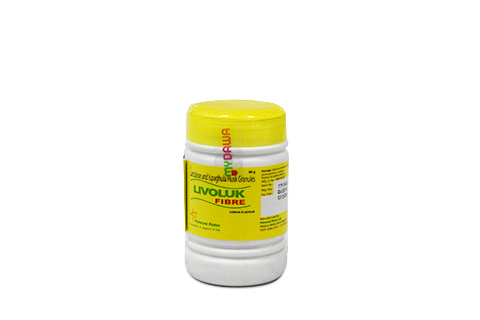
LIVOLUK FIBRE
LACTULOSE AND ISPAGHULA HUSK GRANULES
What it does
Husk is a natural substance often used to support digestive health.
Commonly used for: constipation, irregular bowel movements
Read more in plain English ↓Plain-language summary for general understanding - not medical advice. Always follow your pharmacist/doctor.
Ask about this medicine
Answers come only from this medicine's registration record, BNF monograph and interaction data - not medical advice.
Hard to find? We help patients in Kenya source rare medicines. We don't sell or dispense medicines - licensed pharmacies do.
Source this medicineRegistration & product details
Source: Pharmacy and Poisons Board · fetched 2026-01-28 20:56:28 · updated 2026-07-26 11:47:07
About husk
Husk is a natural substance often used to support digestive health.
What it treats
- constipation
- irregular bowel movements
How it works
Husk absorbs water in the intestines, which helps to soften stools and promote regular bowel movements.
Who it's for
Husk can be used by adults and children who need help with their bowel movements.
Cautions
- • Drink plenty of water while using husk to prevent blockages in the intestines.
- • Consult a healthcare provider if you have ongoing digestive issues.
AI-assisted summary grounded in BNF data - general information only, not medical advice. Always confirm with your pharmacist or doctor.
About ispaghula
Ispaghula is a natural fiber supplement used to help improve bowel movements.
What it treats
- constipation
- irritable bowel syndrome (IBS)
How it works
Ispaghula works by absorbing water in the intestines, which helps to soften stools and promote regular bowel movements.
Who it's for
Ispaghula is suitable for adults and children who need help with constipation or have other bowel issues.
AI-assisted summary grounded in BNF data - general information only, not medical advice. Always confirm with your pharmacist or doctor.
About lactulose
Lactulose is a type of sugar that helps relieve constipation by making stools easier to pass.
What it treats
- constipation
- hepatic encephalopathy
How it works
Lactulose works by drawing water into the bowel, softening the stool, and promoting bowel movements.
Who it's for
Lactulose is suitable for adults and children experiencing constipation or liver-related brain issues.
AI-assisted summary grounded in BNF data - general information only, not medical advice. Always confirm with your pharmacist or doctor.
Clinical monograph: Lactulose
BNF-referencedLactulose is a synthetic disaccharide laxative derived from lactose, consisting of one molecule of galactose and one of fructose. It is primarily used to treat constipation and to manage hepatic encephalopathy. Lactulose works by being metabolized by saccharolytic bacteria in the colon, leading to the production of organic acids that enhance gut motility and increase stool water content, aiding in bowel movements.
Indications
- Chronic constipation
- Portal-systemic encephalopathy
Dosage
Children: Child 1-11 months: 2.5 mL twice daily, adjusted according to response. Child 1-4 years: 5 mL twice daily, adjusted according to response. Child 5-10 years: 10 mL twice daily, adjusted according to response. Child 5-17 years: 5-20 mL twice daily, adjusted according
Adults: Initially 15 mL twice daily, adjusted according to response. For hepatic encephalopathy, doses can be 30-50 mL three times a day, adjusted to produce 2-3 soft stools per day.
Mechanism of action
Lactulose is broken down by saccharolytic bacteria in the large intestine into organic acids, such as lactic acid, which increases intraluminal gas formation and enhances peristaltic gut motility. This osmotic effect increases water content in stool, facilitating bowel movements. Additionally, it acidifies the colonic contents, helping to treat portal-systemic encephalopathy by promoting the conversion of ammonia to ammonium ions, which are less absorbable.
Pharmacodynamics
Lactulose has minimal systemic absorption, exerting its effects predominantly within the gastrointestinal tract. It enhances stool volume and softens stool, which may lead to increased bowel sounds, feelings of bloating, belching, flatus, and diarrhea. These effects contribute to its laxative properties and its role in treating hepatic encephalopathy.
Pharmacokinetics
Lactulose is poorly absorbed from the gastrointestinal tract and exerts its action locally. It typically takes 24 to 48 hours to manifest its laxative effect. The substance is not metabolized before reaching the colon, where it is fermented by gut bacteria, resulting in the production of short-chain fatty acids and gases.
Contra-indications
- Galactosaemia
- Gastrointestinal obstruction
- Gastrointestinal perforation
- Risk of gastrointestinal perforation
- Lactose intolerance
Adverse effects
- Diarrhoea
- Gastrointestinal discomfort
- Nausea
- Abdominal pain
- Flatulence
- Vomiting
- Electrolyte imbalance
Precautions
- Caution in patients with a history of gastrointestinal disorders
- Monitor for electrolyte imbalance in prolonged use
Pregnancy
Not known to be harmful, but manufacturer advises to avoid.
Breast-feeding
Manufacturer advises to avoid.
Storage
Store in a cool, dry place away from direct sunlight. Keep out of reach of children.
Formulations
- Lactulose 10g/15ml oral solution
- Lactulose 680 mg per 1 ml
- Lactulose granules
AI-synthesized from BNF references - general information only, not a substitute for professional medical advice or the current BNF. Verify doses with a pharmacist.
Clinical monograph: husk
Husk, commonly referred to as psyllium husk, is derived from the seeds of the Plantago ovata plant. It is primarily used as a dietary fiber supplement and is known for its ability to relieve constipation and improve bowel regularity. Husk works by absorbing water in the intestines, forming a gel-like mass that aids in the passage of stool. It may also help in lowering cholesterol levels and managing blood sugar levels in patients with diabetes.
Indications
- Constipation
- Irritable bowel syndrome (IBS)
- Diverticular disease
- Cholesterol management
- Blood sugar control in diabetes
Dosage
Children: For children, it is recommended to consult a healthcare provider for appropriate dosing based on age and weight, as specific pediatric dosing
Adults: For adults, the typical dosage is 1 to 2 teaspoons (5 to 10 grams) of psyllium husk taken 1 to 3 times daily, mixed with at least 8 ounces of water or other liquid.
Mechanism of action
Psyllium husk acts as a bulk-forming laxative. It is not digested by the body, but when mixed with water, it expands and forms a viscous gel. This gel increases the bulk of the stool and triggers peristalsis, enhancing bowel movements. Additionally, it may slow down the absorption of carbohydrates and fats, contributing to its cholesterol-lowering and blood sugar-regulating effects.
Pharmacodynamics
The primary pharmacodynamic effect of husk is its ability to increase stool bulk and water content, which facilitates easier passage of stool through the intestines. This leads to improved bowel regularity and relief from constipation. Furthermore, psyllium husk has been shown to have a mild effect on lowering serum cholesterol levels, particularly low-density lipoprotein (LDL) cholesterol, and may improve glycemic control in patients with type 2 diabetes.
Pharmacokinetics
Psyllium husk is not absorbed systemically; it remains in the gastrointestinal tract, where it exerts its effects. The onset of action for bowel regulation typically occurs within 12 to 72 hours after ingestion, depending on the individual's digestive transit time and fluid intake. Adequate hydration is essential to maximize its efficacy and prevent potential gastrointestinal obstruction.
Adverse effects
- Bloating
- Abdominal cramping
- Diarrhea
- Nausea
Precautions
- Ensure adequate fluid intake when using husk to prevent gastrointestinal obstruction
- Monitor for allergic reactions in sensitive individuals
Pregnancy
Generally considered safe to use during pregnancy, but always consult a healthcare provider.
Breast-feeding
Considered safe while breastfeeding, but consult a healthcare provider for personalized advice.
Storage
Store in a cool, dry place, away from direct sunlight and moisture.
Formulations
- Psyllium husk powder
- Psyllium husk capsules
- Psyllium husk granules
AI-synthesized from BNF references - general information only, not a substitute for professional medical advice or the current BNF. Verify doses with a pharmacist.
Clinical monograph: ispaghula
Ispaghula, also known as psyllium husk, is a natural dietary fiber derived from the seeds of the Plantago ovata plant. It is primarily used as a bulk-forming laxative to treat constipation and to improve bowel regularity. Ispaghula works by absorbing water in the intestines, forming a gel-like stool that is easier to pass. It is also utilized for its potential cholesterol-lowering effects and as a dietary supplement to enhance digestive health.
Indications
- Constipation
- Irritable bowel syndrome
- Diverticular disease
- Hyperlipidemia
Dosage
Children: Refer to the BNF for Children for appropriate dosing guidelines in children.
Adults: Refer to the BNF for specific dosing recommendations, typically starting with a standard dose that can be adjusted based on individual response.
Mechanism of action
Ispaghula acts as a soluble fiber that increases the water content and bulk of the stool. This action stimulates peristalsis (the wave-like muscle contractions of the intestines) and facilitates easier passage of stool through the gastrointestinal tract. It may also contribute to the modulation of intestinal microbiota and has prebiotic effects, promoting the growth of beneficial gut bacteria.
Pharmacodynamics
Ispaghula exhibits its pharmacodynamic effects through its ability to absorb water and swell in the gastrointestinal tract, which increases stool mass and triggers bowel movements. This bulk-forming property helps alleviate constipation and maintains bowel health. Additionally, the gel-like substance formed can slow down the absorption of glucose and cholesterol, providing further metabolic benefits.
Pharmacokinetics
Ispaghula is not absorbed in the gastrointestinal tract, which means it does not have systemic effects. It passes through the digestive system and is excreted unchanged. The onset of action typically occurs within 12 to 72 hours after ingestion, depending on the individual and the volume of fluid consumed with the fiber. Adequate hydration is necessary for optimal efficacy.
Contra-indications
- Intestinal obstruction
- Severe dehydration
- Dysphagia
Adverse effects
- Abdominal bloating
- Flatulence
- Diarrhea
- Constipation
- Esophageal obstruction
Interactions
- May reduce the absorption of concomitantly administered oral medications due to its bulk-forming properties
- Caution should be exercised when taken with anticoagulants as it may affect their absorption
Precautions
- Adequate fluid intake should be ensured to prevent esophageal obstruction
- Caution in patients with a history of gastrointestinal disorders
Pregnancy
Generally considered safe for use during pregnancy, but it is advisable to consult a healthcare provider.
Breast-feeding
Considered safe during breastfeeding; however, maternal hydration should be maintained.
Storage
Store in a cool, dry place, away from direct sunlight.
Formulations
- Powder for oral suspension
- Granules for oral intake
- Tablets
AI-synthesized from BNF references - general information only, not a substitute for professional medical advice or the current BNF. Verify doses with a pharmacist.
Molecular reference: Lactulose
PubChem CID 11333Molecular formula: C12H22O11
Mechanism of action
Lactulose is a synthetic disaccharide derivative of lactose that consists of one molecule of galactose and one molecule of fructose. Saccharolytic bacteria present in the large intestine subsequently break the substance down into organic acids like lactic acid and small amounts of formic and acetic acids. Such resultant volatile fatty acid metabolites, in combination with hydrogen and methane that is also generated consequently enhance intraluminal gas formation, peristaltic gut motility, and elicit an osmotic effect that facilitates an increase in the water content of stool as well as associated stool softening. All of these actions ultimately assist in facilitating and increasing the frequency of bowel movements in patients experiencing constipation, although it may take 24 to 48 hours after using the medication for this laxative effect to become evident. At the same time, the formation of such acids via the metabolism of lactulose by colonic bacteria also acidifies the contents of the colon, thereby contributing to the treatment of portal-systemic encephalopathy (PSE). As one of the principal features of PSE involves the accumulation of nitrogenous waste products like ammonia in the systemic circulation, a state in which the colonic contents become more acidic than blood allows ammonia in the circulation to diffuse into the colon.. Furthermore, ammonia that diffuses into the acidic colon is ionized to ammonium ions that are incapable of being absorbed back into the blood. These effects, combined with the laxative action of lactulose facilitates the excretion of excess ammonia. And finally, it is also believed that an acidic colonic environment results in the elimination of urease-producing bacteria that contribute to the formation of ammonia while surviving colonic bacteria use up any trapped ammonia in the colon as a source of nitrogen for protein synthesis.
Pharmacodynamics
Lactulose formulations are most commonly administered via the oral route or the rectal route. Consequently, because the substance experiences minimal absorption by the gut it typically remains localized in the gastrointestinal tract environment and ultimately demonstrates almost all of its pharmacologic effects within the gut. In particular, as lactulose elicits its laxative effects in enhancing stool amounts and softening stool, such biochemical and physiologic activities can cause increased bowel sounds (borborygmi), a feeling of bloatedness, belching, frequent flatus, and diarrhea.
Source: PubChem (NCBI) · pathways from PathBank, Reactome, WikiPathways & PharmGKB.
This drug in other countries
The same active ingredient registered across other registries we cover - including different brands.
- Duphalac · Abbott Biologicals
- LIVOLUK FIBRE · Panacea Biotec
- LOSECOR · Coral Laboratories
- LactEase · S Kant Health
- Lactosan
- Lactuvaq
- LACLOSE SOLUTION · Apex Laboratories
- MEDULAC-WM 667MG/ML SYRUP · Worldwide Medicine
- MEDULAC-WM SYRUP SYRUP · World Medicine
- RONAK'S LACTULOSE SOLUTION (Each 5ml contains Lactulose 3.33gm) · Ronak Exim
- SKYLAX SOLUTION · Aura Lifecare
- SUSPENSION ( Lactulose 3.3g/5ml) · Fresenius Kabi
- CONSTIGO · Aura Lifecare
- DUPHALAC 200ML · Abbott Laboratoires
- EVAC SOLUTION · Laboratory & Allied
- LACTITOS SOLUTION · Enicar Pharmaceuticals
- LACTULIN SOLUTION · Meyer Organics
- LAXALINK · Lincoln Pharmaceuticals
- Fiberex Granules · Meyer Organics
- Golden Lax · Mash For Pharmaceutical Industries
- Lactulin solution · Meyer Organics
- Laxalink Solution · Lincoln Parenteral
- Mylax-L syrup · Corona Remedies
- Osmolax oral solution · Square Pharmaceuticals