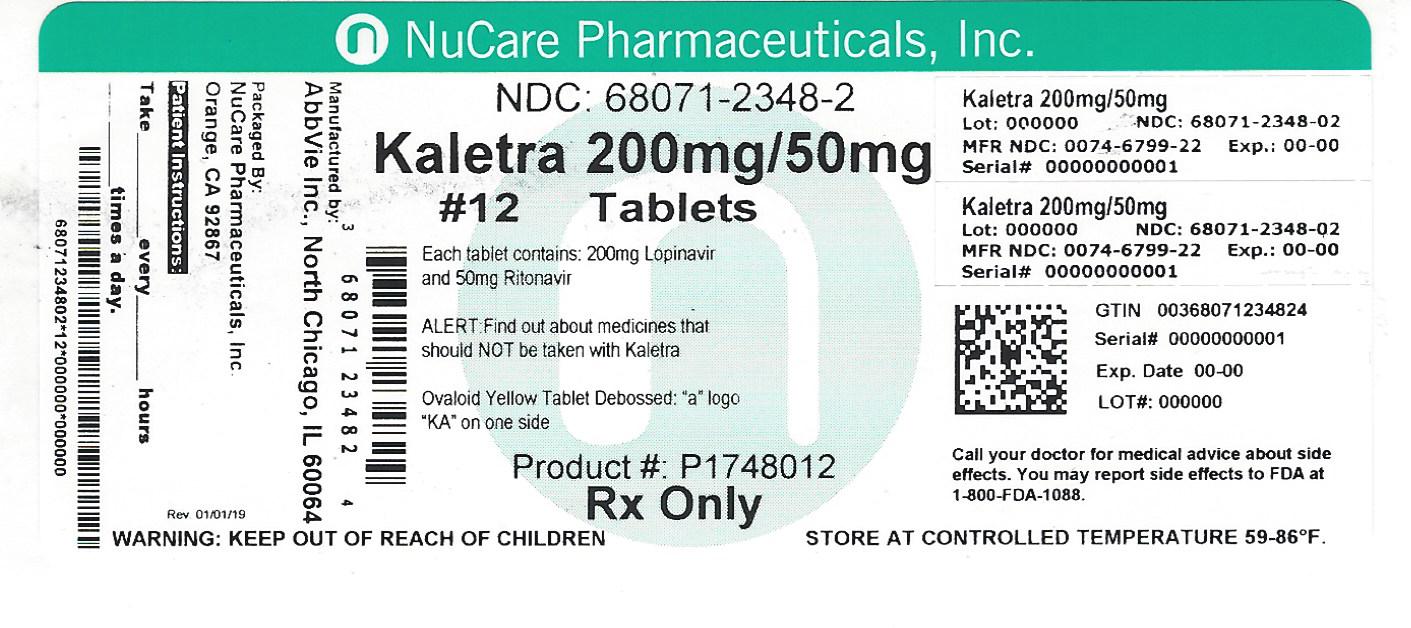
(lopinavir · DailyMed)
LOPINAVIR
Lopinavir 200mg/
What it does
Lopinavir is an antiviral medicine used to help control HIV infection.
Commonly used for: HIV infection (human immunodeficiency virus), AIDS (acquired immune deficiency syndrome)
Read more in plain English ↓Plain-language summary for general understanding - not medical advice. Always follow your pharmacist/doctor.
Ask about this medicine
Answers come only from this medicine's registration record, BNF monograph and interaction data - not medical advice.
Medicine sourcing is available in Kenya only. We don't sell or dispense medicines - licensed pharmacies do.
Sourcing - Kenya onlyRegistration & product details
Source: Rwanda Food and Drugs Authority · fetched 2026-03-11 22:07:38 · updated 2026-09-21 02:30:20
About this medicine
Lopinavir is an antiviral medicine used to help control HIV infection.
What it treats
- HIV infection (human immunodeficiency virus)
- AIDS (acquired immune deficiency syndrome)
How it works
Lopinavir works by stopping the virus from multiplying in the body, helping to manage HIV and improve immune function.
Who it's for
Lopinavir is for people living with HIV to help control the virus and improve their health.
AI-assisted summary grounded in BNF data - general information only, not medical advice. Always confirm with your pharmacist or doctor.
Clinical monograph: lopinavir
BNF-referencedLopinavir is an antiretroviral medication that is primarily used in combination with ritonavir for the treatment of HIV infection. It belongs to the class of drugs known as protease inhibitors, which work by inhibiting the HIV-1 protease enzyme, thereby preventing the cleavage of viral proteins necessary for the maturation of infectious viral particles. Lopinavir is used as part of highly active antiretroviral therapy (HAART) to reduce viral load and improve immune function in individuals living with HIV.
Indications
- HIV infection
- AIDS (Acquired Immunodeficiency Syndrome)
- HIV-related opportunistic infections
Dosage
Adults: The recommended dose of lopinavir when used in combination with ritonavir is 400 mg/100 mg taken twice daily or 800 mg/200 mg taken
Mechanism of action
Lopinavir acts as an inhibitor of the HIV-1 protease enzyme, a dimeric aspartic protease that cleaves the Gag polyprotein into functional viral proteins. By mimicking the normal peptide linkage cleaved by the HIV protease, lopinavir prevents the proteolytic cleavage of the Gag polyprotein, leading to the production of immature, non-infectious viral particles. This mechanism disrupts the HIV lifecycle and reduces the infectivity of the virus.
Pharmacodynamics
Lopinavir inhibits the activity of HIV protease, which is critical for HIV maturation. It has a moderate duration of action, necessitating administration once or twice daily. As a protease inhibitor, lopinavir is prone to drug interactions due to its effects on the cytochrome P450 enzyme system. Caution is advised when administering it alongside other medications. Adverse effects may include hepatotoxicity and pancreatitis, particularly in patients with pre-existing risk factors.
Pharmacokinetics
Lopinavir is well absorbed after oral administration, with a bioavailability that can be affected by food. It is metabolized primarily by the liver through the cytochrome P450 system, particularly CYP3A4, which can lead to significant drug interactions. The elimination half-life of lopinavir is approximately 5 to 6 hours, but it can be prolonged when taken with ritonavir. The drug is primarily excreted in the feces, with a small percentage eliminated in the urine.
Contra-indications
- Severe hypersensitivity to lopinavir or any component of the formulation
- Severe hepatic impairment
- Concomitant use with certain drugs that are highly dependent on CYP3A for clearance and that may cause significant drug interactions
Adverse effects
- Nausea
- Diarrhea
- Vomiting
- Abdominal pain
- Headache
- Fatigue
- Hyperlipidemia
- Hepatotoxicity
- Pancreatitis
Interactions
- CYP3A4 inhibitors and inducers
- Anticoagulants
- Anticonvulsants
- Antituberculosis medications
- Hormonal contraceptives
Precautions
- Monitor liver function tests due to risk of hepatotoxicity
- Monitor for signs and symptoms of pancreatitis
- Use with caution in patients with a history of liver disease or pancreatitis
- Evaluate for potential drug-drug interactions before initiating therapy
Pregnancy
Lopinavir is classified as category C. It should be used during pregnancy only if the potential benefit justifies the potential risk to the fetus.
Breast-feeding
Lopinavir is excreted in human milk. The decision to continue or discontinue breastfeeding should consider the importance of the drug to the mother.
Storage
Store at room temperature, away from moisture and heat. Protect from light.
Formulations
- Lopinavir/ritonavir combination tablets
- Lopinavir/ritonavir oral solution
AI-synthesized from BNF references - general information only, not a substitute for professional medical advice or the current BNF. Verify doses with a pharmacist.
Molecular reference: lopinavir
PubChem CID 92727Molecular formula: C37H48N4O5
Mechanism of action
The HIV lifecycle is comprised of 3 distinct stages: assembly, involving creation and packaging of essential viral components; budding, wherein the viral particle crosses the host cell plasma membrane and forms a lipid envelope; and maturation, wherein the viral particle alters its structure and becomes infectious. At the center of this lifecycle is the Gag polyprotein which, along with the products of its proteolysis, coordinate these stages and function as the major structural proteins of the virus. The HIV-1 protease enzyme, a dimeric aspartic protease, is the enzyme responsible for cleaving the Gag polyprotein and thus plays a critical role in many aspects of the HIV viral lifecycle. Lopinavir is an inhibitor of the HIV-1 protease enzyme. Its design is based on the "peptidomimetic" principle, wherein the molecule contains a hydroxyethylene scaffold which mimics the normal peptide linkage (cleaved by HIV protease) but which itself cannot be cleaved. By preventing HIV-1 protease activity, and thus the proteolysis of the Gag polyprotein, lopinavir results in the production of immature, non-infectious viral particles. /The researchers/ have previously shown that the HIV protease inhibitor lopinavir has selective toxicity against human papillomavirus (HPV)-positive cervical carcinoma cells via an unknown mechanism. SiHa cervical carcinoma cells were stably transfected with the proteasome sensor vector pZsProSensor-1 to confirm lopinavir inhibits the proteasome in these cells. The Panorama Xpress profiler 725 antibody array was then used to analyse specific changes in protein expression in lopinavir-treated versus control untreated SiHa cells followed by PCR and western blotting. Colorimetric growth assays of lopinavir-treated E6/E7 immortalised versus control human keratinocytes were performed. Targeted small interfering RNA gene silencing followed by growth assay comparison of lopinavir-treated/untreated SiHa cells was also used. Lopinavir induced an increase in the fluorescence of pZsProSensor-1 transfected SiHa cells, indicative of proteasomal inhibition. Ribonuclease L (RNASEL) protein was shown to be up-regulated in lopinavir-treated SiHa cells, which was confirmed by PCR and western blot. Targeted silencing of RNASEL reduced the sensitivity of SiHa cells to lopinavir. Selective toxicity against E6/E7 immortalised keratinocytes versus control cells was also seen with lopinavir and was associated with up-regulated RNASEL expression. These data are consistent with the toxicity of lopinavir against HPV-positive cervical carcinoma cells being related to its ability to block viral proteasome activation and induce an up-regulation of the antiviral protein RNASEL. This is supported by the drug's selective toxicity and up-regulation of RNASEL in E6/E7 immortalised keratinocytes combined with the increased resistance to lopinavir observed in SiHa cells following silencing of RNASEL gene expression. Lopinavir inhibits replication of HIV type 1 (HIV-1) by interfering with HIV protease. During HIV replication, HIV protease cleaves viral polypeptide products of the gag and gag-pol genes to form structural proteins of the virion core and essential viral enzymes. By interfering with the formation of these essential proteins and enzymes, lopinavir blocks maturation of the virus and causes formation of nonfunctional, immature, noninfectious virions. Lopinavir also has some in vitro activity against HIV type 2 (HIV-2).
Pharmacodynamics
Lopinavir inhibits the activity of an enzyme critical for the HIV viral lifecycle. It has a moderate duration of action necessitating once or twice daily dosing. Lopinavir, like other protease inhibitors, has a propensity for participating in drug interactions - use caution when administering lopinavir to patients maintained on other pharmaceutical agents as pharmacodynamic and pharmacokinetic interactions are common. Fatal hepatotoxicity and pancreatitis have been noted in patients undergoing therapy with lopinavir and patients with an increased baseline risk of these events should be monitored closely throughout therapy.
Source: PubChem (NCBI) · pathways from PathBank, Reactome, WikiPathways & PharmGKB.
This drug in other countries
The same active ingredient registered across other registries we cover - including different brands.
- ABACAVIR, LAMIVUDINE, LOPINAVIR AND RITONAVIR GRANULES 30 MG/15 MG/40 MG/10 MG · Phillips Healthcare
- ALUVIA 100/25 TABLETS · Harleys
- ALUVIA 200/50 TABLETS · Harleys
- Abacavir, Lamivudine, Lopinavir and Ritonavir… · Cipla Ltd
- KALETRA ORAL SOLUTION · AbbVie
- LOPINAVIR & RITONAVIR TABLETS 200MG/50MG · Phillips Healthcare
- ALLTERA_50 40/10MG GRANULES
- ALUVIA 200/50MG TABLET
- ALUVIA-125 100/25MG TABLET
- KALETRA 80/20MG SOLUTION
- KALETRA COMBINATION PRODUCT CAPSULE
- LOPIMUNE 200/50MG TABLET
- ALLTERA 50 · Mylan Laboratories
- ALLTERA 50 · Mylan Laboratories
- Lopinavir & Ritonavir · Aurobindo Pharma
- Lopinavir 200 mg & Ritonavir 50 mg USP tablets · Aurobindo Pharma Limited
- Lopinavir USP & Ritonavir USP · Aurobindo Pharma
- Lopinavir USP and Ritonavir USP · Laurus Labs
- ALLTERA · Mylan Laboratories
- ALLTERA 50 · Mylan Laboratories
- LOPINAVIR; RITONAVIR · Hetero Drugs
- LOPINAVIR; RITONAVIR · Aurobindo
- LOPINAVIR; RITONAVIR · Aurobindo
- LOPINAVIR; RITONAVIR · Hetero Drugs