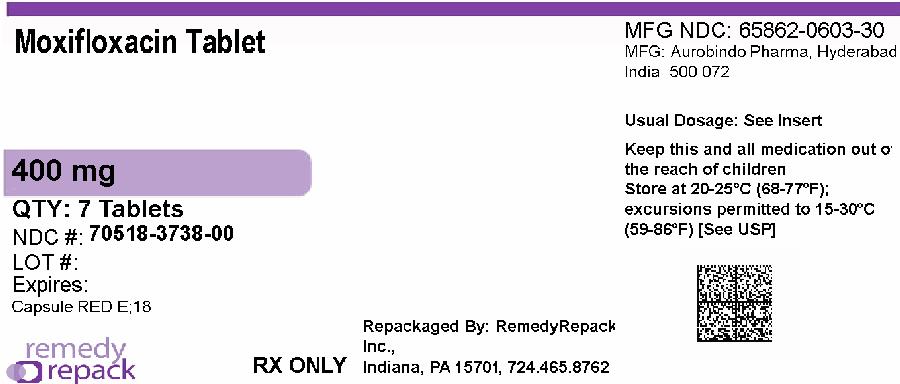
(moxifloxacin · DailyMed)
MAXICIN
MOXIFLOXACIN HYDROCHLORODE
What it does
Hydrochloride is a medication used to treat various health conditions. It helps manage symptoms and improve quality of life.
Commonly used for: high blood pressure (hypertension), edema (swelling due to fluid retention)
Read more in plain English ↓Plain-language summary for general understanding - not medical advice. Always follow your pharmacist/doctor.
Ask about this medicine
Answers come only from this medicine's registration record, BNF monograph and interaction data - not medical advice.
Hard to find? We help patients in Kenya source rare medicines. We don't sell or dispense medicines - licensed pharmacies do.
Source this medicineRegistration & product details
Source: Pharmacy and Poisons Board · fetched 2026-01-28 19:48:29 · updated 2026-10-18 02:00:55
Drug Interactions
6Pharmacodynamic Warnings
Moxifloxacin appears in TABLE 9: Drugs that prolong the QT interval
Severe (1)
Quinolones - decreases absorption
Strontiumispredictedtodecreasetheabsorptionof quinolones.Avoid.oTheoretical
Unknown (5)
Quinolones - decreases exposure
Lanthanum moderately decreases the exposure to quinolones. Quinolones should be taken 2 hours before or 4 hours after lanthanum.
Quinolones - increases exposure
Leflunomideispredictedtoincreasetheexposuretoquinolones (ciprofloxacin).oTheoretical
Quinolones - decreases exposure
Sucralfate decreases the exposure to quinolones. Separate administration by 2 hours.
Quinolones - decreases exposure
Zinc is predicted to decrease the exposure to quinolones. Separate administration by 2 hours. Rabeprazole → see proton pump inhibitors Rabies immunoglobulin → see immunoglobulins Rabies vaccine
Quinolones - increases exposure
Teriflunomideispredictedtoincreasetheexposureto quinolones(ciprofloxacin).oTheoretical https://www.facebook.c (Books-Courses-Medic
Data from BNF 85 (British National Formulary). This is not a substitute for professional medical advice. Matched via: class
About hydrochlorode
Hydrochloride is a medication used to treat various health conditions. It helps manage symptoms and improve quality of life.
What it treats
- high blood pressure (hypertension)
- edema (swelling due to fluid retention)
How it works
Hydrochloride works by helping the body remove excess salt and water, which can lower blood pressure and reduce swelling.
Who it's for
This medication is for adults and children who need help with controlling blood pressure or reducing swelling.
AI-assisted summary grounded in BNF data - general information only, not medical advice. Always confirm with your pharmacist or doctor.
About moxifloxacin
Moxifloxacin is an antibiotic used to treat various bacterial infections.
What it treats
- bacterial infections
- lung infections (pneumonia)
- skin infections
- abdominal infections
How it works
It works by stopping the growth of bacteria, helping your body to fight off the infection.
Who it's for
It is for adults and children aged 2 months and above who have certain bacterial infections.
Drug class
Quinolones
Cautions
- • Be cautious if you are taking other medications that may affect heart rhythm.
AI-assisted summary grounded in BNF data - general information only, not medical advice. Always confirm with your pharmacist or doctor.
Clinical monograph: hydrochlorode
Hydrochloride salts are commonly used in various pharmaceutical products, often to enhance the solubility and bioavailability of the active ingredient. They are typically associated with a range of therapeutic applications depending on the specific drug they are combined with. The hydrochloride form is particularly prevalent in medications that target conditions such as hypertension, anxiety, and pain management.
Dosage
Children: Refer to specific product guidelines for dosing information.
Adults: Refer to specific product guidelines for dosing information.
Mechanism of action
Hydrochloride salts do not possess intrinsic pharmacological activity on their own. Instead, they serve as a stabilizing and solubilizing agent for the active pharmaceutical ingredient. The mechanism of action depends on the specific drug that is formulated as a hydrochloride salt. For instance, in the case of antihypertensives or analgesics, these drugs may act by inhibiting specific receptors or pathways involved in blood pressure regulation or pain perception.
Pharmacodynamics
The pharmacodynamics of hydrochloride salts is contingent upon the drug they are associated with. Generally, the hydrochloride form enhances absorption and facilitates a more consistent therapeutic effect. Depending on the specific drug, effects may include alterations in neurotransmitter levels, modulation of ion channels, or inhibition of enzymes that contribute to disease pathology.
Pharmacokinetics
Pharmacokinetic properties such as absorption, distribution, metabolism, and excretion vary widely depending on the specific drug in its hydrochloride form. Typically, hydrochloride salts are well-absorbed in the gastrointestinal tract, with peak plasma concentrations occurring within a few hours post-administration. Metabolism may occur in the liver, and elimination routes can involve renal excretion. The presence of the hydrochloride salt can improve the solubility and stability of the drug, leading to enhanced bioavailability.
Contra-indications
- Hypersensitivity to hydrochlorothiazide or any component of the formulation
- Anuria
- Severe renal impairment
Adverse effects
- Hypokalemia
- Hyponatremia
- Hypercalcemia
- Hyperuricemia
- Gastrointestinal disturbances such as nausea and vomiting
- Dizziness
- Headache
- Photosensitivity
- Skin rash
Interactions
- Non-steroidal anti-inflammatory drugs (NSAIDs) may reduce the diuretic effect
- Corticosteroids may increase the risk of hypokalemia
- Antidiabetic agents may have decreased efficacy
- Lithium levels may increase, leading to toxicity
- Digoxin may increase the risk of arrhythmias in the presence of hypokalemia
Precautions
- Monitor electrolytes, especially potassium levels
- Use with caution in patients with liver disease
- Caution in patients with diabetes or gout due to potential changes in glucose and uric acid levels
- Assess renal function prior to initiation and during therapy
Pregnancy
Hydrochlorothiazide should be used during pregnancy only if the benefit outweighs the risk, as it may affect placental perfusion.
Breast-feeding
Hydrochlorothiazide is excreted in breast milk. Caution is advised when administering to nursing mothers.
Storage
Store in a cool, dry place away from light. Keep out of reach of children.
Formulations
- Tablets
- Oral solution
AI-synthesized from BNF references - general information only, not a substitute for professional medical advice or the current BNF. Verify doses with a pharmacist.
Clinical monograph: Moxifloxacin
BNF-referencedMoxifloxacin is a fluoroquinolone antibiotic used to treat a variety of bacterial infections. It exhibits a broad spectrum of activity against both Gram-positive and Gram-negative bacteria and is particularly effective against respiratory tract infections, skin and soft tissue infections, and certain intra-abdominal infections. The drug is characterized by its bactericidal action, which results from the inhibition of bacterial DNA replication.
Indications
- Bacterial infections
- Complicated skin and soft-tissue infections
- Pelvic inflammatory disease
- Respiratory tract infections
- Intra-abdominal infections
Dosage
Children: Refer to the BNF for Children for appropriate dosing information.
Adults: 400 mg once daily for 7-21 days, depending on the specific infection being treated.
Mechanism of action
Moxifloxacin's bactericidal effect is primarily due to its inhibition of the enzymes topoisomerase II (DNA gyrase) and topoisomerase IV. By interfering with these enzymes, moxifloxacin prevents the replication, transcription, and repair of bacterial DNA. This mechanism is crucial for bacterial cell division and survival.
Pharmacodynamics
As a quinolone antibiotic, moxifloxacin is effective against a range of bacteria including aerobic Gram-positive organisms such as _Staphylococcus aureus_ and _Streptococcus pneumoniae_, as well as Gram-negative organisms like _Haemophilus influenzae_. It is known for its high affinity for bacterial DNA gyrase, which is approximately 100 times greater than its affinity for mammalian enzymes, making it selectively toxic to bacteria.
Pharmacokinetics
Moxifloxacin exhibits good oral bioavailability and is widely distributed in body tissues, reaching peak plasma concentrations approximately 1 to 2 hours after administration. The drug is primarily metabolized in the liver and excreted via the urine. The half-life of moxifloxacin is approximately 12 hours, allowing for once-daily dosing.
Contra-indications
- Acute myocardial infarction (risk factor for QT interval prolongation)
- Bradycardia (risk factor for QT interval prolongation)
- Congenital long QT syndrome (risk factor for QT interval prolongation)
- Electrolyte disturbances (risk factor for QT interval prolongation)
- Heart failure with reduced left ventricular ejection fraction (risk factor for QT interval prolongation)
- History of symptomatic arrhythmias (risk factor for QT interval prolongation)
Adverse effects
- Increased risk of infection
- Akathisia
- Angina pectoris
- Colitis associated with antibiotics
- Asthma
- Dehydration
- Gastritis
- Hyperlipidaemia
- Malaise
- Oedema
- Pelvic pain
- Thrombocytosis
- Vasodilation
Precautions
- May impair performance of skilled tasks (e.g. driving)
- Use with caution in patients with a history of seizures or CNS disorders
Pregnancy
Manufacturer advises use only if potential benefit outweighs risk.
Breast-feeding
Manufacturer advises avoid-present in milk in animal studies.
Storage
Store in a cool, dry place away from direct sunlight.
Formulations
- Tablets 400 mg
- Injection solution 400 mg/250 ml
- Nebuliser solution 100 mg/1 ml
AI-synthesized from BNF references - general information only, not a substitute for professional medical advice or the current BNF. Verify doses with a pharmacist.
Molecular reference: Moxifloxacin
PubChem CID 152946Molecular formula: C21H24FN3O4
Mechanism of action
The bactericidal action of moxifloxacin results from inhibition of the enzymes topoisomerase II (DNA gyrase) and topoisomerase IV. DNA gyrase is an essential enzyme that is involved in the replication, transcription and repair of bacterial DNA. Topoisomerase IV is an enzyme known to play a key role in the partitioning of the chromosomal DNA during bacterial cell division. The fluoroquinolone antibiotic moxifloxacin has been associated with the acquired long QT syndrome and is used as a positive control in the evaluation of the QT-interval prolonging potential of new drugs. In common with other QT-prolonging agents, moxifloxacin is known to inhibit the hERG potassium K+ channel, but at present there is little mechanistic information available on this action. This study was conducted in order to characterise the inhibition of hERG current (I(hERG)) by moxifloxacin, and to determine the role in drug binding of the S6 aromatic amino-acid residues Tyr652 and Phe656. hERG currents were studied using whole-cell patch clamp (at room temperature and at 35-37 degrees C) in an HEK293 cell line stably expressing hERG channels. Moxifloxacin reversibly inhibited currents in a dose-dependent manner. We investigated the effects of different voltage commands to elicit hERG currents on moxifloxacin potency. Using a 'step-ramp' protocol, the IC50 was 65 uM at room temperature and 29 microM at 35 degrees C. When a ventricular action potential waveform was used to elicit currents, the IC50 was 114 microM. Block of hERG by moxifloxacin was found to be voltage-dependent, occurred rapidly and was independent of stimulation frequency. Mutagenesis of the S6 helix residue Phe656 to Ala failed to eliminate or reduce the moxifloxacin-mediated block whereas mutation of Tyr652 to Ala reduced moxifloxacin block by approximately 66%. Our data demonstrate that moxifloxacin blocks the hERG channel with a preference for the activated channel state. The Tyr652 but not Phe656 S6 residue is involved in moxifloxacin block of hERG, concordant with an interaction in the channel inner cavity. The bactericidal action of moxifloxacin results from inhibition of the topoisomerase II (DNA gyrase) and topoisomerase IV required for bacterial DNA replication, transcription, repair, and recombination. It appears that the C8-methoxy moiety contributes to enhanced activity and lower selection of resistant mutants of Gram-positive bacteria compared to the C8-H moiety. The presence of the bulky bicycloamine substituent at the C-7 position prevents active efflux, associated with the NorA or pmrA genes seen in certain Gram-positive bacteria. Torsade de pointes (TdP) is increasingly recognized as a complication of drug therapy. The most common cause of drug-induced QT prolongation is inhibition of the rapidly activating component of the delayed potassium current (I(Kr)). Moxifloxacin, a widely used fluoroquinolone, is a weak I(Kr) inhibitor and has been associated with QT prolongation. Fluoroquinolones prolong the QT interval by blocking voltage-gated potassium channels, especially the rapid component of the delayed rectifier potassium current I(Kr), expressed by HERG (the human ether-a-go-go-related gene). According to the available case reports and clinical studies, moxifloxacin carries the greatest risk of QT prolongation from all available quinolones in clinical practice and it should be used with caution in patients with predisposing factors for Torsades de pointes (TdP).
Pharmacodynamics
Moxifloxacin is a quinolone/fluoroquinolone antibiotic. Moxifloxacin can be used to treat infections caused by the following bacteria: Aerobic Gram-positive microorganisms: _Corynebacterium_ species, _Micrococcus luteus_, _Staphylococcus aureus_, _Staphylococcus epidermidis_, _Staphylococcus haemolyticus_, _Staphylococcus hominis_, _Staphylococcus warneri_, _Streptococcus pneumoniae_, and _Streptococcus viridans_ group. Aerobic Gram-negative microorganisms: _Acinetobacter lwoffii_, _Haemophilus influenzae_, and _Haemophilus parainfluenzae_. Other microorganisms: _Chlamydia trachomatis_. Moxifloxacin is bactericidal and its mode of action depends on blocking of bacterial DNA replication by binding itself to an enzyme called DNA gyrase, which allows the untwisting required to replicate one DNA double helix into two. Notably the drug has 100 times higher affinity for bacterial DNA gyrase than for mammalian. Moxifloxacin is a broad-spectrum antibiotic that is active against both Gram-positive and Gram-negative bacteria.
Source: PubChem (NCBI) · pathways from PathBank, Reactome, WikiPathways & PharmGKB.
This drug in other countries
The same active ingredient registered across other registries we cover - including different brands.
- APDROPS · Ajanta Pharma
- Apdrops DX · Ajanta Pharma
- Avelox · Bayer
- Avelox · Bayer
- FLOXSAFE 400 · Msn Laboratories
- Getimox 400 · Getz Pharma Limited
- APDROPS_DX 0.5/0.1%W/V EYE DROPS
- FLOXSAFE_400 400MG TABLET
- M-FLOX 400MG TABLETS
- MICROMOX-400 400MG FILM-COATED TABLETS
- MOCIN 0.5%W/V SOLUTION(EYE DROPS)
- MOXAF 400MG TABLET
- AROX EYE DROPS · Jamjoom Pharmaceuticals
- AROX UD OPTHALMIC SOLUTION · Jampoon Pharmaceuticals
- FLOXIMEX OPTHTHALMIC SOLUTION · East African Overseas
- FLOXSAFE TABLETS (Each film-coated tablet contains Moxifloxacin Hydrochloride 400mg) · Msn Laboratories
- MOFILON OPHTHALMIC SOLUTION · Indoco Remedies
- MOXETERO 400MG TABLETS · Hetero Labs Ltd
- APDROPS · Ajanta Pharma
- FLOXSAFE 400 · Msn Laboratories
- MFLOX · Aurolab
- MICROMOX EYE DROP · Micro Labs
- MOXIFLOXACIN TABLETS USP 400 MG · Lupin
- OXCIN OPHTHALMIC SOLUTION · Atco Laboratories