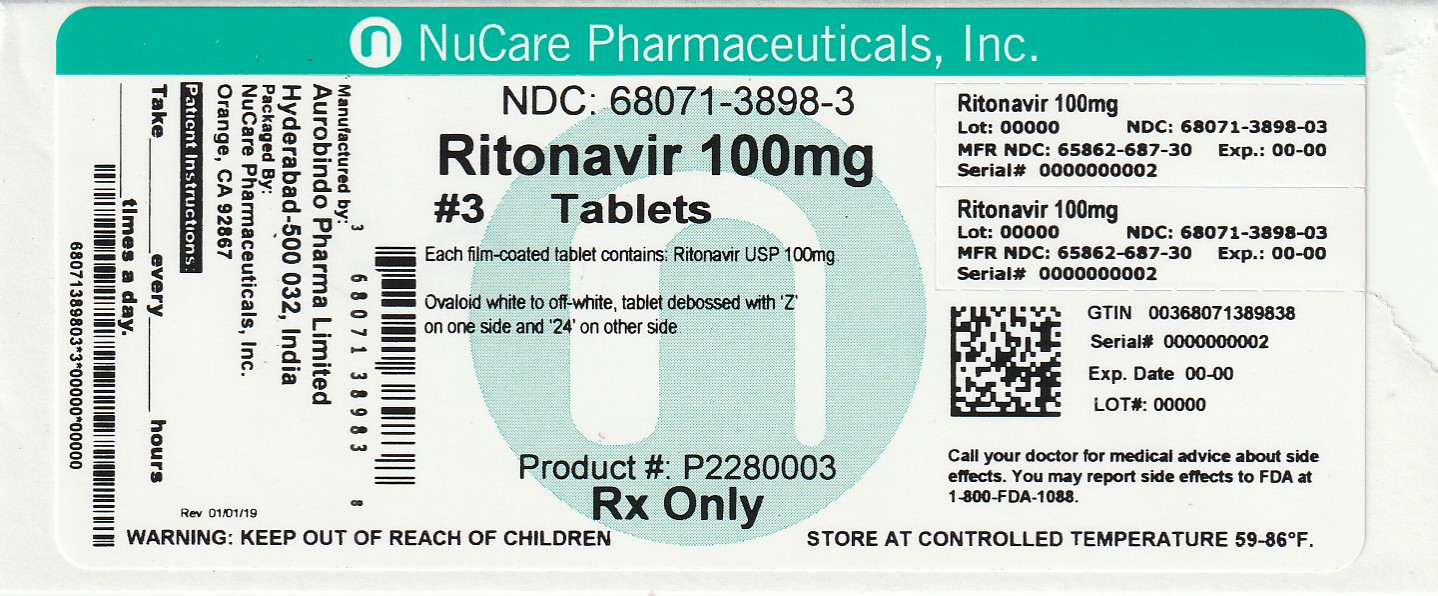
(ritonavir · DailyMed)
NIRMACOM 150/100MG TABLET
NIRMATRELVIR AND RITONAVIR
What it does
Nirmatrelvir is a medication used to treat COVID-19, helping to reduce the severity of the illness.
Commonly used for: COVID-19
Read more in plain English ↓Plain-language summary for general understanding - not medical advice. Always follow your pharmacist/doctor.
Ask about this medicine
Answers come only from this medicine's registration record, BNF monograph and interaction data - not medical advice.
Medicine sourcing is available in Kenya only. We don't sell or dispense medicines - licensed pharmacies do.
Sourcing - Kenya onlyRegistration & product details
Source: Pharmacy and Medicines Regulatory Authority · fetched 2026-04-21 17:37:42 · updated 2026-09-19 04:30:23
Drug Interactions
63Severe (12)
Antipsychotics, Second Generation - affects exposure
Ritonavir is predicted to affect the exposure to antipsychotics, second generation (clozapine). Avoid.
Benzodiazepines - increases exposure
Ritonavir is predicted to increase the exposure to benzodiazepines (diazepam, flurazepam). Avoid.
Clopidogrel - decreases efficacy
Ritonavirmightdecreasetheefficacyofclopidogrel.Avoid. oTheoretical
Clozapine - affects exposure
Ritonavir is predicted to affect the exposure to antipsychotics, second generation (clozapine). Avoid.
Dabigatran - increases exposure
Ritonavir is predicted to increase the exposure to thrombin inhibitors (dabigatran). Avoid.
Moderate (11)
Antipsychotics, Second Generation - decreases exposure
Ritonavir is predicted to decrease the exposure to antipsychotics, second generation (olanzapine). Monitor and adjust dose.
Clarithromycin - increases exposure
Ritonavir increases the exposure to macrolides (clarithromycin). Adjust dose in renal impairment.
Deferasirox - decreases exposure
Ritonavir is predicted to decrease the exposure to iron chelators (deferasirox). Monitor serum ferritin and adjust dose.
Digoxin - increases concentration
Ritonavir increases the concentration of digoxin. Adjust dose and monitor concentration.
Ironchelators - decreases exposure
Ritonavir is predicted to decrease the exposure to iron chelators (deferasirox). Monitor serum ferritin and adjust dose.
Unknown (40)
Agomelatine - decreases exposure
Ritonavirispredictedtodecreasetheexposuretoagomelatine. oTheoretical
Albendazole - decreases exposure
Ritonavir decreases the exposure to albendazole.
Aliskiren - increases exposure
Ritonavirispredictedtoincreasetheexposuretoaliskiren. oTheoretical
Aminophylline - decreases exposure
Ritonavir decreases the exposure to aminophylline. Adjust dose.
Anaesthetics,local - decreases exposure
Ritonavir is predicted to decrease the exposure to anaesthetics, local (ropivacaine).
Data from BNF 85 (British National Formulary). This is not a substitute for professional medical advice. Matched via: exact
About nirmatrelvir
Nirmatrelvir is a medication used to treat COVID-19, helping to reduce the severity of the illness.
What it treats
- COVID-19
How it works
Nirmatrelvir works by stopping the virus that causes COVID-19 from multiplying in the body.
Who it's for
This medication is for adults and children who are at high risk of getting severe COVID-19.
AI-assisted summary grounded in BNF data - general information only, not medical advice. Always confirm with your pharmacist or doctor.
About ritonavir
Ritonavir is a medication primarily used to treat HIV infection. It helps boost the effectiveness of other HIV medications.
What it treats
- HIV infection
- Acquired Immunodeficiency Syndrome (AIDS)
How it works
Ritonavir works by inhibiting an enzyme that HIV needs to multiply, thus helping to control the virus in the body.
Who it's for
This medication is for individuals diagnosed with HIV or AIDS.
AI-assisted summary grounded in BNF data - general information only, not medical advice. Always confirm with your pharmacist or doctor.
Clinical monograph: nirmatrelvir
BNF-referencedNirmatrelvir is an antiviral medication primarily used in combination with ritonavir for the treatment of COVID-19. It acts by inhibiting the 3C-like protease (3CLPRO) of the SARS-CoV-2 virus, which is essential for viral replication. Nirmatrelvir is administered orally and is part of the therapeutic regimen aimed at reducing the severity of the disease in patients with a high risk of progression to severe COVID-19.
Indications
- COVID-19 in patients at high risk of progression to severe disease
- Treatment for mild to moderate COVID-19
Dosage
Children: Refer to the BNF for Children for paediatric dosing recommendations.
Adults: Refer to the BNF for specific dosing guidelines as they may vary based on clinical circumstances.
Mechanism of action
Nirmatrelvir inhibits a cysteine residue in the 3C-like protease (3CLPRO) of SARS-CoV-2, preventing the cleavage of polyproteins that are necessary for viral replication. The inhibition of this protease effectively halts the release of nonstructural proteins required for the virus to replicate and propagate.
Pharmacodynamics
Nirmatrelvir is used in conjunction with ritonavir, which enhances the plasma concentration of nirmatrelvir by inhibiting its metabolism via CYP3A enzymes. This combination improves the efficacy of nirmatrelvir but also increases the risk of drug-drug interactions, necessitating careful review of a patient's medication history before initiation.
Pharmacokinetics
Nirmatrelvir is rapidly absorbed following oral administration, with peak plasma concentrations typically reached within a few hours. The pharmacokinetics of nirmatrelvir are significantly influenced by the co-administration of ritonavir, which serves to increase its bioavailability. The drug is primarily metabolized in the liver, with renal excretion being a significant route for elimination.
Interactions
- nirmatrelvir boosted with ritonavir + voriconazole: Severe (decreases concentration)
- mitotane + nirmatrelvir boosted with ritonavir: Severe (decreases exposure)
- nirmatrelvir boosted with ritonavir + antifungals, azoles: Severe (decreases concentration)
- St John's Wort + nirmatrelvir boosted with ritonavir: Severe (decreases exposure)
- rifampicin + nirmatrelvir boosted with ritonavir: Severe (decreases exposure)
- nirmatrelvir boosted with ritonavir + aminophylline: Moderate (decreases concentration)
- nirmatrelvir boosted with ritonavir + opioids: Moderate (decreases concentration)
- nirmatrelvir boosted with ritonavir + methadone: Moderate (decreases concentration)
- nirmatrelvir boosted with ritonavir + theophylline: Moderate (decreases concentration)
- nirmatrelvir boosted with ritonavir + antiepileptics: Unknown (decreases concentration)
Pregnancy
Use in pregnancy should be considered only if the potential benefit justifies the potential risk to the fetus. Consult prescribing information.
Breast-feeding
Caution is advised when administering nirmatrelvir to breastfeeding mothers. Consult prescribing information for guidance.
Storage
Store at room temperature, away from moisture and heat. Keep out of reach of children.
Formulations
- Nirmatrelvir and ritonavir combination (Paxlovid)
AI-synthesized from BNF references - general information only, not a substitute for professional medical advice or the current BNF. Verify doses with a pharmacist.
Clinical monograph: Ritonavir
BNF-referencedRitonavir is an antiretroviral medication primarily used in the treatment of HIV infection. It functions as a protease inhibitor, impeding the HIV protease enzyme's ability to cleave viral polyproteins, resulting in the production of immature and non-infectious viral particles. Ritonavir is often used in combination with other antiretroviral agents to enhance efficacy and improve therapeutic outcomes.
Indications
- HIV infection in combination with other antiretroviral drugs
Dosage
Children: For children over 2 years of age
Adults: The typical adult dose of ritonavir is 100–200 mg taken 1–2 times a day. For high-dose ritonavir used as a booster, the recommended dose is 800/200 mg once daily, but this should only be used in patients with an HIV strain that has fewer than 3 mutations to protease inhibitors.
Mechanism of action
Ritonavir inhibits the HIV protease enzyme, which is crucial for the cleavage of the viral polyprotein precursors into functional proteins essential for the formation of infectious HIV particles. By binding to the active site of the protease, ritonavir prevents this cleavage, leading to the production of non-infectious viral particles. Additionally, ritonavir is a potent inhibitor of the cytochrome P450 CYP3A4 isoenzyme, which enhances the pharmacokinetic profile of other protease inhibitors by reducing their metabolism.
Pharmacodynamics
Ritonavir exhibits antiviral activity specifically against HIV-1 by preventing the function of the viral protease. This inhibition disrupts the normal life cycle of HIV, resulting in immature viral particles that cannot propagate infection. Ritonavir is generally administered in conjunction with other antiretroviral therapies to achieve a synergistic effect, enhancing the overall antiviral activity and therapeutic success.
Pharmacokinetics
Ritonavir is well-absorbed when taken orally, with peak plasma concentrations occurring approximately 2 to 4 hours post-administration. Its bioavailability is influenced by food intake. The drug is extensively metabolized in the liver, primarily by the CYP3A4 enzyme. Ritonavir has a half-life of about 3 to 5 hours in adults, requiring multiple daily doses to maintain effective plasma levels. The drug is excreted mainly in feces, with minimal renal excretion.
Contra-indications
- Severe hepatic impairment
- Severe renal impairment
- History of pancreatitis
Adverse effects
- Nausea
- Diarrhea
- Vomiting
- Abdominal pain
- Increased risk of infections
- Pancreatitis
- Hyperlipidemia
- Fat redistribution
- Liver enzyme elevation
- Cardiac conduction disorders
- Visual impairment
- Peripheral neuropathy
- Hypersensitivity reactions
Interactions
- Ritonavir + antipsychotics (second-generation): Severe (affects exposure)
- Ritonavir + clozapine: Severe (affects exposure)
- Ritonavir + benzodiazepines: Severe (increases exposure)
- Ritonavir + diazepam: Severe (increases exposure)
- Ritonavir + flurazepam: Severe (increases exposure)
- Ritonavir + clopidogrel: Severe (decreases efficacy)
- Ritonavir + glecaprevir: Severe (increases exposure)
- Ritonavir + opioids: Severe (increases risk of central nervous system toxicity)
- Ritonavir + pethidine: Severe (increases risk of central nervous system toxicity)
- Ritonavir + tepotinib: Severe (increases exposure)
Precautions
- Monitor liver function tests regularly
- Use with caution in patients with a history of cardiac conduction disorders
- Evaluate signs of pancreatitis, discontinue if diagnosed
- Avoid use in severe impairment of hepatic or renal function
- Consider potential for drug interactions due to CYP3A4 inhibition
Pregnancy
Use during pregnancy only if the potential benefit justifies the potential risk to the fetus. Ritonavir is classified as Category B.
Breast-feeding
Ritonavir is excreted in breast milk. Weigh the benefits of breastfeeding against the potential risks of HIV transmission or adverse effects to the infant.
Storage
Store at room temperature, away from moisture and heat. Keep out of reach of children.
Formulations
- Ritonavir 50 mg tablets
AI-synthesized from BNF references - general information only, not a substitute for professional medical advice or the current BNF. Verify doses with a pharmacist.
Molecular reference: nirmatrelvir
PubChem CID 155903259Molecular formula: C23H32F3N5O4
Mechanism of action
Nirmatrelvir is an inhibitor of a cysteine residue in the 3C-like protease (3CL<sup>PRO</sup>) of SARS-CoV-2. This cysteine is responsible to the activity of the 3CL<sup>PRO</sup> of SARS-CoV-2 and potentially other members of the coronavirus family. The 3CL<sup>PRO</sup>, also known as the main protease or non structural protein 5, is responsible for cleaving polyproteins 1a and 1ab. These polyproteins contain the 3CL<sup>PRO</sup> itself, a papain-like (PL) cysteine protease, and 14 other nonstructural proteins. Without the activity of the 3CL<sup>PRO</sup>, nonstructural proteins (including proteases) cannot be released to perform their functions, inhibiting viral replication.
Pharmacodynamics
Nirmatrelvir is administered alongside ritonavir, a potent inhibitor of CYP3A enzymes, in order to inhibit its metabolism and increase plasma nirmatrelvir concentrations. While therapeutically beneficial, the use of ritonavir poses a significant risk of drug interaction due to its potent inhibition profile - patients and clinicians should consult the prescribing information for Paxlovid (nirmatrelvir and ritonavir) to evaluate any potential for drug interaction with existing medications prior to the initiation of Paxlovid.
Source: PubChem (NCBI) · pathways from PathBank, Reactome, WikiPathways & PharmGKB.
Molecular reference: Ritonavir
PubChem CID 392622Molecular formula: C37H48N6O5S2
Mechanism of action
Ritonavic inhibits the HIV viral proteinase enzyme that normally cleaves the structural and replicative proteins that arise from major HIV genes, such as *gag* and *pol*. *Gag* encodes proteins involved in the core and the nucleocapsid, while *pol* encodes the the HIV reverse transcriptase, ribonuclease H, integrase, and protease. The *pol*-encoded proteins are initially translated in the form of a larger precursoe polypeptide, *gag-pol*, and needs to be cleaved by HIV protease to form other complement proteins. Ritonavir prevents the cleavage of the *gag-pol* polyprotein, which results in noninfectious, immature viral particles. Ritonavir is a potent inhibitor of cytochrome P450 CYP3A4 isoenzyme present both in the intestinal tract and liver. It is a type II ligand that perfectly fits into the CYP3A4 active site cavity and irreversibly binds to the heme iron via the thiazole nitrogen, which decreases the redox potential of the protein and precludes its reduction with the redox partner, cytochrome P450 reductase. Ritonavir may also play a role in limiting cellular transport and efflux of other protease inhibitors via the P-glycoprotein and MRP efflux channels. Unlike nucleoside antiretroviral agents, the antiviral activity of ritonavir does not depend on intracellular conversion to an active metabolite. Ritonavir and other HIV protease inhibitors (e.g., amprenavir, indinavir, lopinavir, nelfinavir, saquinavir) act at a different stage of the HIV replication cycle than nucleoside and nonnucleoside reverse transcriptase inhibitors, and results of in vitro studies indicate that the antiretroviral effects of HIV protease inhibitors and some nucleoside or nonnucleoside antiretroviral agents may be additive or synergistic. Ritonavir is a selective, competitive, reversible inhibitor of HIV protease. HIV protease, an aspartic endopeptidase that functions as a homodimer, plays an essential role in the HIV replication cycle and the formation of infectious virus. During HIV replication, HIV protease cleaves viral polypeptide products of the gag and gag-pol genes (i.e., p55 and p160) to form structural proteins of the virion core (i.e., p17, p24, p9, and p7) and essential viral enzymes (i.e., reverse transcriptase, integrase, and protease). By interfering with the formation of these essential proteins and enzymes, ritonavir blocks maturation of the virus and causes formation of nonfunctional, immature, noninfectious virions. Ritonavir is active in both acutely and chronically infected cells since it targets the HIV replication cycle after translation and before assembly. Thus, the drug is active in chronically infected cells (e.g., monocytes and macrophages) that generally are not affected by nucleoside reverse transcriptase inhibitors (e.g., didanosine, lamivudine, stavudine, zalcitabine, zidovudine). Ritonavir does not affect early stages of the HIV replication cycle; however, the drug interferes with production of infectious HIV and limits further infectious spread of the virus. While the complete mechanisms of antiviral activity of ritonavir have not been fully elucidated, ritonavir apparently inhibits replication of retroviruses, including human immunodeficiency virus type 1 (HIV-1) and 2 (HIV-2), by interfering with HIV protease. The drug, therefore, exerts a virustatic effect against retroviruses by acting as an HIV protease inhibitor.
Pharmacodynamics
Ritonavir is a protease inhibitor with activity against Human Immunodeficiency Virus Type 1 (HIV-1). Protease inhibitors block the part of HIV called protease. HIV-1 protease is an enzyme required for the proteolytic cleavage of the viral polyprotein precursors into the individual functional proteins found in infectious HIV-1. Ritonavir binds to the protease active site and inhibits the activity of the enzyme. This inhibition prevents cleavage of the viral polyproteins resulting in the formation of immature non-infectious viral particles. Protease inhibitors are almost always used in combination with at least two other anti-HIV drugs. Modern protease inhibitors require the use of low-dose ritonavir to boost pharmacokinetic exposure through inhibition of metabolism via the cytochrome P450 3A4 enzyme pathway.
Source: PubChem (NCBI) · pathways from PathBank, Reactome, WikiPathways & PharmGKB.
This drug in other countries
The same active ingredient registered across other registries we cover - including different brands.
- ABACAVIR, LAMIVUDINE, LOPINAVIR AND RITONAVIR GRANULES 30 MG/15 MG/40 MG/10 MG · Phillips Healthcare
- ALUVIA 100/25 TABLETS · Harleys
- ALUVIA 200/50 TABLETS · Harleys
- ANZAVIR-R TABLETS · Surgilinks
- ATAVAZ · Sun Pharma
- ATAZANAVIR (AS SULFATE)/ RITONAVIR TABLETS 300 MG/ 100 MG · Sai Pharmaceuticals
- ALLTERA 50 · Mylan Laboratories
- ALLTERA 50 · Mylan Laboratories
- ATAZANAVIR SULFATE 300 MG AND RITONAVIR 100 MG FILM COATED TABLETS
- Anzavir-R · Mylan Laboratories
- Atazanavir and Ritonavir Tablets 300 mg/100 mg · Laurus Labs
- Atazanavir/ Ritonavir Tablets 300 mg/100 mg · Shanghai Desano Bio-Pharmaceutical
- ALLTERA 50 · Mylan Laboratories
- ANZAVIR-R · Mylan Laboratories
- ATAZANAVIR (AS SULFATE) AND RITONAVIR TABLETS 300MG AND 100MG · Lupin
- ATAZOR-R-300/100 · Emcurepharmaceuticalsltd
- DARUNAVIR AND RITONAVIR TABLETS · Hetero Labs
- DARUNAVIR AND RITONAVIR TABLETS · Hetero Labs
- ANZAVIR-R TABLETS · Mylan Laboratories
- ATAZOR-R TABLETS · Emcure Pharmaceuticals
- DARUNAVIR+RITONAVIR TABLETS · Mylan Laboratories
- NIRMACOM TABLETS (Each tablet contains Nirmatrelvir/Ritonavir 150mg / 100mg) · Hetero Labs
- PAXLOVID TABLETS (Each film-coated tablet contains Nirmatrelvir/Ritonavir 150mg/100mg) · Pfizer