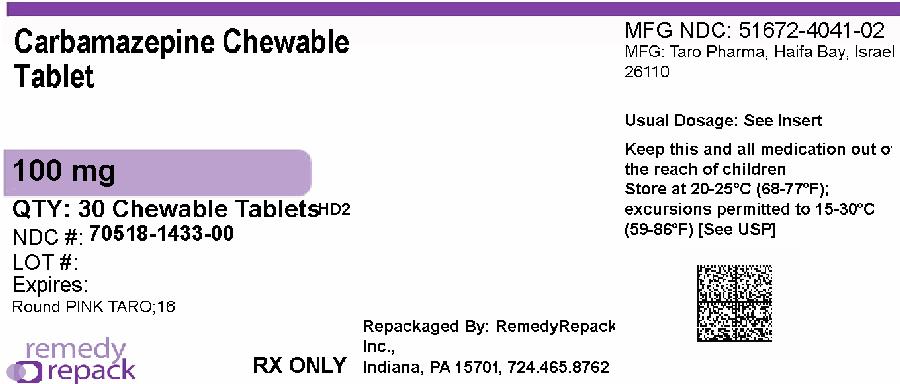
(carbamazepine · DailyMed)
NONE
CARBAMAZEPINE
What it does
Carbamazepine is a medication used to treat seizures and certain types of nerve pain. It belongs to a class of drugs called antiepileptics.
Commonly used for: seizures (epilepsy), nerve pain (neuropathic pain)
Read more in plain English ↓Plain-language summary for general understanding - not medical advice. Always follow your pharmacist/doctor.
Ask about this medicine
Answers come only from this medicine's registration record, BNF monograph and interaction data - not medical advice.
Medicine sourcing is available in Kenya only. We don't sell or dispense medicines - licensed pharmacies do.
Sourcing - Kenya onlyRegistration & product details
Source: Medicines Control Authority of Zimbabwe · fetched 2026-04-18 08:22:09 · updated 2026-09-13 04:30:08
Drug Interactions
113Pharmacodynamic Warnings
Carbamazepine appears in TABLE 1: Drugs that cause hepatotoxicity
Carbamazepine appears in TABLE 18: Drugs that cause hyponatraemia
Severe (15)
Antiepileptics - decreases absorption
Iron chelators (dexrazoxane) might decrease the absorption of antiepileptics (fosphenytoin, phenytoin). Avoid.
Antiepileptics - decreases exposure
Lumacaftor is predicted to decrease the exposure to antiepileptics (carbamazepine, fosphenytoin, phenobarbital, phenytoin, primidone). Avoid.
Antiepileptics - decreases concentration
St John’s wort is predicted to decrease the concentration of antiepileptics (fosphenytoin, phenobarbital, phenytoin, primidone). Avoid.
Antiepileptics - increases risk of overheating and dehydration
Hydroxyzine potentially increases the risk of overheating and dehydration when given with antiepileptics (zonisamide). Avoid in children.
Antiepileptics - increases risk of overheating and dehydration
Haloperidol potentially increases the risk of overheating and dehydration when given with antiepileptics (zonisamide). Avoid in children.
Moderate (47)
Antiepileptics - increases concentration
Intravenous chloramphenicol increases the concentration of antiepileptics (fosphenytoin, phenytoin) and antiepileptics (fosphenytoin, phenytoin) affect the concentration of intravenous chloramphenicol
Antiepileptics - decreases concentration
Diazoxide decreases the concentration of antiepileptics (fosphenytoin, phenytoin) and antiepileptics (fosphenytoin, phenytoin) are predicted to decrease the effects of diazoxide. Monitor concentration
Antiepileptics - increases concentration
Disulfiramincreasestheconcentrationofantiepileptics (fosphenytoin,phenytoin).Monitorconcentrationandadjust dose.rStudy →AlsoseeTABLE12p.1520
Antiepileptics - increases concentration
Fluorouracilincreasestheconcentrationofantiepileptics (fosphenytoin,phenytoin).Monitorconcentrationandadjust dose.rAnecdotal 1xidneppA|snoitcaretnI A1 https://www.facebook.c (Books-Courses-Medic
Antiepileptics - decreases concentration
Folates are predicted to decrease the concentration of antiepileptics (fosphenytoin, phenobarbital, phenytoin, primidone). Monitor concentration and adjust dose.
Unknown (51)
Afatinib - decreases exposure
Carbamazepine is predicted to decrease the exposure to afatinib.
Aliskiren - decreases exposure
Carbamazepine decreases the exposure to aliskiren.
Antiepileptics - increases risk of overheating and dehydration
Acetazolamide potentially increases the risk of overheating and dehydration when given with antiepileptics (zonisamide). Avoid in children.
Antiepileptics - increases risk of visual disturbances
Alcohol potentially increases the risk of visual disturbances when given with antiepileptics (retigabine).
Antiepileptics - decreases exposure
Enzalutamide is predicted to slightly decrease the exposure to antiepileptics (brivaracetam).
Data from BNF 85 (British National Formulary). This is not a substitute for professional medical advice. Matched via: class
About this medicine
Carbamazepine is a medication used to treat seizures and certain types of nerve pain. It belongs to a class of drugs called antiepileptics.
What it treats
- seizures (epilepsy)
- nerve pain (neuropathic pain)
How it works
Carbamazepine helps stabilize electrical activity in the brain, reducing the frequency and severity of seizures.
Who it's for
This medication is for individuals with epilepsy or specific nerve pain conditions.
Drug class
Antiepileptics
Cautions
- • Be careful if you are taking drugs that can harm the liver.
- • Be cautious if you are taking medications that can lower sodium levels in the blood.
AI-assisted summary grounded in BNF data - general information only, not medical advice. Always confirm with your pharmacist or doctor.
Clinical monograph: Carbamazepine
BNF-referencedCarbamazepine is an antiepileptic drug primarily used to manage epilepsy, particularly focal and generalized tonic-clonic seizures. It is also indicated for other conditions such as trigeminal neuralgia and bipolar disorder. Carbamazepine functions by inhibiting sodium channels, thereby reducing neuronal excitability and stabilizing mood in bipolar disorder. It has a narrow therapeutic index, necessitating careful monitoring of plasma levels to avoid toxicity.
Indications
- Epilepsy (focal and generalized tonic-clonic seizures)
- Trigeminal neuralgia
- Bipolar disorder (manic episodes)
- Adjunctive therapy in acute alcohol withdrawal
- Diabetic neuropathy
Dosage
Children: For children
Adults: Initially, 100 mg 1-2 times a day, increased gradually according to response; usual dose 200 mg 3-4 times a day, increased if necessary up to 1.6 g daily.
Mechanism of action
Carbamazepine's mechanism of action is associated with its ability to inhibit voltage-dependent sodium channels, which reduces the firing of action potentials and stabilizes neuronal membranes. This results in decreased polysynaptic nerve responses and inhibition of excessive neuronal firing, effectively controlling seizure activity. In bipolar disorder, it may enhance GABA transmission and increase dopamine turnover, alleviating manic and depressive symptoms.
Pharmacodynamics
Carbamazepine exhibits anticonvulsant effects by limiting high-frequency repetitive firing of action potentials in neurons. It shows effectiveness in treating manic episodes in bipolar disorder and alleviating pain associated with trigeminal neuralgia. The drug has a narrow therapeutic index, which requires careful dose management to balance efficacy with the risk of adverse effects. Genetic variations can affect carbamazepine metabolism and efficacy, with certain genotypes conferring resistance to treatment.
Pharmacokinetics
Carbamazepine is well absorbed orally and undergoes extensive hepatic metabolism, primarily by cytochrome P450 enzymes. It has a half-life of about 12-17 hours, but this can decrease with chronic use due to autoinduction of its metabolism. The drug is primarily excreted in urine as metabolites, with only a small fraction excreted unchanged. Plasma levels should be monitored, particularly in patients with significant genetic variations affecting drug metabolism.
Contra-indications
- History of hypersensitivity to carbamazepine or any of its components
- Bone marrow depression
- History of aplastic anaemia or agranulocytosis associated with carbamazepine
- Concomitant use with monoamine oxidase inhibitors
Adverse effects
- Dizziness
- Drowsiness
- Nausea
- Vomiting
- Rash
- Agranulocytosis
- Aplastic anaemia
- Hepatic dysfunction
- Stevens-Johnson syndrome
- Toxic epidermal necrolysis
Interactions
- Carbamazepine + Antipsychotics (second-generation): Severe (increases risk of myelosuppression)
- Carbamazepine + Clozapine: Severe (increases risk of myelosuppression)
- Carbamazepine + Berotralstat: Severe (decreases concentration)
- Carbamazepine + Ledipasvir: Severe (decreases exposure)
- Carbamazepine + Lumacaftor: Severe (decreases exposure)
- Carbamazepine + Sofosbuvir: Severe (decreases exposure)
- Carbamazepine + Thrombin inhibitors: Severe (decreases exposure)
- Carbamazepine + Dabigatran: Severe (decreases exposure)
- Carbamazepine + Antifungals (azoles): Moderate (decreases efficacy)
- Carbamazepine + Itraconazole: Moderate (decreases efficacy)
Precautions
- Monitor hepatic function regularly, especially in long-term therapy
- Caution in patients with a history of bone marrow suppression
- Gradual withdrawal recommended to avoid seizure exacerbation
- Consider genetic testing for HLA-B*1502 to assess risk of serious skin reactions in certain populations
Pregnancy
Use during pregnancy only if the potential benefit justifies the potential risk to the fetus. Monitor closely as carbamazepine may cause fetal harm.
Breast-feeding
Carbamazepine is excreted in breast milk. Caution is advised; monitor the infant for side effects.
Storage
Store
AI-synthesized from BNF references - general information only, not a substitute for professional medical advice or the current BNF. Verify doses with a pharmacist.
Molecular reference: Carbamazepine
PubChem CID 2554Molecular formula: C15H12N2O
Mechanism of action
Carbamazepine's mechanism of action is not fully elucidated and is widely debated. One major hypothesis is that carbamazepine inhibits sodium channel firing, treating seizure activity. Animal research studies have demonstrated that carbamazepine exerts its effects by lowering polysynaptic nerve response and inhibiting post-tetanic potentiation. In both cats and rats, carbamazepine was shown to decrease pain caused by infraorbital nerve stimulation. A decrease in the action potential in the nucleus ventralis of the thalamus in the brain and inhibition of the lingual mandibular reflex were observed in other studies after carbamazepine use. Carbamazepine causes the above effects by binding to voltage-dependent sodium channels and preventing action potentials, which normally lead to stimulatory effects on nerves. In bipolar disorder, carbamazepine is thought to increase dopamine turnover and increase GABA transmission, treating manic and depressive symptoms. A common issue that has arisen is resistance to this drug in up to 30% of epileptic patients, which may occur to altered metabolism in patients with variant genotypes. A potential therapeutic target to combat carbamazepine resistance has recently been identified as the EPHX1 gene promoter, potentially conferring resistance to carbamazepine through methylation. Anticonvulsant: Exact mechanism unknown; may act postsynaptically by limiting the ability of neurons to sustain high frequency repetitive firing of action potentials through enhancement of sodium channel inactivation; in addition to altering neuronal excitability, may act presynaptically to block the release of neurotransmitter by blocking presynaptic sodium channels and the firing of action potentials, which in turn decreases synaptic transmission. Antineuralgic: Exact mechanism unknown; may involve gamma-aminobutyric acid (GABAB) receptors, which may be linked to calcium channels. Antimanic; antipsychotic: Exact mechanism is unknown; may be related to either the anticonvulsant or the antineuralgic effects of carbamazepine, or to tis effects on neurotransmitter modulator systems. Antidiuretic: Exact mechanism unknown; may exert a hypothalamic effect on the osmoreceptors mediated via secretion of antidiuretic hormone (ADH), or may have a direct effect on the renal tubule. For more Mechanism of Action (Complete) data for CARBAMAZEPINE (8 total), please visit the HSDB record page.
Pharmacodynamics
**General effects** Carbamazepine treats seizures and the symptoms of trigeminal neuralgia by inhibiting sodium channels. In bipolar 1 disorder, carbamazepine has been found to decrease mania symptoms in a clinically significant manner according to the Young Mania Rating Scale (YMRS). Carbamazepine has a narrow therapeutic index. **A note on genetic variation and carbamazepine use** In studies of Han Chinese ancestry patients, a pronounced association between the HLA-B*1502 genotype and Steven Johnson syndrome and/or toxic epidermal necrolysis (SJS/TEN) resulting from carbamazepine use was observed.
Biological pathways
Source: PubChem (NCBI) · pathways from PathBank, Reactome, WikiPathways & PharmGKB.
This drug in other countries
The same active ingredient registered across other registries we cover - including different brands.
- AZEPINE TABLETS · Biodeal Laboratories
- CARBAGEN 200MG · Unisel
- CARBAMAZEPINE TABLETS BP 200 MG · Sai Pharmaceuticals
- CARBAMAZEPINE TABS 200MG · Harleys
- CARBAPRO 200 · Pro Med Pharmaceuticals
- CARBAS · Opera Pharma
- CARBAMAZEPINE 200MG TABLET
- CARBAMAZEPINE 200MG TABLET
- CARBAMAZEPINE 200MG TABLET
- CARBAMAZEPINE 200MG TABLET
- CARBAMAZEPINE 200MG TABLETS
- CARBATOL 200MG TABLET
- AFRIMAZE · Zenufa Laboratories
- Carbamazepine · Unique Pharmaceutical Laboratories
- Carbamazepine · Medopharm
- Carbamazepine · Medopharm
- Carbamazepine Extended Release Tablets USP 400 mg · Unique Pharmaceutical Laboratories
- MAJEROL · Lincoln Pharmaceuticals
- CARBAMAZEPINE · Medreich
- LABTOL-200 TABLETS · Laboratory & Allied
- REZEPINE TABLETS · Rene Industries
- TEGRETOL CR 200 · Novartis Farma
- TEGRETOL CR 400 MG · Novartis Farma
- TEGRETOL ORAL SUSPENSION · Delpharm
- CARBAMAZAPINE · Gss Pharm
- CARBAMAZEPINE 200MG TABLETS (Each tablet contains Carbamazepine 200mg) · Jiansusu Peryyn
- Carbamazepine USP 200mg Tablet (Each tablet contains Carbamazepine BP 200mg · Infocus Remedies
- TEGRETOL 2% ORAL SUSPENSION · Delpharm Huninue
- TEGRETOL 200MG TABLETS · Novartis
- TEGRETOL CR 200MG TABLETS · Novartis