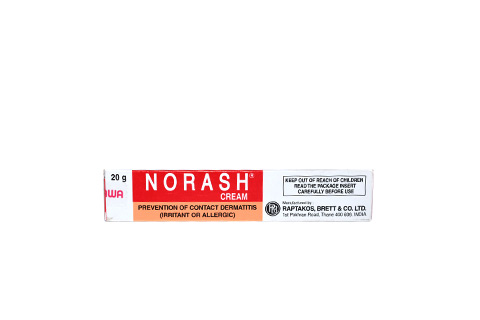
NORASH CREAM
DIMETHICONEZINC OXIDECALAMINECETRIMIDE
What it does
Dimethiconezinc is a topical treatment that helps soothe and protect the skin.
Commonly used for: skin irritation, rash, diaper rash
Read more in plain English ↓Plain-language summary for general understanding - not medical advice. Always follow your pharmacist/doctor.
Ask about this medicine
Answers come only from this medicine's registration record, BNF monograph and interaction data - not medical advice.
Hard to find? We help patients in Kenya source rare medicines. We don't sell or dispense medicines - licensed pharmacies do.
Source this medicineRegistration & product details
Source: Pharmacy and Poisons Board · fetched 2026-01-28 22:08:55 · updated 2026-03-23 04:54:04
About dimethiconezinc
Dimethiconezinc is a topical treatment that helps soothe and protect the skin.
What it treats
- skin irritation
- rash
- diaper rash
How it works
It forms a barrier on the skin that keeps moisture in and irritants out, helping to heal the skin.
Who it's for
It is suitable for people of all ages who need relief from skin irritations.
AI-assisted summary grounded in BNF data - general information only, not medical advice. Always confirm with your pharmacist or doctor.
About oxidecalaminecetrimide
Oxidecalaminecetrimide is a topical medication used to soothe and protect the skin.
What it treats
- skin irritation
- eczema
- dermatitis
How it works
It helps calm inflammation and provides a barrier to protect the skin.
Who it's for
This medication is suitable for adults and children with skin conditions.
AI-assisted summary grounded in BNF data - general information only, not medical advice. Always confirm with your pharmacist or doctor.
Clinical monograph: dimethiconezinc
Dimethicone-zinc is a topical formulation that combines dimethicone, a silicone-based polymer known for its emollient and skin-protecting properties, with zinc, which has anti-inflammatory and antimicrobial effects. This combination is often used in dermatological preparations to treat skin irritations, rashes, and other skin conditions. The formulation helps to create a protective barrier on the skin, reducing moisture loss and providing a soothing effect.
Indications
- Skin irritations
- Diaper rash
- Contact dermatitis
- Eczema
- Psoriasis
- Minor burns
Dosage
Children: For infants and children, apply a thin layer to the affected area as needed, ensuring the skin is clean and dry before application. Refer to specific pediatric guidelines for more detailed dosing information.
Adults: Apply a thin layer to the affected area as needed, ensuring the skin is clean and dry before application.
Mechanism of action
Dimethicone works by forming a protective layer on the skin, which helps to prevent transepidermal water loss and provides a smooth, silky feel. Zinc, on the other hand, has been shown to have anti-inflammatory properties, aiding in the reduction of redness and irritation. It can also promote wound healing and offers antimicrobial benefits, which can help prevent infection in compromised skin.
Pharmacodynamics
The pharmacodynamics of dimethicone-zinc primarily involves its emollient and barrier-forming properties, which enhance skin hydration and protection. Zinc's role in the formulation contributes to its ability to soothe inflammation and promote skin repair. The combination thus offers a multifaceted approach to skin care, addressing both protective and healing needs.
Pharmacokinetics
Dimethicone is not absorbed through the skin and acts locally at the site of application. Its effects are primarily topical, providing a physical barrier rather than systemic pharmacological effects. Zinc can be absorbed in small amounts through the skin, but the extent of systemic absorption from topical application is minimal. The onset of action is typically rapid, with effects observed shortly after application.
Pregnancy
Dimethicone-zinc is generally considered safe for use during pregnancy, but it is advisable to consult a healthcare professional before use.
Breast-feeding
Dimethicone-zinc is considered safe for breastfeeding mothers, but consulting a healthcare professional is recommended.
Storage
Store in a cool, dry place away from direct sunlight. Keep out of reach of children.
Formulations
- Topical cream
- Ointment
- Gel
AI-synthesized from BNF references - general information only, not a substitute for professional medical advice or the current BNF. Verify doses with a pharmacist.
Clinical monograph: oxidecalaminecetrimide
Oxidecalaminecetrimide is a topical antiseptic preparation that combines two active ingredients: oxidecalamine, which is known for its soothing and protective properties, and cetrimide, a quaternary ammonium compound that acts as an antiseptic. This combination is typically used in the management of skin conditions that require protection from infection while promoting healing.
Indications
- Minor cuts
- Abrasions
- Skin irritations
- Insect bites
- Minor burns
Dosage
Children: For paediatric patients, the same application frequency as adults is generally recommended, but it is advisable to consult the BNF for Children for specific guidance.
Adults: Apply the preparation to the affected area 1 to 3 times daily, or as directed by a healthcare professional.
Mechanism of action
Cetrimide works by disrupting the cell membranes of bacteria, leading to their death. It exhibits broad-spectrum antimicrobial activity against a variety of Gram-positive and Gram-negative bacteria. Oxidecalamine, on the other hand, provides a protective barrier over the skin, reduces irritation, and aids in the healing process by soothing inflamed skin.
Pharmacodynamics
The pharmacodynamic properties of oxidecalaminecetrimide are characterized by its antiseptic and soothing effects. Cetrimide's ability to kill bacteria and prevent infection is complemented by oxidecalamine's protective and anti-inflammatory actions, making it effective in treating minor cuts, abrasions, and skin irritations.
Pharmacokinetics
As a topical preparation, the pharmacokinetics of oxidecalaminecetrimide are primarily localized to the site of application. Systemic absorption is minimal, which reduces the risk of systemic side effects. The duration of action depends on the specific formulation and the condition being treated, but it is generally effective for the duration of its application.
Adverse effects
- Local skin irritation
- Allergic reactions
- Erythema
- Dryness of the skin
Precautions
- Avoid contact with eyes
- Use with caution in patients with sensitive skin or allergies
Pregnancy
Safety during pregnancy has not been established. Use only if clearly needed and prescribed by a healthcare provider.
Breast-feeding
It is unknown if oxidecalaminecetrimide is excreted in human milk. Caution is advised when used by nursing mothers.
Storage
Store in a cool, dry place away from direct sunlight. Keep out of reach of children.
Formulations
- Topical cream
- Topical lotion
AI-synthesized from BNF references - general information only, not a substitute for professional medical advice or the current BNF. Verify doses with a pharmacist.