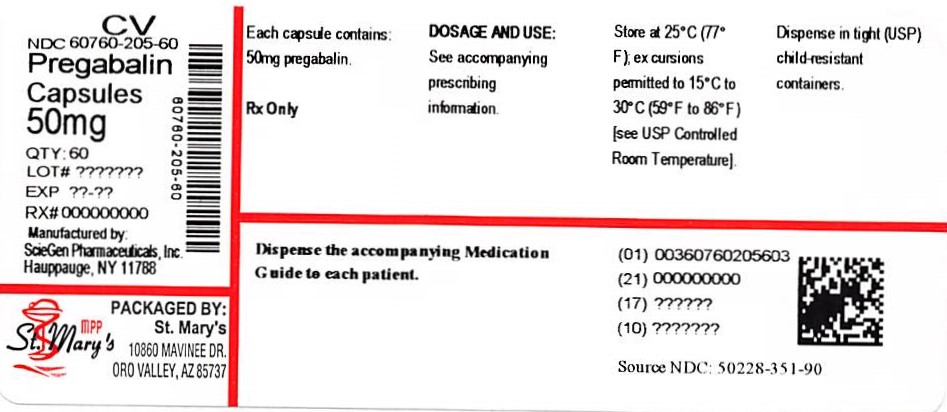
(pregabalin · DailyMed)
PREGAPIN 75
Pregabalin 75 mg,Pregelatinized Maiz Starch 24.00 mg/6 mL,Talc 1.00 mg/6 mL
What it does
Maiz is a natural product often used for various health benefits.
Commonly used for: nutritional support, energy boost
Read more in plain English ↓Plain-language summary for general understanding - not medical advice. Always follow your pharmacist/doctor.
Ask about this medicine
Answers come only from this medicine's registration record, BNF monograph and interaction data - not medical advice.
Medicine sourcing is available in Kenya only. We don't sell or dispense medicines - licensed pharmacies do.
Sourcing - Kenya onlyRegistration & product details
Source: Tanzania Medicines and Medical Devices Authority · fetched 2026-09-10 03:01:08 · updated 2026-10-29 03:00:47
Drug Interactions
65Pharmacodynamic Warnings
Pregabalin appears in TABLE 11: Drugs with CNS depressant effects
Severe (7)
Antiepileptics - decreases absorption
Iron chelators (dexrazoxane) might decrease the absorption of antiepileptics (fosphenytoin, phenytoin). Avoid.
Antiepileptics - decreases exposure
Lumacaftor is predicted to decrease the exposure to antiepileptics (carbamazepine, fosphenytoin, phenobarbital, phenytoin, primidone). Avoid.
Antiepileptics - decreases concentration
St John’s wort is predicted to decrease the concentration of antiepileptics (fosphenytoin, phenobarbital, phenytoin, primidone). Avoid.
Antiepileptics - increases risk of overheating and dehydration
Hydroxyzine potentially increases the risk of overheating and dehydration when given with antiepileptics (zonisamide). Avoid in children.
Antiepileptics - increases risk of overheating and dehydration
Haloperidol potentially increases the risk of overheating and dehydration when given with antiepileptics (zonisamide). Avoid in children.
Antiepileptics - decreases absorption
Dexrazoxane might decrease the absorption of antiepileptics (fosphenytoin, phenytoin). Avoid.
Antiepileptics - increases risk of overheating and dehydration
Oxybutynin potentially increases the risk of overheating and dehydration when given with antiepileptics (zonisamide). Avoid in children.
Moderate (25)
Antiepileptics - increases concentration
Intravenous chloramphenicol increases the concentration of antiepileptics (fosphenytoin, phenytoin) and antiepileptics (fosphenytoin, phenytoin) affect the concentration of intravenous chloramphenicol
Antiepileptics - decreases concentration
Diazoxide decreases the concentration of antiepileptics (fosphenytoin, phenytoin) and antiepileptics (fosphenytoin, phenytoin) are predicted to decrease the effects of diazoxide. Monitor concentration
Antiepileptics - increases concentration
Disulfiramincreasestheconcentrationofantiepileptics (fosphenytoin,phenytoin).Monitorconcentrationandadjust dose.rStudy →AlsoseeTABLE12p.1520
Antiepileptics - increases concentration
Fluorouracilincreasestheconcentrationofantiepileptics (fosphenytoin,phenytoin).Monitorconcentrationandadjust dose.rAnecdotal 1xidneppA|snoitcaretnI A1 https://www.facebook.c (Books-Courses-Medic
Antiepileptics - decreases concentration
Folates are predicted to decrease the concentration of antiepileptics (fosphenytoin, phenobarbital, phenytoin, primidone). Monitor concentration and adjust dose.
Unknown (33)
Antiepileptics - increases risk of overheating and dehydration
Acetazolamide potentially increases the risk of overheating and dehydration when given with antiepileptics (zonisamide). Avoid in children.
Antiepileptics - increases risk of visual disturbances
Alcohol potentially increases the risk of visual disturbances when given with antiepileptics (retigabine).
Antiepileptics - decreases exposure
Enzalutamide is predicted to slightly decrease the exposure to antiepileptics (brivaracetam).
Antiepileptics - decreases exposure
Apalutamidepotentiallydecreasestheexposureto antiepileptics(valproate).nTheoretical
Antiepileptics - increases concentration
Capecitabine increases the concentration of antiepileptics (fosphenytoin, phenytoin).
Data from BNF 85 (British National Formulary). This is not a substitute for professional medical advice. Matched via: class
About maiz
Maiz is a natural product often used for various health benefits.
What it treats
- nutritional support
- energy boost
How it works
Maiz provides carbohydrates that the body uses for energy.
Who it's for
Suitable for individuals seeking a natural source of energy and nutrition.
AI-assisted summary grounded in BNF data - general information only, not medical advice. Always confirm with your pharmacist or doctor.
About pregabalin
Pregabalin is a medication used to treat nerve pain and certain types of seizures. It helps calm overactive nerves in the brain.
What it treats
- nerve pain (neuropathic pain)
- seizures (epilepsy)
- anxiety disorders
How it works
Pregabalin works by reducing the number of signals sent by nerves to the brain, which helps decrease pain and seizure activity.
Who it's for
Pregabalin is suitable for adults and some children who have nerve pain or epilepsy.
Drug class
Antiepileptics
Cautions
- • Be careful if you are taking other medications that can cause drowsiness or slow down brain activity.
AI-assisted summary grounded in BNF data - general information only, not medical advice. Always confirm with your pharmacist or doctor.
About pregelatinized
Pregelatinized is a modified starch used in various pharmaceutical formulations.
What it treats
- used as a binder in tablet formulations
- used as a thickening agent in liquid medicines
How it works
Pregelatinized helps to hold together the ingredients in tablets and improves the consistency of liquid medicines.
Who it's for
It is suitable for patients requiring solid or liquid medications that need binding or thickening.
AI-assisted summary grounded in BNF data - general information only, not medical advice. Always confirm with your pharmacist or doctor.
About starch
Starch is a carbohydrate that serves as a source of energy and is often used in various food products.
What it treats
- energy source
- dietary supplement
How it works
Starch is broken down by the body into glucose, which provides energy for daily activities.
Who it's for
Starch can be used by anyone needing extra energy in their diet, particularly those with increased energy needs.
AI-assisted summary grounded in BNF data - general information only, not medical advice. Always confirm with your pharmacist or doctor.
About talc
Talc is a mineral used primarily to absorb moisture and reduce friction. It is commonly found in various personal care products.
What it treats
- skin irritation
- diaper rash
- chafing
- sweating
How it works
Talc works by absorbing moisture and providing a smooth surface, which helps to prevent irritation and discomfort on the skin.
Who it's for
Talc is suitable for anyone needing relief from moisture-related skin issues, including babies and adults.
Cautions
- • Avoid using on broken or irritated skin.
- • Keep away from the eyes and mouth.
AI-assisted summary grounded in BNF data - general information only, not medical advice. Always confirm with your pharmacist or doctor.
Clinical monograph: Pregabalin
BNF-referencedPregabalin is an anticonvulsant medication that is structurally related to gamma-aminobutyric acid (GABA). It is primarily used for the management of epilepsy, neuropathic pain, and generalized anxiety disorder. Pregabalin modulates the release of excitatory neurotransmitters by binding to the alpha2-delta subunit of voltage-gated calcium channels in the central nervous system, which contributes to its antiseizure and analgesic effects. It does not interact directly with GABA receptors but may enhance GABAergic activity indirectly.
Indications
- Epilepsy
- Neuropathic pain
- Generalized anxiety disorder
Dosage
Adults: The usual starting dose is 150 mg daily, divided into two or three doses. The dose may be increased to a maximum of 600 mg daily based on clinical response and tolerability. Refer to the BNF for specific dosing adjustments in
Mechanism of action
Pregabalin binds presynaptically to the alpha2-delta subunit of voltage-gated calcium channels in the central nervous system. This binding modulates the release of several excitatory neurotransmitters, including glutamate, substance P, norepinephrine, and calcitonin gene-related peptide. By preventing the trafficking of the alpha2-delta subunit from the dorsal root ganglia to the spinal dorsal horn, pregabalin contributes to its anticonvulsant and analgesic effects.
Pharmacodynamics
Pregabalin increases the density of GABA transporters in cultured neurons but does not bind directly to GABA-A, GABA-B, or benzodiazepine receptors. It does not affect dopamine, serotonin, or opiate receptors, nor does it modulate sodium channels or cyclooxygenase activity. Its primary action is through the inhibition of excitatory neurotransmitter release, which helps in controlling seizures and alleviating neuropathic pain.
Pharmacokinetics
Pregabalin is rapidly absorbed after oral administration, with peak plasma concentrations usually reached within 1 hour. It has a bioavailability of approximately 90%, and its plasma concentration does not significantly change with increasing doses. Pregabalin is not extensively metabolized; it is primarily excreted unchanged in the urine. The elimination half-life is about 6 hours, and dose adjustments may be necessary in patients with renal impairment.
Adverse effects
- Dizziness
- Somnolence
- Dry mouth
- Edema
- Weight gain
- Blurred vision
- Difficulty concentrating
- Euphoria
- Depression
- Angioedema
Interactions
- CNS depressants may enhance the sedative effects of pregabalin
- Concurrent use with opioids may increase the risk of respiratory depression
- Antiepileptic drugs may have additive effects
Precautions
- Use with caution in patients with a history of substance abuse
- Monitor for signs of angioedema, especially in patients with a history of angioedema
- Caution in patients with renal impairment, as dosage adjustments may be necessary
Pregnancy
Pregabalin is classified as category C. Animal studies have shown adverse effects, and there are no well-controlled studies in pregnant women. Use only if the potential benefit justifies the potential risk to the fetus.
Breast-feeding
Pregabalin is excreted in breast milk. The effects on a nursing infant are unknown, and caution is advised when administering to nursing mothers.
Storage
Store at room temperature, away from moisture and heat. Keep out of reach of children.
Formulations
- Capsules: 25 mg, 50 mg, 75 mg, 100 mg, 150 mg, 200 mg, 225 mg, 300 mg
- Oral solution: 20 mg/mL
- Chewable tablets: 50 mg
AI-synthesized from BNF references - general information only, not a substitute for professional medical advice or the current BNF. Verify doses with a pharmacist.
Clinical monograph: maiz
Maize (Zea mays) is a cereal grain first domesticated by indigenous peoples in southern Mexico about 10,000 years ago. It is a staple food in many countries, providing essential nutrients and serving as a significant source of carbohydrates. Maize is utilized in various forms including whole kernels, flour, and syrup, and is also used as animal feed and in industrial applications. It contains a variety of phytochemicals, vitamins, and minerals.
Indications
- Nutritional supplement
- Source of carbohydrates
- Dietary fiber source
- Animal feed
Dosage
Children: Refer to specific dietary guidelines as maize is typically consumed as part of a balanced diet rather than as a medication.
Adults: Refer to specific dietary guidelines as maize is typically consumed as part of a balanced diet rather than as a medication.
Mechanism of action
Maize provides energy primarily through its high starch content, which is broken down into glucose during digestion. The fiber in maize can aid in digestion and promote gut health. Certain compounds in maize, such as antioxidants and phytonutrients, may also contribute to its health benefits, including anti-inflammatory and antioxidant effects.
Pharmacodynamics
The consumption of maize influences metabolic processes by serving as a significant energy source. Its complex carbohydrates provide a slow release of glucose into the bloodstream, helping to maintain stable blood sugar levels. The dietary fiber in maize promotes satiety and aids in weight management, while its phytochemical content may help in reducing chronic inflammation and the risk of certain diseases.
Pharmacokinetics
The digestion of maize begins in the mouth, where enzymes in saliva start breaking down starches. Once ingested, maize is primarily digested in the small intestine, where enzymes further break down carbohydrates into simple sugars. Absorption occurs in the small intestine, with glucose entering the bloodstream. The fiber content is not digested but passes into the large intestine, where it can be fermented by gut bacteria. The bioavailability of nutrients from maize can be influenced by its preparation and processing methods.
AI-synthesized from BNF references - general information only, not a substitute for professional medical advice or the current BNF. Verify doses with a pharmacist.
Clinical monograph: pregelatinized
Pregelatinized starch is a modified starch that is used as an excipient in pharmaceutical formulations. It is produced by gelatinizing starch granules through a process of heating in the presence of water, followed by drying. This modification enhances the solubility and dispersibility of the starch, making it suitable for use in tablet formulations, granules, and other dosage forms.
Indications
- Used as a binder in tablet formulations
- Serves as a disintegrant to enhance drug release
- Utilized in the formulation of granules and powders
Dosage
Children: Refer to specific formulation guidelines as doses vary based on the formulation and active ingredients.
Adults: Refer to specific formulation guidelines as doses vary based on the formulation and active ingredients.
Mechanism of action
Pregelatinized starch acts primarily as a binder and disintegrant in tablet formulations. When exposed to moisture, it swells and rapidly absorbs water, leading to the disintegration of the tablet and facilitating the release of the active pharmaceutical ingredients.
Pharmacodynamics
The pharmacodynamic properties of pregelatinized starch are closely related to its physicochemical characteristics. It enhances the dissolution rate of poorly soluble drugs and helps in achieving a uniform distribution of the active ingredients within a formulation. Its ability to form a gel-like consistency in the presence of water aids in the controlled release of the drug.
Pharmacokinetics
As an excipient, pregelatinized starch is not intended to exert pharmacological effects on its own. It is generally regarded as safe and is not absorbed systemically. Its role is primarily mechanical, aiding in the formulation process of pharmaceutical products. The pharmacokinetics of any drug formulated with pregelatinized starch will depend on the active ingredients present in the formulation.
Pregnancy
Pregelatinized starch is generally considered safe for use during pregnancy as it is a food grade ingredient, but it is advisable to consult with a healthcare professional.
Breast-feeding
Pregelatinized starch is also considered safe during breastfeeding as it is unlikely to affect milk production or quality.
Storage
Store in a cool, dry place away from direct sunlight and moisture.
Formulations
- Powder
- Granules
AI-synthesized from BNF references - general information only, not a substitute for professional medical advice or the current BNF. Verify doses with a pharmacist.
Clinical monograph: starch
Starch is a polysaccharide carbohydrate consisting of a large number of glucose units joined by glycosidic bonds. It is a major energy source in the human diet and is found in numerous food sources such as grains, legumes, and tubers. In a clinical setting, starch can also be used as an excipient in various pharmaceuticals and is sometimes utilized in enteral nutrition formulations.
Indications
- Nutritional supplementation
- Energy source in enteral nutrition
- Excipient in pharmaceutical formulations
Dosage
Children: Refer to specific guidelines or product inserts for dosing information, as it can vary based on the context of use.
Adults: Refer to specific guidelines or product inserts for dosing information, as it can vary based on the context of use.
Mechanism of action
Starch is broken down into glucose units by enzymes such as amylase during digestion. The glucose is then absorbed in the intestines and utilized for energy production in the body's cells. This pathway involves hydrolysis of the glycosidic bonds, converting starch into simpler sugars.
Pharmacodynamics
Starch primarily serves as an energy source. Its digestion and absorption lead to an increase in blood glucose levels, which provides energy for metabolic processes. In this context, it plays a crucial role in maintaining energy homeostasis in the body.
Pharmacokinetics
Starch is not absorbed in its polymeric form; it must first be enzymatically hydrolyzed into simpler sugars such as maltose and glucose. The digestion and absorption of starch occur predominantly in the small intestine, with glucose being readily absorbed into the bloodstream. The rate of absorption can vary depending on the type of starch and its physical form.
Adverse effects
- Allergic reactions
- Gastrointestinal discomfort
- Diarrhea
- Constipation
Precautions
- Use with caution in individuals with known allergies to starch or starch derivatives
- Monitor for gastrointestinal symptoms in patients with a history of digestive disorders
Pregnancy
Starch is generally considered safe for use during pregnancy. However, it should be consumed in moderation as part of a balanced diet.
Breast-feeding
Starch is deemed safe for nursing mothers when used in moderation as part of a balanced diet.
Storage
Store in a cool, dry place away from moisture and direct sunlight.
Formulations
- Powder
- Granules
- Tablets
- Suspensions
AI-synthesized from BNF references - general information only, not a substitute for professional medical advice or the current BNF. Verify doses with a pharmacist.
Clinical monograph: talc
BNF-referencedTalc is a mineral composed of magnesium, silicon, and oxygen, commonly used in various pharmaceutical applications due to its excellent absorptive properties. It is often employed as an excipient in drug formulations and as a bulking agent in tablets and powders. Talc is also utilized in some medical procedures, such as pleurodesis, to prevent the recurrence of pleural effusions.
Indications
- Used as an excipient in drug formulations
- Pleurodesis for the management of recurrent pleural effusions
Dosage
Children: Refer to specific guidelines for paediatric use, as dosing may differ based on age and clinical condition.
Adults: Refer to specific guidelines for the appropriate dosage in pleurodesis and other applications, as it may vary based on clinical context.
Mechanism of action
Talc exhibits very good absorptive properties, allowing it to absorb moisture and other substances effectively. This characteristic is particularly useful in pharmaceutical formulations, where it may enhance the stability and texture of the drug product.
Pharmacodynamics
Talc's primary pharmacodynamic effect is its ability to act as an inert filler and bulking agent in pharmaceutical preparations. It does not have any intrinsic pharmacological activity but serves to improve the physical properties of formulations, such as flowability and compressibility.
Pharmacokinetics
Talc is not absorbed systemically when used as an excipient or in medical procedures. Its effects are local, and it remains in the site of application, where it functions primarily as a mechanical agent. The pharmacokinetics of talc in the context of its use in pleurodesis involves its ability to promote adhesion of the pleural surfaces, thereby preventing fluid accumulation.
Pregnancy
Talc is classified as a substance with minimal systemic absorption, but safety during pregnancy has not been well established. Consult relevant guidelines.
Breast-feeding
Talc is not expected to be absorbed in significant amounts; however, caution is advised and consult guidelines.
Storage
Store in a cool, dry place, away from direct sunlight.
AI-synthesized from BNF references - general information only, not a substitute for professional medical advice or the current BNF. Verify doses with a pharmacist.
Molecular reference: Pregabalin
PubChem CID 5486971Molecular formula: C8H17NO2
Mechanism of action
Although the mechanism of action has not been fully elucidated, studies involving structurally related drugs suggest that presynaptic binding of pregabalin to voltage-gated calcium channels is key to the antiseizure and antinociceptive effects observed in animal models. By binding presynaptically to the alpha2-delta subunit of voltage-gated calcium channels in the central nervous system, pregabalin modulates the release of several excitatory neurotransmitters including glutamate, substance-P, norepinephrine, and calcitonin gene related peptide. In addition, pregabalin prevents the alpha2-delta subunit from being trafficked from the dorsal root ganglia to the spinal dorsal horn, which may also contribute to the mechanism of action. Although pregabalin is a structural derivative of the inhibitory neurotransmitter gamma-aminobutyric acid (GABA), it does not bind directly to GABA or benzodiazepine receptors. Pregabalin is an anticonvulsant that is structurally related to the inhibitory CNS neurotransmitter gamma-aminobutyric acid (GABA). Pregabalin also has demonstrated analgesic activity. Although pregabalin was developed as a structural analog of GABA, the drug does not bind directly to GABA-A, GABA-B, or benzodiazepine receptors; does not augment GABA-A responses in cultured neurons; and does not alter brain concentrations of GABA in rats or affect GABA uptake or degradation. However, in cultured neurons, prolonged application of pregabalin increases the density of GABA transporter protein and increases the rate of functional GABA transport. Pregabalin binds with high affinity to the alpha2-delta site (an auxiliary subunit of voltage-gated calcium channels) in CNS tissues. ... In vitro, pregabalin reduces the calcium-dependent release of several neurotransmitters, including glutamate, norepinephrine, and substance P, possibly by modulation of calcium channel function. Pregabalin does not block sodium channels, is not active at opiate receptors, and does not alter cyclooxygenase enzyme activity. It is inactive at serotonin and dopamine receptors and does not inhibit dopamine, serotonin, or noradrenaline reuptake. Pregabalin is a potent ligand for the alpha-2-delta subunit of voltage-gated calcium channels in the central nervous system that exhibits potent anticonvulsant, analgesic, and anxiolytic activity in a range of animal models. ... Potent binding to the alpha-2-delta site reduces depolarization-induced calcium influx with a consequential modulation in excitatory neurotransmitter release. Pregabalin has no demonstrated effects on GABAergic mechanisms. ... For more Mechanism of Action (Complete) data for PREGABALIN (6 total), please visit the HSDB record page.
Pharmacodynamics
Although the structure of pregabalin is similar to gamma-aminobutyric acid (GABA), it does not bind to GABA receptors. Instead, it binds the alpha2-delta subunit of presynaptic voltage-gated calcium channels in the central nervous system. Pregabalin does not modulate dopamine receptors, serotonin receptors, opiate receptors, sodium channels or cyclooxygenase activity.
Source: PubChem (NCBI) · pathways from PathBank, Reactome, WikiPathways & PharmGKB.
Molecular reference: talc
PubChem CID 165411828Molecular formula: H2Mg3O12Si4
Mechanism of action
It has very good absorptive properties.
Source: PubChem (NCBI) · pathways from PathBank, Reactome, WikiPathways & PharmGKB.
This drug in other countries
The same active ingredient registered across other registries we cover - including different brands.
- EPIBALIN CAPSULES (Each capsule contains Pregabalin 150mg) · Msn Laboratories
- EPIBALIN CAPSULES · Msn Laboratories
- EPIBALIN CAPSULES · Msn Laboratories
- EPIBALIN CAPSULES · Msn Laboratories
- EVOGAB 150MG CAPSULES · Pharmevo
- EVOGAB 75MG CAPSULES · Pharmevo