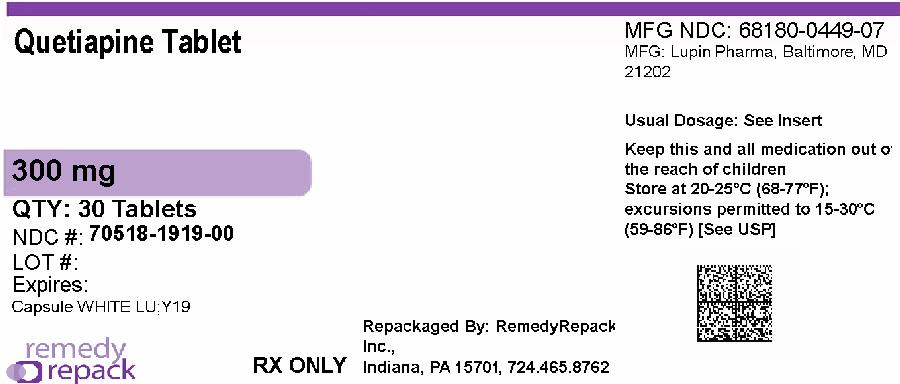
(quetiapine · DailyMed)
QUITAS 300
QUETIAPINE FUMARATE EQ TO QUETIAPINE 300 MG
What it does
Quetiapine is an antipsychotic medicine used to treat mood disorders and mental health conditions.
Commonly used for: schizophrenia, bipolar disorder, depression
Read more in plain English ↓Plain-language summary for general understanding - not medical advice. Always follow your pharmacist/doctor.
Ask about this medicine
Answers come only from this medicine's registration record, BNF monograph and interaction data - not medical advice.
Hard to find? We help patients in Kenya source rare medicines. We don't sell or dispense medicines - licensed pharmacies do.
Source this medicineRegistration & product details
Source: Pharmacy and Poisons Board · fetched 2026-01-28 19:17:55 · updated 2026-09-15 02:07:12
Drug Interactions
20Pharmacodynamic Warnings
Quetiapine appears in TABLE 8: Drugs that cause hypotension
Quetiapine appears in TABLE 11: Drugs with CNS depressant effects
Severe (8)
Quetiapine - increases exposure
Dronedarone is predicted to increase the exposure to antipsychotics, second generation (quetiapine). Avoid.
Quetiapine - increases exposure
Antifungals, azoles (fluconazole, isavuconazole, posaconazole) are predicted to increase the exposure to antipsychotics, second generation (quetiapine). Avoid.
Quetiapine - increases exposure
Cobicistat is predicted to increase the exposure to antipsychotics, second generation (lurasidone, quetiapine). Avoid.
Quetiapine - increases exposure
Grapefruit juice is predicted to increase the exposure to antipsychotics, second generation (lurasidone, quetiapine). Avoid.
Quetiapine - increases exposure
Idelalisib is predicted to increase the exposure to antipsychotics, second generation (lurasidone, quetiapine). Avoid.
Quetiapine - increases exposure
Ribociclib(high-dose)ispredictedtoincreasetheexposureto quetiapine.Avoid.oTheoretical
Quetiapine - increases exposure
Clarithromycin is predicted to increase the exposure to antipsychotics, second generation (lurasidone, quetiapine). Avoid.
Quetiapine - increases exposure
Erythromycin is predicted to increase the exposure to antipsychotics, second generation (quetiapine). Avoid.
Moderate (1)
Quetiapine - decreases exposure
Cenobamate is predicted to decrease the exposure to antipsychotics, second generation (lurasidone, quetiapine). Adjust dose. Also see TABLE 11 p. 1519
Unknown (11)
Antipsychotics - additive effect
Antipsychotics,secondgeneration(clozapine)cancause constipation,ascanantipsychotics,secondgeneration (olanzapine,quetiapine);concurrentusemightincreasethe riskofdevelopingintestinalobstruction.rAnecdo
Levodopa - decreases effects
Quetiapinedecreasestheeffectsoflevodopa.r Anecdotal →AlsoseeTABLE8p.1518
Quetiapine - increases exposure
Crizotinib is predicted to increase the exposure to quetiapine. Avoid.
Quetiapine - decreases exposure
Dabrafenib is predicted to decrease the exposure to quetiapine.
Quetiapine - increases exposure
Imatinib is predicted to increase the exposure to quetiapine. Avoid.
Data from BNF 85 (British National Formulary). This is not a substitute for professional medical advice. Matched via: exact
About this medicine
Quetiapine is an antipsychotic medicine used to treat mood disorders and mental health conditions.
What it treats
- schizophrenia
- bipolar disorder
- depression
How it works
Quetiapine helps to balance certain chemicals in the brain, which can improve mood, thoughts, and behavior.
Who it's for
This medicine is prescribed for adults and sometimes for teenagers experiencing severe mood swings or psychosis.
Drug class
Antipsychotics
Cautions
- • Be careful if you are taking other medicines that lower blood pressure.
- • Avoid using with other medicines that can cause drowsiness or sedation.
AI-assisted summary grounded in BNF data - general information only, not medical advice. Always confirm with your pharmacist or doctor.
Clinical monograph: Quetiapine
BNF-referencedQuetiapine is an atypical antipsychotic medication used primarily to treat schizophrenia, bipolar disorder, and major depressive disorder. It acts on multiple neurotransmitter receptors in the brain, including dopamine and serotonin receptors, leading to improved symptoms of psychosis as well as mood stabilization. Quetiapine is noted for its lower incidence of extrapyramidal side effects compared to typical antipsychotics, making it a preferred choice for certain patient populations.
Indications
- Schizophrenia
- Bipolar disorder (manic and depressive episodes)
- Major depressive disorder (as an adjunctive treatment)
Dosage
Adults: Initial dose of 50 mg twice daily on day 1, 100 mg twice daily on day 2, 150 mg twice daily on day 3, subsequently adjusted according to response. Usual maintenance dose is 400-800 mg daily
Mechanism of action
Quetiapine's exact mechanism of action is not completely understood, but it is believed to involve the antagonism of dopamine type 2 (D2) and serotonin 2A (5HT2A) receptors. In bipolar depression and major depression, its effects may result from binding to the norepinephrine transporter. Additionally, its sedative effects may come from antagonism of H1 receptors and adrenergic α1 receptors, while anticholinergic effects may arise from antagonism of muscarinic M1 receptors.
Pharmacodynamics
Quetiapine improves both positive and negative symptoms of schizophrenia and alleviates depressive episodes in bipolar disorder and major depression. Its action on various neurotransmitter receptors facilitates significant mood stabilization and reduction in psychotic symptoms. However, monitoring for suicidality is crucial, especially in younger patients, and it is contraindicated for use in dementia-related psychosis due to increased mortality risk in elderly populations.
Pharmacokinetics
Quetiapine is well absorbed from the gastrointestinal tract, with peak plasma concentrations occurring within 1.5 hours after oral administration. It has a large volume of distribution and is highly protein-bound. The drug undergoes extensive hepatic metabolism via CYP3A4, leading to various metabolites. The elimination half-life averages about 6 hours, though this can vary. Quetiapine is primarily excreted in urine as metabolites, with a small fraction being eliminated unchanged.
Contra-indications
- Hypersensitivity to quetiapine or any of its components
- Concomitant use with strong CYP3A4 inhibitors (e.g., ketoconazole, itraconazole)
- History of neuroleptic malignant syndrome
Adverse effects
- Sedation
- Dizziness
- Weight gain
- Dry mouth
- Constipation
- Orthostatic hypotension
- Extrapyramidal symptoms (rare)
- Increased cholesterol levels
- Hyperglycemia
Interactions
- Dronedarone: Severe (increases exposure)
- Antifungals (azoles): Severe (increases exposure)
- Cobicistat: Severe (increases exposure)
- Grapefruit juice: Severe (increases exposure)
- Idelalisib: Severe (increases exposure)
- Ribociclib: Severe (increases exposure)
- Clarithromycin: Severe (increases exposure)
- Erythromycin: Severe (increases exposure)
- Cenobamate: Moderate (decreases exposure)
- Crizotinib: Unknown (increases exposure)
Precautions
- Monitor for signs of suicidality, especially in young patients
- Caution in patients with cardiovascular disease
- Use with caution in elderly patients due to increased risk of mortality
- Monitor metabolic parameters: weight, glucose, and lipids
- Avoid abrupt discontinuation to prevent withdrawal symptoms
Pregnancy
Quetiapine should only be used in pregnancy if the potential benefit justifies the potential risk to the fetus. Limited data on human use.
Breast-feeding
Quetiapine is excreted in breast milk. Caution is advised when administering to nursing mothers.
Storage
Store at room temperature, away from moisture and heat. Keep out of reach of children.
Formulations
- Immediate-release tablets (25 mg, 100 mg, 200 mg, 300 mg)
- Modified-release tablets (50 mg, 150 mg, 300 mg, 400 mg)
AI-synthesized from BNF references - general information only, not a substitute for professional medical advice or the current BNF. Verify doses with a pharmacist.
Molecular reference: Quetiapine
PubChem CID 5002Molecular formula: C21H25N3O2S
Mechanism of action
Although the mechanism of action of quetiapine is not fully understood, several proposed mechanisms exist. In schizophrenia, its actions could occur from the antagonism of dopamine type 2 (D2) and serotonin 2A (5HT2A) receptors. In bipolar depression and major depression, quetiapine's actions may be attributed to the binding of this drug or its metabolite to the norepinephrine transporter. Additional effects of quetiapine, including somnolence, orthostatic hypotension, and anticholinergic effects, may result from the antagonism of H1 receptors, adrenergic α1 receptors, and muscarinic M1 receptors, respectively. The therapeutic effects of antipsychotic drugs are thought to be mediated by dopaminergic blockade in the mesolimbic and mesocortical areas of the CNS, while antidopaminergic effects in the neostriatum appear to be associated with extrapyramidal effects. The apparently low incidence of extrapyramidal effects associated with quetiapine therapy suggests that the drug is more active in the mesolimbic than in the neostriatal dopaminergic system. In contrast to typical antipsychotic agents (e.g., chlorpromazine) but like other atypical antipsychotic drugs (e.g., clozapine), quetiapine does not cause sustained elevations in serum prolactin concentrations and therefore is unlikely to produce adverse effects such as amenorrhea, galactorrhea, and impotence. The exact mechanism of antipsychotic action of quetiapine has not been fully elucidated but may involve antagonism at serotonin type 1 (5-hydroxytryptamine [5- HT1A]) and type 2 (5-HT2A, 5-HT2C) receptors, and at dopamine (D1, D2) receptors. Current evidence suggests that the clinical potency and antipsychotic efficacy of both typical and atypical antipsychotic drugs generally are related to their affinity for and blockade of central dopamine D2 receptors; however, antagonism at dopamine D2 receptors does not appear to account fully for the antipsychotic effects of quetiapine. Results of in vivo and in vitro studies indicate that quetiapine is a comparatively weak antagonist at dopamine D2 receptors. Receptor binding studies show quetiapine is a weak antagonist at D1 receptors. Although their role in eliciting the pharmacologic effects of antipsychotic agents remains to be fully elucidated, dopamine D3, D4, and D5 receptors also have been identified; quetiapine possesses no affinity for the dopamine D4 receptor. Quetiapine exhibits alpha1- and alpha2-adrenergic blocking activity; blockade of alpha1-adrenergic receptors may explain the occasional orthostatic hypotension associated with the drug. Quetiapine also blocks histamine H1 receptors, which may explain the sedative effects associated with the drug. Quetiapine possesses little or no affinity for beta-adrenergic, gamma-aminobutyric acid (GABA), benzodiazepine, or muscarinic receptors. Recent neuroimaging and postmortem studies have reported abnormalities in white matter of schizophrenic brains, suggesting the involvement of oligodendrocytes in the etiopathology of schizophrenia. This view is being supported by gene microarray studies showing the downregulation of genes related to oligodendrocyte function and myelination in schizophrenic brain compared to control subjects. However, there is currently little information available on the response of oligodendrocytes to antipsychotic drugs (APDs), which could be invaluable for corroborating the oligodendrocyte hypothesis. In this study we found: (1) quetiapine (QUE, an atypical APD) treatment in conjunction with addition of growth factors increased the proliferation of neural progenitors isolated from the cerebral cortex of embryonic rats; (2) QUE directed the differentiation of neural progenitors to oligodendrocyte lineage through extracellular signal-related kinases; (3) addition of QUE increased the synthesis of myelin basic protein and facilitated myelination in rat embryonic cortical aggregate cultures; (4) chronic administration of QUE to C57BL/6 mice prevented cortical
Pharmacodynamics
Quetiapine improves the positive and negative symptoms of schizophrenia and major depression by acting on various neurotransmitter receptors, such as the serotonin and dopamine receptors. In bipolar disorder, it improves both depressive and manic symptoms. **A note on suicidality in young patients and administration in the elderly** Quetiapine can cause suicidal thinking or behavior in children and adolescents and should not be given to children under 10 years of age. It is important to monitor for suicidality if this drug is given to younger patients. In addition, this drug is not indicated for the treatment of psychosis related to dementia due to an increased death rate in elderly patients taking this drug.
Biological pathways
Source: PubChem (NCBI) · pathways from PathBank, Reactome, WikiPathways & PharmGKB.
This drug in other countries
The same active ingredient registered across other registries we cover - including different brands.
- INTAQ SR 200 · Intas Pharmaceuticals
- INTAQ SR 300 · Intas Pharmaceuticals
- INTAQ SR 50 · Intas Pharmaceuticals
- Q-TAB 100 · Hetero Drugs
- Q-TAB 200 · Hetero Labs
- QUETAMAC · Macleods Pharmaceuticals