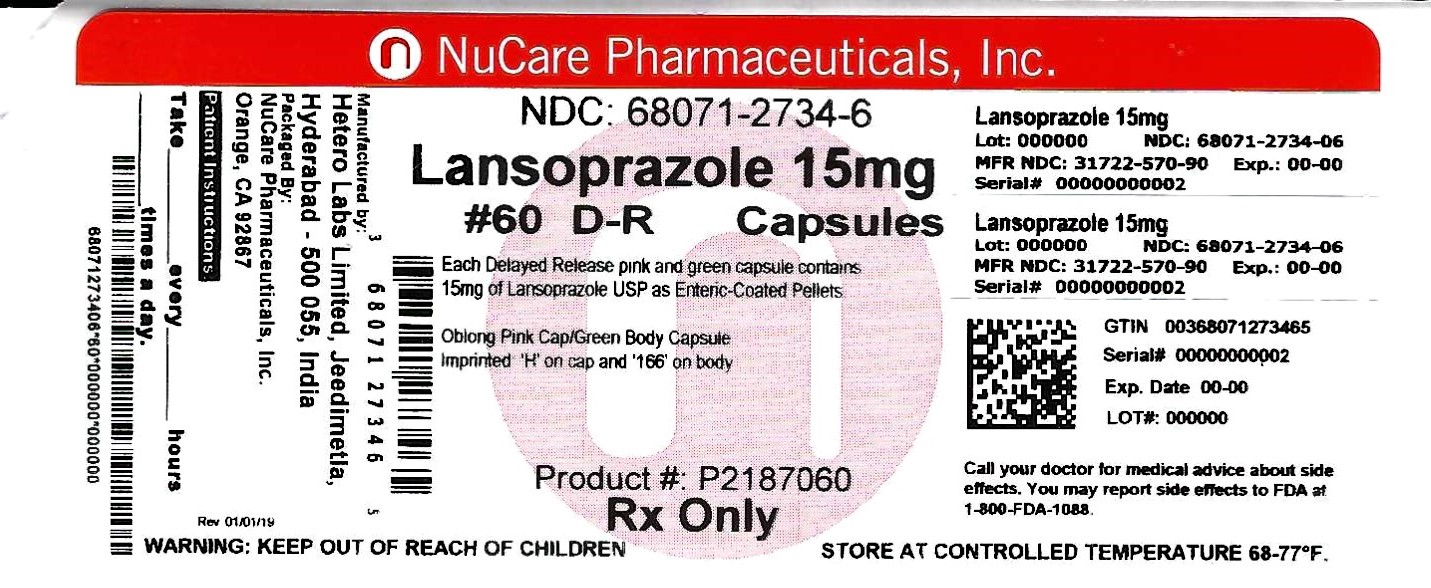
(lansoprazole · DailyMed)
RAN-LANSOPRAZOLE 15
Lansoprazole
What it does
Lansoprazole is a medication that reduces stomach acid, helping to treat certain digestive issues.
Commonly used for: acid reflux (gastroesophageal reflux disease), stomach ulcers (peptic ulcers), Zollinger-Ellison syndrome
Read more in plain English ↓Plain-language summary for general understanding - not medical advice. Always follow your pharmacist/doctor.
Ask about this medicine
Answers come only from this medicine's registration record, BNF monograph and interaction data - not medical advice.
Medicine sourcing is available in Kenya only. We don't sell or dispense medicines - licensed pharmacies do.
Sourcing - Kenya onlyRegistration & product details
Source: South African Health Products Regulatory Authority · fetched 2026-04-15 21:23:35 · updated 2026-09-16 04:00:52
Drug Interactions
1Unknown (1)
Lansoprazole - decreases exposure
Apalutamide is predicted to decrease the exposure to proton pump inhibitors (lansoprazole, rabeprazole). Avoid or monitor.
Data from BNF 85 (British National Formulary). This is not a substitute for professional medical advice. Matched via: exact
About this medicine
Lansoprazole is a medication that reduces stomach acid, helping to treat certain digestive issues.
What it treats
- acid reflux (gastroesophageal reflux disease)
- stomach ulcers (peptic ulcers)
- Zollinger-Ellison syndrome
How it works
It works by blocking the production of stomach acid, which helps heal and prevent damage to the stomach and esophagus.
Who it's for
It is for adults and children over the age of 1 who need relief from acid-related conditions.
AI-assisted summary grounded in BNF data - general information only, not medical advice. Always confirm with your pharmacist or doctor.
Clinical monograph: Lansoprazole
BNF-referencedLansoprazole is a proton pump inhibitor (PPI) used primarily to treat gastric acid-related disorders such as gastro-oesophageal reflux disease, duodenal ulcers, and gastric ulcers. It functions by irreversibly inhibiting the H+,K+-ATPase enzyme in the gastric parietal cells, which is responsible for the final step in gastric acid secretion, thereby reducing gastric acidity and promoting healing of the gastrointestinal mucosa.
Indications
- Gastro-oesophageal reflux disease
- Duodenal ulcer
- Benign gastric ulcer
- NSAID-associated gastric or duodenal ulcer
- Zollinger-Ellison syndrome
Dosage
Adults: 30 mg once daily for 4 weeks for duodenal ulcers, 30 mg once daily for 8 weeks for gastric ulcers, and 15 mg once daily for maintenance treatment. For gastro-oesophageal reflux disease, the usual dose is 15 mg
Mechanism of action
Lansoprazole is a prodrug that becomes activated in an acidic environment. Once protonated, it forms stable disulfide bonds with cysteine residues on the H+,K+-ATPase enzyme in parietal cells. This covalent binding leads to prolonged inhibition of gastric acid secretion, affecting both basal and stimulated acid production regardless of the stimulus.
Pharmacodynamics
Lansoprazole decreases gastric acid secretion by specifically targeting the H+,K+-ATPase enzyme, which catalyzes the final step in gastric acid secretion. It effectively heals duodenal ulcers and alleviates symptoms associated with acid secretion, such as heartburn, while also reducing pepsin secretion. Its action is effective in both daytime and nocturnal acid secretion, making it useful in treating various acid-related disorders.
Pharmacokinetics
Lansoprazole is absorbed after oral administration, with peak plasma concentrations usually occurring within 1-2 hours. It is extensively metabolized in the liver primarily via cytochrome P450 enzymes, leading to various metabolites that are excreted in urine. The half-life of lansoprazole is approximately 1.5 hours, but its acid-suppressive effects last longer due to its mechanism of action. The presence of food can affect the absorption rate, so it is typically recommended to take lansoprazole before meals.
Contra-indications
- Hypersensitivity to lansoprazole or any of its excipients
- Concurrent use with rilpivirine-containing products
Adverse effects
- Headache
- Diarrhoea
- Nausea
- Abdominal pain
- Constipation
- Flatulence
- Dizziness
- Fatigue
- Skin rash
- Elevated liver enzymes
- Acute interstitial nephritis
- Clostridium difficile-associated diarrhoea
- Bone fractures
- Hypomagnesemia
Interactions
- Increased risk of gastrointestinal infections due to reduced gastric acidity
- Apalutamide may decrease exposure when used with lansoprazole
- May alter the absorption of drugs that require an acidic environment for optimal absorption
Precautions
- Use with caution in patients with hepatic impairment
- Monitor for signs of Clostridium difficile infection in patients with prolonged therapy
- Consider risk of hypomagnesemia and associated complications
Pregnancy
Manufacturer advises to avoid use during pregnancy due to lack of adequate human data.
Breast-feeding
Specialist sources indicate use with caution, as lansoprazole is likely to be present in human milk, but in small amounts probably too low to be harmful.
Storage
Store below 25°C in a dry place, protect from light.
Formulations
- Gastro-resistant capsules
- Oral suspension
- Gastro-resistant tablets
- Gastro-resistant granules
AI-synthesized from BNF references - general information only, not a substitute for professional medical advice or the current BNF. Verify doses with a pharmacist.
Molecular reference: Lansoprazole
PubChem CID 3883Molecular formula: C16H14F3N3O2S
Mechanism of action
As a PPI, lansoprazole is a prodrug and requires protonation via an acidic environment to become activated. Once protonated, lansoprazole is able to react with cysteine residues, specifically Cys813 and Cys321, on parietal H+,K+-ATPase resulting in stable disulfides. PPI's in general are able to provide prolonged inhibition of acid secretion due to their ability to bind covalently to their targets. Lansoprazole is a selective and irreversible proton pump inhibitor. In the acidic environment of the gastric parietal cell, lansoprazole is converted to active sulphenamide derivatives that bind to the sulfhydryl group of (H+, K+)-adenosine triphosphatase ((H+,K+)-ATPase), also known as the proton pump (H+,K+)-ATPase catalyzes the final step in the gastric acid secretion pathway. Lansoprazole's inhibition of (H+,K+)-ATPase results in inhibition of both centrally and peripherally mediated gastric acid secretion. The inhibitory effect is dose-related. Lansoprazole inhibits both basal and stimulated gastric acid secretion regardless of the stimulus.
Pharmacodynamics
Lansoprazole decreases gastric acid secretion by targeting H+,K+-ATPase, which is the enzyme that catalyzes the final step in the acid secretion pathway in parietal cells. Conveniently, lansoprazole administered any time of day is able to inhibit both daytime and nocturnal acid secretion. The result is that lansoprazole is effective at healing duodenal ulcers, reduces ulcer-related pain, and offers relief from symptoms of heartburn Lansoprazole also reduces pepsin secretion, making it a useful treatment option for hypersecretory conditions such as Zollinger-Ellison syndrome.
Biological pathways
Source: PubChem (NCBI) · pathways from PathBank, Reactome, WikiPathways & PharmGKB.
This drug in other countries
The same active ingredient registered across other registries we cover - including different brands.
- ACL KIT · Universal Corporation
- ASPYORI KIT · Opera Pharma
- DEGASTROL 30MG · Pharmaco Healthcare
- EUROPYL KIT · Sky Healthcare
- GASTROKIT TRIPLE THERAPY PACKAGE · Pharmaco Healthcare
- HELICOS KIT · Cosmos
- Gastro-Kit
- Heligo 500 · Intas Pharmaceuticals
- Heligo kit · Intas Pharmaceuticals
- LAN 30 · Intas Pharmaceuticals
- LANPRO · Unichem Laboratories
- LCT KIT