International reference: 1 US FDA recall for this ingredient
Labeling: Incorrect or Missing Lot and/or Exp Date: Potential for missing or illegible lot and expiration date coding on the bottles. (mouthwash)
US-market enforcement records (OpenFDA), shown for reference - not specific to this product in Kenya.
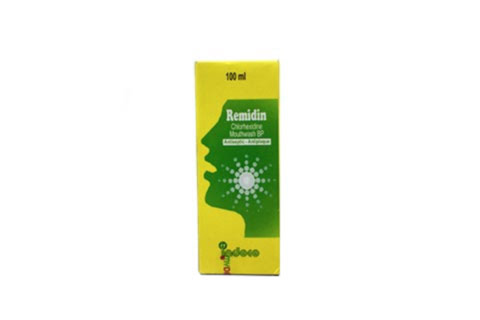
REMIDIN
CHLORHEXIDINE MOUTHWASH BP
What it does
Chlorhexidine is an antiseptic used to clean skin and prevent infections.
Commonly used for: skin infections, wound cleaning, gum disease (gingivitis) prevention
Read more in plain English ↓Plain-language summary for general understanding - not medical advice. Always follow your pharmacist/doctor.
Ask about this medicine
Answers come only from this medicine's registration record, BNF monograph and interaction data - not medical advice.
Hard to find? We help patients in Kenya source rare medicines. We don't sell or dispense medicines - licensed pharmacies do.
Source this medicineRegistration & product details
Source: Pharmacy and Poisons Board · fetched 2026-01-28 22:09:19 · updated 2026-03-23 04:54:29
About chlorhexidine
Chlorhexidine is an antiseptic used to clean skin and prevent infections.
What it treats
- skin infections
- wound cleaning
- gum disease (gingivitis) prevention
How it works
Chlorhexidine kills or stops the growth of bacteria, helping to prevent infections.
Who it's for
It is suitable for adults and children needing skin or oral care.
Cautions
- • Avoid contact with eyes.
- • Do not use on deep wounds or serious burns without medical advice.
AI-assisted summary grounded in BNF data - general information only, not medical advice. Always confirm with your pharmacist or doctor.
About mouthwash
Mouthwash is a liquid used to rinse your mouth. It helps to freshen breath, reduce plaque, and promote oral hygiene.
What it treats
- bad breath (halitosis)
- gum disease (gingivitis)
- oral hygiene
How it works
Mouthwash works by killing bacteria in the mouth, reducing plaque buildup, and giving you fresh breath.
Who it's for
Mouthwash is suitable for anyone looking to improve their oral health and freshness, but should be used as directed.
AI-assisted summary grounded in BNF data - general information only, not medical advice. Always confirm with your pharmacist or doctor.
Clinical monograph: Chlorhexidine
BNF-referencedChlorhexidine is an antimicrobial agent widely used for its broad-spectrum efficacy against various microorganisms, including both gram-positive and gram-negative bacteria, yeasts, and viruses. It is commonly employed in clinical settings for oral hygiene, skin antisepsis, and bladder irrigation due to its ability to disrupt microbial cell membranes, leading to cell death. Chlorhexidine is available in various formulations, including mouthwashes, solutions for skin disinfection, and irrigation solutions for urological procedures.
Indications
- Oral hygiene
- Skin antisepsis
- Bladder irrigation
- Urological surgery
- Management of infections associated with indwelling urinary catheters
Mechanism of action
Chlorhexidine's antimicrobial effects arise from its ability to disrupt microbial cell membranes. The positively charged chlorhexidine molecule interacts with negatively charged phosphate groups on microbial surfaces, compromising cell integrity and causing leakage of intracellular materials. This interaction allows chlorhexidine to enter the cell, precipitate cytoplasmic components, and ultimately induce cell death. At lower concentrations, chlorhexidine acts as a bacteriostatic agent, causing leakage of substances like potassium and phosphorus, while at higher concentrations, it exerts bactericidal effects.
Pharmacodynamics
Chlorhexidine exhibits broad-spectrum antimicrobial activity, effective against a variety of bacteria, yeasts, and viruses. Its action is dose-dependent, with lower concentrations (0.02%-0.06%) providing bacteriostatic effects, while higher concentrations (>0.12%) are bactericidal. Pharmacokinetic studies indicate that about 30% of chlorhexidine remains in the mouth after rinsing, allowing for slow release into oral fluids. This property, known as 'substantivity', helps prevent microbial colonization on surfaces like dentine, although prolonged use can lead to staining of oral surfaces.
Pharmacokinetics
Chlorhexidine is retained in the oral cavity at approximately 30% following rinsing, with a slow release into saliva. The pharmacokinetics of chlorhexidine indicate a high affinity for binding to tissues, which prolongs its antimicrobial action. The systemic absorption of chlorhexidine is minimal when used topically or as a rinse, making it safe for localized use. The elimination half-life and metabolism details are not well documented due to its primarily topical application.
Adverse effects
- Mucosal irritation
- Burning sensation
- Staining of teeth and oral surfaces
- Allergic reactions
Precautions
- Use with caution in patients with a history of hypersensitivity to chlorhexidine
- May cause irritation; discontinue if severe irritation occurs
- Staining may occur with prolonged use, particularly with oral formulations
Pregnancy
Chlorhexidine is generally considered safe for use during pregnancy; however, caution is advised and pregnant individuals should consult healthcare providers.
Breast-feeding
Chlorhexidine is considered safe during breastfeeding, but it is advisable to consult a healthcare provider.
Storage
Store at room temperature, away from light and moisture. Keep out of reach of children.
Formulations
- Irrigation solution (0.02% and 0.05%)
- Capsules (various strengths)
- Catheter maintenance solution (1:5000)
- Topical solutions for oral hygiene
AI-synthesized from BNF references - general information only, not a substitute for professional medical advice or the current BNF. Verify doses with a pharmacist.
Clinical monograph: mouthwash
BNF-referencedMouthwash is an oral hygiene product used to freshen breath, reduce oral bacteria, and promote overall oral health. It often contains various active ingredients, including antiseptics, astringents, and flavoring agents. The formulation is designed to be used as part of a daily dental care routine, alongside brushing and flossing.
Indications
- Oral hygiene
- Halitosis (bad breath)
- Gingivitis
- Plaque control
- Postoperative oral care
Dosage
Children: Refer to BNF for Children for specific pediatric dosing recommendations.
Adults: Use as directed on the product label. Usually involves rinsing with 15-30 ml for 30 seconds to 1 minute, typically twice daily.
Mechanism of action
The exact mechanism of action of mouthwash is not fully understood, but it is attributed to the denaturing of lipoprotein complexes and possibly other actions. Evidence suggests that the major site of action may be the cell membrane, where agents can alter permeability, allowing the escape of enzymes, coenzymes, and metabolic intermediates. Additionally, cationic surfactants found in mouthwash can emulsify sebaceous material, facilitating the removal of dirt and bacteria. The mild desquamating effect of quaternary ammonium compounds in mouthwash aids in cleaning the oral cavity.
Pharmacodynamics
Mouthwash works by reducing the microbial load in the oral cavity and promoting a healthier environment. It can help to control plaque formation, reduce gingivitis, and provide symptomatic relief from oral conditions. The antibacterial properties of quaternary ammonium compounds contribute to the overall effectiveness in maintaining oral hygiene.
Pharmacokinetics
Mouthwash is typically used topically in the oral cavity, and its pharmacokinetics may vary based on the specific formulation. Generally, the active ingredients exert their effects locally, with minimal systemic absorption. The duration of action can depend on the formulation, frequency of use, and individual oral hygiene practices.
Pregnancy
There is limited data on the use of mouthwash during pregnancy. Consult a healthcare professional before use.
Breast-feeding
Consult a healthcare professional before use during breastfeeding, as safety has not been established.
Storage
Store in a cool, dry place, away from direct sunlight. Keep out of reach of children.
Formulations
- Liquid mouthwash
- Concentrated mouthwash
AI-synthesized from BNF references - general information only, not a substitute for professional medical advice or the current BNF. Verify doses with a pharmacist.
Molecular reference: Chlorhexidine
PubChem CID 9552079Molecular formula: C22H30Cl2N10
Mechanism of action
Chlorhexidine’s broad-spectrum antimicrobial effects are due to its ability to disrupt microbial cell membranes. The positively charged chlorhexidine molecule reacts with negatively charged phosphate groups on microbial cell surfaces - this reaction both destroys the integrity of the cell, allowing leakage of intracellular material, and allows chlorhexidine to enter the cell, causing precipitation of cytoplasmic components and ultimately cell death. The specific means of cell death is dependent on the concentration of chlorhexidine - lower concentrations are bacteriostatic and result in leakage of intracellular substances such as potassium and phosphorous, whereas higher concentrations are bactericidal and cause cytoplasmic precipitation.
Pharmacodynamics
Chlorhexidine is a broad-spectrum antimicrobial with demonstrated activity against both gram-positive and gram-negative bacteria, yeasts, and viruses. Antimicrobial activity is dose-dependent - chlorhexidine is bacteriostatic at lower concentrations (0.02%-0.06%) and bactericidal at higher concentrations (>0.12%). Pharmacokinetic studies of oral chlorhexidine rinses indicate that approximately 30% of the active ingredient is retained in the mouth following rinsing, which is subsequently slowly released into oral fluids. This ability to adsorb to dentine, shared with tetracycline antibiotics such as [doxycycline], is known as "substantivity" and is the result of chlorhexidine's positive charge - it is likely that this substantivity plays at least some role in chlorhexidine's antimicrobial activity, as its persistence on surfaces such as dentine prevent microbial colonization. Dental chlorhexidine rinses may result in staining of oral surfaces, such as teeth. This effect is not ubiquitous and appears to be more significant with extended therapy (i.e. up to 6 months) - nevertheless, patients for whom oral staining is unacceptable should use chlorhexidine rinse with caution and for the shortest effective interval. Allergic reactions to chlorhexidine have been associated with the development of anaphylaxis.
Source: PubChem (NCBI) · pathways from PathBank, Reactome, WikiPathways & PharmGKB.
Molecular reference: mouthwash
PubChem CID 31239Molecular formula: C21H38N.Cl
Mechanism of action
MODE OF ACTION ... NOT YET FULLY UNDERSTOOD BUT HAS BEEN ASCRIBED TO ... THE DENATURING OF LIPOPROTEIN COMPLEXES, & POSSIBLY OTHER ACTIONS. /QUATERNARY AMMONIUM COMPD/ EVIDENCE HAS BEEN PRESENTED THAT THE MAJOR SITE OF ACTION ... MAY BE THE CELL MEMBRANE, WHERE THE AGENTS MAY CAUSE CHANGES IN PERMEABILITY THAT PERMIT ESCAPE OF ENZYMES, COENZYMES, & METABOLIC INTERMEDIATES. /CATIONIC SURFACTANTS/ EMULSIFY SEBACEOUS MATERIAL, WHICH IS THEN REMOVED TOGETHER WITH DIRT & BACTERIA. THE MILD DESQUAMATING EFFECT OF THE QUATERNARY AMMONIUM COMPOUNDS AIDS IN CLEANING. /QUATERNARY AMMONIUM COMPD/
Source: PubChem (NCBI) · pathways from PathBank, Reactome, WikiPathways & PharmGKB.
This drug in other countries
The same active ingredient registered across other registries we cover - including different brands.
- Argisept · Centaur Pharmaceuticals
- BL Citroxin · Bl Biopharm
- Burn Cream · Prince Pharmaceuticals
- Burnox · Shelys Pharmaceuticals
- CHX 7.1% GEL · Universal Corporation
- CHX MOUTH WASH · Universal Corporation
- BURNOX COMBINATION PRODUCT CREAM
- CHLORHEXIDINE 5%W/V LIQUID
- CLENORA_MOUTH_WASH 0.2%W/V SOLUTION
- DERMAZINE_PLUS COMBINATION PRODUCT CREAM
- HIBITANE CONCENTRATE 26%V/V SOLUTION
- HIBSCRUB 21.2%V/V SOLUTION
- EMGIDINE GEL (Each gram contains Chlorhexidine Gluconate 7.1%w/w) · S Kant Healthcare
- LYNXACLOX MOUTHWASH · Vega Biotec
- NESTER MOUTHWASH FRESH MINT · Ernest Chemist
- NESTER MOUTHWASH ORIGINAL · Ernest Chemist
- OMERINSE MOUTH WASH · Omer Investment
- QUADRAJEL SUSPENSION ( Chlorhexidine gluconate/Metronidazole/Lidocaine hydrochloride gel 1%w/w/ 1%w/w/ 2%w/w) · Fourrts Laboratories
- BIOTAINE 2 %
- CORSODYL MOUTHWASH MINT
- CORSODYL MOUTHWASH ORIGINAL
- Fungalene
- Resmed Chlorhexidine Gluconate 0,2% Mouthwash
- ZHLORAPREP STERILE CLEAR