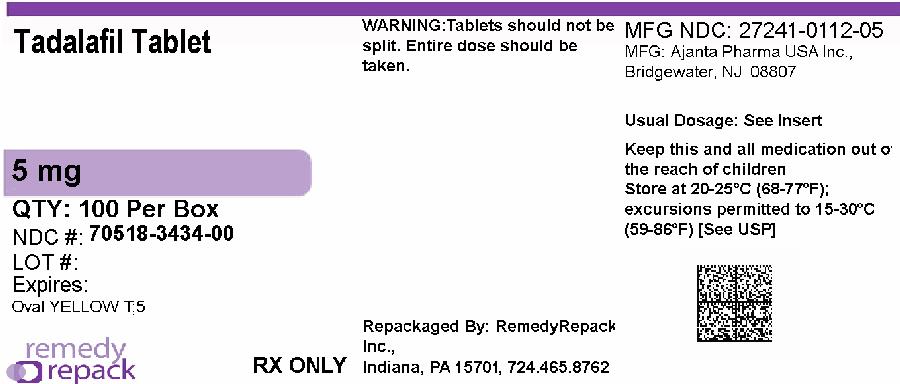
(tadalafil · DailyMed)
TADALAFIL 5 UNIMED
TADALAFIL
What it does
Tadalafil is a medication used to treat erectile dysfunction (impotence) and symptoms of benign prostatic hyperplasia (BPH), which is an enlarged prostate.
Commonly used for: erectile dysfunction (impotence), benign prostatic hyperplasia (BPH)
Read more in plain English ↓Plain-language summary for general understanding - not medical advice. Always follow your pharmacist/doctor.
Ask about this medicine
Answers come only from this medicine's registration record, BNF monograph and interaction data - not medical advice.
Medicine sourcing is available in Kenya only. We don't sell or dispense medicines - licensed pharmacies do.
Sourcing - Kenya onlyRegistration & product details
Source: South African Health Products Regulatory Authority · fetched 2026-04-15 21:28:59 · updated 2026-09-16 04:01:12
Drug Interactions
7Pharmacodynamic Warnings
Tadalafil appears in TABLE 8: Drugs that cause hypotension
Moderate (1)
Tadalafil - increases exposure
Cobicistat is predicted to increase the exposure to tadalafil. Use with caution or avoid.
Unknown (6)
Tadalafil - increases exposure
Antifungals, azoles (fluconazole, isavuconazole, posaconazole) are predicted to increase the exposure to tadalafil.
Tadalafil - increases exposure
Crizotinibispredictedtoincreasetheexposuretotadalafil. rTheoretical
Tadalafil - increases exposure
Idelalisib is predicted to increase the exposure to tadalafil. Use with caution or avoid.
Tadalafil - increases exposure
Imatinibispredictedtoincreasetheexposuretotadalafil. rTheoretical
Tadalafil - increases exposure
Letermovirispredictedtoincreasetheexposuretotadalafil. rTheoretical
Tadalafil - increases exposure
Nilotinibispredictedtoincreasetheexposuretotadalafil. rTheoretical
Data from BNF 85 (British National Formulary). This is not a substitute for professional medical advice. Matched via: exact
About this medicine
Tadalafil is a medication used to treat erectile dysfunction (impotence) and symptoms of benign prostatic hyperplasia (BPH), which is an enlarged prostate.
What it treats
- erectile dysfunction (impotence)
- benign prostatic hyperplasia (BPH)
How it works
Tadalafil works by relaxing blood vessels, which increases blood flow to specific areas of the body, helping achieve and maintain an erection.
Who it's for
Tadalafil is suitable for adult men experiencing difficulties with erections or related urinary symptoms due to an enlarged prostate.
Cautions
- • Avoid using with other medications that lower blood pressure.
AI-assisted summary grounded in BNF data - general information only, not medical advice. Always confirm with your pharmacist or doctor.
Clinical monograph: Tadalafil
BNF-referencedTadalafil is a selective phosphodiesterase-5 (PDE5) inhibitor primarily used for the treatment of erectile dysfunction (ED) and pulmonary arterial hypertension (PAH). By inhibiting PDE5, tadalafil enhances the effects of nitric oxide, leading to increased cGMP levels, which facilitates smooth muscle relaxation and vasodilation in the penis and pulmonary vasculature. It is also used for benign prostatic hyperplasia (BPH) due to its effects on smooth muscle relaxation.
Indications
- Erectile dysfunction (ED)
- Pulmonary arterial hypertension (PAH)
- Benign prostatic hyperplasia (BPH)
Dosage
Children: Not established; refer to the BNF for Children for further guidance.
Adults: Refer to the specific guidelines in the BNF for appropriate dosage.
Mechanism of action
Tadalafil selectively inhibits phosphodiesterase-5 (PDE5), leading to increased levels of cyclic guanosine monophosphate (cGMP). This enhances smooth muscle relaxation in penile tissues during sexual arousal by preventing the breakdown of cGMP, thereby facilitating increased blood flow and erection. In PAH, tadalafil promotes vasodilation of the pulmonary arteries, reducing blood pressure in these vessels. In BPH, it may decrease smooth muscle cell proliferation, alleviating urinary symptoms.
Pharmacodynamics
Tadalafil enhances sexual stimulation-dependent smooth muscle relaxation in the penis, resulting in increased blood flow and erection. In PAH, it produces vasodilation in the pulmonary vasculature, lowering pulmonary artery pressure. For BPH, tadalafil may alleviate urinary symptoms by reducing prostate size and relieving anatomical obstruction. Its lower affinity for PDE6 compared to other PDE5 inhibitors results in fewer visual side effects.
Pharmacokinetics
Tadalafil is well absorbed orally, with peak plasma concentrations occurring within 2 hours. Its bioavailability is approximately 80%, and it has a half-life of approximately 17.5 hours, allowing for once-daily dosing for some indications. Tadalafil is metabolized primarily in the liver via the cytochrome P450 system, mainly CYP3A4, and is excreted as metabolites in the feces and urine. The presence of food does not significantly affect its absorption.
Contra-indications
- Systolic blood pressure less than 90 mmHg
- Concurrent use of nitrates for angina
Adverse effects
- Headache
- Flushing
- Dyspepsia
- Nausea
- Back pain
- Myalgia
- Visual disturbances
- Hearing impairment
- Priapism
- Hypotension
Interactions
- Cobicistat + tadalafil: Moderate (increases exposure)
- Antifungals, azoles + tadalafil: Unknown (increases exposure)
- Crizotinib + tadalafil: Unknown (increases exposure)
- Idelalisib + tadalafil: Unknown (increases exposure)
- Imatinib + tadalafil: Unknown (increases exposure)
- Letermovir + tadalafil: Unknown (increases exposure)
- Nilotinib + tadalafil: Unknown (increases exposure)
Precautions
- Caution in patients with hepatic impairment
- Consider dose adjustment in mild to moderate impairment
- Discontinue if sudden visual impairment occurs
Pregnancy
Use only if potential benefit outweighs risk; no evidence of harm in animal studies.
Breast-feeding
Manufacturer advises avoiding use; no information available.
Storage
Store in a cool, dry place away from light.
Formulations
- Tadalafil 2.5 mg tablets
- Tadalafil 5 mg tablets
- Tadalafil 10 mg tablets
- Tadalafil 20 mg tablets
AI-synthesized from BNF references - general information only, not a substitute for professional medical advice or the current BNF. Verify doses with a pharmacist.
Molecular reference: Tadalafil
PubChem CID 110635Molecular formula: C22H19N3O4
Mechanism of action
Tadalafil is a selective phosphodiesterase-5 (PDE5) inhibitor that produces several downstream effects with the most common therapeutic effect being smooth muscle relaxation. Patients may experience ED due to a variety of causes including psychogenic, neurogenic, vasculogenic, iatrogenic, or endocrine. These causes result in dysfunction of penile smooth muscle relaxation through either disrupted neuronal signaling or direct influence on smooth muscle cells. During sexual arousal, non-adrenergic non-cholinergic (NANC) neurons release nitric oxide (NO). Nitric oxide stimulates guanylate cyclase which converts guanosine triphosphate to cyclic guanosine monophosphate (cGMP). cGMP activates the cGMP-dependent kinase (PKG) in a signal cascade which activates K+ channels leading to inhibition of Ca2+ channels, inhibits platelet activation, and inhibits smooth muscle cell proliferation while inducing apoptosis. This signal cascade is attenuated by PDE5 which breaks the phosphodiester bond of cGMP, converting it to GMP. Inhibition of PDE5 by tadalafil increases signaling via the PKG cascade which supports penile smooth muscle relaxation during sexual arousal by decreasing Ca2+ entry into smooth muscle cells. This smooth muscle relaxation allows blood to fill the corpus cavernosum thereby producing an erection. In PAH, blood pressure in the pulmonary arteries is raised due to a variety of mechanisms stemming from endothelial dysfunction. Decreased production of NO and prostacyclin reduce vasodilatory signaling while overproduction of endothelin-1 and thromboxane increase vasoconstriction. Inflammation, thromboses, and hypoxia later contribute to vascular remodeling which further reduces luminal size. The resultant increase in blood pressure reduces the capacity for gas exchange and increases afterload at the right ventricle, producing symptoms of dyspnea, fatigue, and dizziness as well as leading to right-sided heart failure. Tadalafil exerts its therapeutic effect in PAH through boosting NO-cGMP signaling to contribute to smooth muscle relaxation as with ED. Lastly, tadalafil is used to treat BPH. BPH produces urinary dysfunction through hyperproliferation of the epithelial and smooth muscle layers of the prostate. The increased size of the prostate blocks urine flow through the urethra resulting in higher residual volumes due to incomplete emptying. Tadalafil does not appear to exert its benefit via smooth muscle relaxation of the prostate. It may instead exert its effect through a mix of increased oxygenation and decreased inflammation, which decreases tissue remodeling, and inhibition of cell proliferation through the cGMP cascade. The decreased affinity for PDE6 compared to other PDE5 inhibitors may explain the decreased incidence of visual side effects as PDE6 is present in the eye and contributes to color vision. In vitro studies have shown that the effect of tadalafil is more potent on phosphodiesterase type 5 (PDE5) than on other phosphodiesterases. These studies have shown that tadalafil is >10,000-fold more potent for PDE5 than for PDE1, PDE2, PDE4, and PDE7 enzymes, which are found in the heart, brain, blood vessels, liver, leukocytes, skeletal muscle, and other organs. Tadalafil is >10,000-fold more potent for PDE5 than for PDE3, an enzyme found in the heart and blood vessels. Additionally, tadalafil is 700-fold more potent for PDE5 than for PDE8, PDE9, PDE10 and 14-fold more potent for PDE5 than for PDE11A1, an enzyme found in human skeletal muscle. Tadalafil inhibits human recombinant PDE11A1 activity at concentrations within the therapeutic range. The physiological role and clinical consequence of PDE11 inhibition in humans have not been defined. Studies in vitro have demonstrated that tadalafil is a selective inhibitor of phosphodiesterase type 5 (PDE5). PDE5 is found in corpus cavernosum smooth muscle, vascular and visceral smooth muscle, skeletal muscle, platelets, kidney, lung, cerebellum, and pancreas. Penile ere
Pharmacodynamics
Tadalafil exerts a therapeutic effect in ED by increasing sexual stimulation-dependant smooth muscle relaxation in the penis, allowing the corpus cavernosum to fill with blood to produce an erection. Smooth muscle relaxation in the pulmonary vasculature helps to produce vasodilation in PAH which reduces blood pressure in the pulmonary arteries. In BPH, tadalafil may contribute to decreased smooth muscle cell proliferation which may reduce the size of the prostate and relieve the anatomical obstruction which produces urinary symptoms of BPH. The decreased affinity of tadalafil for PDE6 compared to other PDE5 inhibitors may explain the reduced incidence of visual side effects.
Source: PubChem (NCBI) · pathways from PathBank, Reactome, WikiPathways & PharmGKB.
This drug in other countries
The same active ingredient registered across other registries we cover - including different brands.
- APCALIS SX 20 · Harleys
- CIALIS 20MG · Beta Healthcare
- CIALIS 5MG · Beta Healthcare
- CIATUFF 10 · Simba Pharmaceuticals
- CIATUFF 20 · Simba Pharmaceuticals
- DIAX-T · Medfo Kenya
- AOLI TADALAFIL 20MG TABLETS (Each film-coated tablet contains Tadalafil 20mg) · Jiangsu Lianhuan Pharmaceutical
- DRAGON 20mg TABLETS · Pratima Pharmaceuticals
- FIERO 10 TABLETS · Oa&j Pharmaceuticals
- FIERO 20 TABLETS · Oa&j Pharmaceuticals
- JOVAN T 20 TABLETS (Each film-coated tablet contains Tadalafil 20mg) · Cadila Pharmaceuticals
- MPLIFY TABLETS (Each tablet contains Tadalafil 20mg) · Unichem Laboratories
- APCALIS_SX_10 10MG TABLET
- APCALIS_SX_20 20MG TABLET
- CIALIS 20MG TABLET
- EROS 20MG TABLET
- MEGALIS_20 20MG TABLET
- T-FILL_20 20MG TABLET
- APCALIS - SX 20 · Ajanta Pharma
- APCALIS-SX 20 · Ajanta Pharma
- BRILIMANZ ODS 20 · Zim Laboratories
- CIATUFF 10 · Aurobindo Pharma
- CIATUFF 20 · Aurobindo Pharma
- EFIL · Unique Pharmaceutical Laboratories