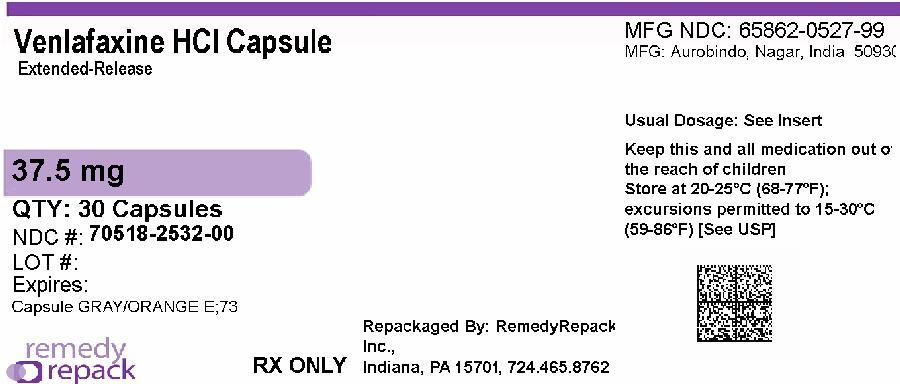
(venlafaxine · DailyMed)
VENLIFT MR 150MG 150MG CAPSULE
VENLAFAXINE HYDROCHLORIDE EXTENDED RELEASE
What it does
Extended is a medication that is often used to treat various conditions, providing relief and improving health outcomes.
Commonly used for: chronic pain, anxiety, depression, seizures
Read more in plain English ↓Plain-language summary for general understanding - not medical advice. Always follow your pharmacist/doctor.
Ask about this medicine
Answers come only from this medicine's registration record, BNF monograph and interaction data - not medical advice.
Medicine sourcing is available in Kenya only. We don't sell or dispense medicines - licensed pharmacies do.
Sourcing - Kenya onlyRegistration & product details
Source: Pharmacy and Medicines Regulatory Authority · fetched 2026-04-21 17:37:46 · updated 2026-09-26 04:30:28
Drug Interactions
6Pharmacodynamic Warnings
Venlafaxine appears in TABLE 4: Drugs with antiplatelet effects
Venlafaxine appears in TABLE 9: Drugs that prolong the QT interval
Venlafaxine appears in TABLE 11: Drugs with CNS depressant effects
Venlafaxine appears in TABLE 13: Drugs that cause serotonin syndrome
Moderate (1)
Pitolisant - increases exposure
Venlafaxine is predicted to increase the exposure to pitolisant. Use with caution and adjust dose.
Unknown (5)
Haloperidol - increases exposure
Venlafaxineslightlyincreasestheexposuretohaloperidol. e rStudy →AlsoseeTABLE9p.1519 →AlsoseeTABLE11p.1519
Venlafaxine - increases exposure
Cobicistat is predicted to increase the exposure to venlafaxine.
Venlafaxine - increases exposure
Idelalisib is predicted to increase the exposure to venlafaxine.
Venlafaxine - increases risk of serotonin syndrome
Tacrolimus potentially increases the risk of serotonin syndrome when given with venlafaxine.
Venlafaxine - increases concentration
Vaborbactamispredictedtoincreasetheconcentrationof venlafaxine.qTheoretical
Data from BNF 85 (British National Formulary). This is not a substitute for professional medical advice. Matched via: exact
About extended
Extended is a medication that is often used to treat various conditions, providing relief and improving health outcomes.
What it treats
- chronic pain
- anxiety
- depression
- seizures
How it works
Extended works by affecting certain chemicals in the brain to help improve mood, reduce pain, and manage other symptoms.
Who it's for
This medication is for adults and children who need help managing their symptoms from specific medical conditions.
Cautions
- • May cause drowsiness; avoid driving until you know how it affects you.
- • Inform your doctor if you have a history of substance abuse.
- • Not recommended for individuals with certain medical conditions; consult your healthcare provider.
AI-assisted summary grounded in BNF data - general information only, not medical advice. Always confirm with your pharmacist or doctor.
About release
Release is a medication used to help manage certain health conditions.
How it works
Release works by affecting specific processes in the body to help improve symptoms.
Who it's for
This medicine is suitable for individuals with certain health issues as determined by a healthcare professional.
AI-assisted summary grounded in BNF data - general information only, not medical advice. Always confirm with your pharmacist or doctor.
About venlafaxine
Venlafaxine is a medication used to treat depression and anxiety disorders.
What it treats
- depression
- generalized anxiety disorder
- social anxiety disorder
- panic disorder
How it works
Venlafaxine helps balance certain chemicals in the brain that affect mood, which can improve feelings of well-being.
Who it's for
This medication is for adults experiencing depression or anxiety-related conditions.
Cautions
- • Be careful if taking medicines that thin the blood.
- • Avoid drugs that can affect heart rhythm.
- • Use with caution if taking medications that cause drowsiness.
- • Be wary of drugs that may lead to serotonin syndrome, a serious condition.
AI-assisted summary grounded in BNF data - general information only, not medical advice. Always confirm with your pharmacist or doctor.
Clinical monograph: Venlafaxine
BNF-referencedVenlafaxine is a serotonin-norepinephrine reuptake inhibitor (SNRI) primarily used in the treatment of major depressive disorder, generalized anxiety disorder, social anxiety disorder, and panic disorder. It increases the levels of neurotransmitters serotonin and norepinephrine in the synaptic cleft, thereby improving mood and anxiety symptoms. Venlafaxine is available in various formulations, including immediate-release and extended-release capsules.
Indications
- Major depressive disorder
- Generalized anxiety disorder
- Social anxiety disorder
- Panic disorder
Dosage
Adults: The usual starting dose is 75 mg once daily, which may be increased if necessary to a maximum of 225 mg once daily. Doses should be increased
Mechanism of action
Venlafaxine, along with its active metabolite O-desmethylvenlafaxine, selectively inhibits the reuptake of serotonin and norepinephrine at the presynaptic terminal. This action leads to increased availability of these neurotransmitters at the synapse, stimulating postsynaptic receptors. At lower doses, venlafaxine mainly inhibits serotonin reuptake, while at higher doses, it also inhibits norepinephrine reuptake. It exhibits weak dopamine reuptake inhibition without significant affinity for muscarinic, H1-histaminergic, or a1-adrenergic receptors.
Pharmacodynamics
Venlafaxine acts as an antidepressant by elevating the levels of serotonin and norepinephrine in the central nervous system, which are crucial for regulating mood and anxiety. Its pharmacological profile does not include significant muscarinic, histaminergic, or adrenergic activities, distinguishing it from other psychotropic medications that may have additional sedative or cardiovascular side effects.
Pharmacokinetics
Venlafaxine is well absorbed following oral administration, with peak plasma concentrations occurring within 2 hours for immediate-release formulations. It undergoes extensive metabolism in the liver, primarily via CYP2D6 to its active metabolite O-desmethylvenlafaxine. The elimination half-life of venlafaxine is approximately 5 hours, while O-desmethylvenlafaxine has a longer half-life of about 11 hours. Renal impairment can affect clearance, necessitating dose adjustments. The drug is approximately 27% bound to plasma proteins.
Contra-indications
- Hypersensitivity to venlafaxine or any excipients
- Severe renal impairment (creatinine clearance less than 30 mL/min)
- Concurrent treatment with monoamine oxidase inhibitors (MAOIs)
Adverse effects
- Nausea
- Vomiting
- Headache
- Anxiety
- Dizziness
- Insomnia
- Sexual dysfunction
- Increased blood pressure
- Tremor
- Withdrawal symptoms upon abrupt cessation
Interactions
- Venlafaxine + pitolisant: Moderate (increases exposure)
- Cobicistat + venlafaxine: Unknown (increases exposure)
- Venlafaxine + haloperidol: Unknown (increases exposure)
- Idelalisib + venlafaxine: Unknown (increases exposure)
- Tacrolimus + venlafaxine: Unknown (increases risk of serotonin syndrome)
- Vaborbactam + venlafaxine: Unknown (increases concentration)
Precautions
- Monitor blood pressure regularly due to potential increases
- Use caution in patients with a history of seizures
- Consider risk of serotonin syndrome when used with other serotonergic agents
- Withdrawal symptoms may occur if dosage is reduced abruptly
Pregnancy
Toxicity in animal studies; avoid use during pregnancy unless benefits outweigh risks.
Breast-feeding
Present in breast milk; manufacturer advises avoidance if possible.
Storage
Store at room temperature, away from moisture and heat.
Formulations
- Gastro-resistant capsules
- Modified-release tablets
AI-synthesized from BNF references - general information only, not a substitute for professional medical advice or the current BNF. Verify doses with a pharmacist.
Clinical monograph: extended
Extended is a term that may refer to various pharmaceutical formulations that provide prolonged release of an active ingredient. These formulations are designed to maintain therapeutic levels of medication in the bloodstream over an extended period, reducing the frequency of dosing and improving patient compliance. Extended-release medications are commonly used in various therapeutic areas, including pain management, cardiovascular health, and chronic conditions.
Dosage
Children: Refer to specific product information for paediatric dosage guidelines based on the active ingredient and clinical condition.
Adults: Refer to specific product information for dosage instructions, as extended-release formulations vary by active ingredient and condition treated.
Mechanism of action
Extended-release formulations typically work by utilizing a matrix or coating that delays the release of the active ingredient. The release mechanism may involve diffusion, erosion, or osmotic processes, which allow the drug to be released slowly into the systemic circulation. This controlled release helps achieve stable plasma drug concentrations and minimizes peaks and troughs associated with immediate-release formulations.
Pharmacodynamics
The pharmacodynamics of extended-release medications depend on the specific active ingredient used. Generally, these medications aim to provide a steady-state concentration of the drug, leading to more consistent therapeutic effects. The prolonged exposure to the drug can enhance its efficacy and reduce side effects associated with rapid absorption, such as peak-related toxicity or adverse reactions.
Pharmacokinetics
Pharmacokinetics of extended-release formulations involves absorption, distribution, metabolism, and elimination phases that differ from immediate-release forms. The extended-release form is designed to slow the absorption rate, resulting in a longer half-life and sustained therapeutic effect. The drug may be absorbed over several hours to days, depending on the formulation. Metabolism and elimination pathways remain similar to those of the immediate-release counterparts, but the sustained exposure may necessitate careful monitoring for potential accumulation and side effects.
AI-synthesized from BNF references - general information only, not a substitute for professional medical advice or the current BNF. Verify doses with a pharmacist.
Clinical monograph: release
BNF-referencedRelease is a medication classified as a halogenated aromatic compound, which is often used in various therapeutic settings. It is primarily indicated for its antibacterial properties and is utilized in the treatment of infections caused by susceptible organisms. The drug's molecular formula is C7H4Cl3NO3, indicating it contains chlorine and nitrogen components that contribute to its pharmacological activity.
Indications
- Bacterial infections
- Infections caused by susceptible organisms
- Prophylaxis in certain surgical procedures
Dosage
Children: Refer to the BNF for Children for specific dosing recommendations based on age, weight, and condition.
Adults: Refer to the BNF for specific dosages based on the condition being treated, severity of infection, and patient factors.
Mechanism of action
Release exerts its effects by inhibiting bacterial cell wall synthesis, leading to cell lysis and death. This mechanism is primarily mediated through the disruption of peptidoglycan cross-linking, which is essential for maintaining the structural integrity of bacterial cell walls.
Pharmacodynamics
The pharmacodynamics of Release involves its bactericidal action against a wide range of gram-positive and some gram-negative bacteria. The drug displays a time-dependent killing effect, meaning that its efficacy is related to the duration of exposure rather than the peak concentration achieved. Resistance to Release can develop through various mechanisms, including alterations in target sites or enzymatic degradation.
Pharmacokinetics
Release is absorbed and distributed throughout the body following administration. Peak plasma concentrations are typically achieved within a few hours. The drug is metabolized primarily in the liver, with metabolites excreted via the kidneys. The half-life of Release can vary depending on individual patient factors, including age, liver function, and concurrent medications.
AI-synthesized from BNF references - general information only, not a substitute for professional medical advice or the current BNF. Verify doses with a pharmacist.
Molecular reference: release
PubChem CID 41428Molecular formula: C7H4Cl3NO3
Source: PubChem (NCBI) · pathways from PathBank, Reactome, WikiPathways & PharmGKB.
Molecular reference: Venlafaxine
PubChem CID 5656Molecular formula: C17H27NO2
Mechanism of action
The exact mechanism of action of venlafaxine in the treatment of various psychiatric conditions has not been fully elucidated; however, it is understood that venlafaxine and its active metabolite O-desmethylvenlafaxine (ODV) potently and selectively inhibits the reuptake of both serotonin and norepinephrine at the presynaptic terminal. This results in increased levels of neurotransmitters available at the synapse that can stimulate postsynaptic receptors. It is suggested that venlafaxine has a 30-fold selectivity for serotonin compared to norepinephrine: venlafaxine initially inhibits serotonin reuptake at low doses, and with higher doses, it inhibits norepinephrine reuptake in addition to serotonin. Venlafaxine and ODV are also weak inhibitors of dopamine reuptake. The mechanism of the antidepressant action of venlafaxine in humans is believed to be associated with its potentiation of neurotransmitter activity in the CNS. Preclinical studies have shown that venlafaxine and its active metabolite, O-desmethylvenlafaxine, are potent inhibitors of neuronal serotonin and norepinephrine reuptake and weak inhibitors of dopamine reuptake. Venlafaxine and O-desmethylvenlafaxine have no significant affinity for muscarinic cholinergic, H1-histaminergic, or a1-adrenergic receptors in vitro. Pharmacologic activity at these receptors is hypothesized to be associated with the various anticholinergic, sedative, and cardiovascular effects seen with other psychotropic drugs. Venlafaxine and O-desmethylvenlafaxine do not possess monoamine oxidase (MAO) inhibitory activity. /The antinociceptive effects of the novel phentylethylamine antidepressant drug venlafaxine and its interaction with various opioid, noradrenaline and serotonin receptor subtypes were evaluated. When mice were tested with a hotplate analgesia meter, venlafaxine induced a dose-dependent antinociceptive effect following i.p. administration with an ED50 of 46.7 mg/kg (20.5; 146.5; 95% CL). Opioid, adrenergic and serotoninergic receptor antagonists were tested for their ability to block venlafaxine antinociception. Venlafaxine-induced antinociception was significantly inhibited by naloxone, nor-BNI and naltrindole but not by beta-FNA or naloxonazine, implying involvement of kappa1- and delta-opioid mechanisms. When adrenergic and serotoninergic antagonists were used, yohimbine (P < 0.005) but not phentolamine or metergoline, decreased antinociception elicited by venlafaxine, implying a clear alpha2- and a minor alpha1-adrenergic mechanism of antinociception. When venlafaxine was administered together with various agonists of the opioid and alpha2- receptor subtypes, it significantly potentiated antinociception mediated by kappa1- kappa3- and delta-opioid receptor subtypes. The alpha2-adrenergic agonist clonidine significantly potentiated venlafaxine-mediated antinociception. Summing up these results, we conclude that the antinociceptive effect of venlafaxine is mainly influenced by the kappa- and delta-opioid receptor subtypes combined with the alpha2-adrenergic receptor. These results suggest a potential use of venlafaxine in the management of some pain syndromes. However, further research is needed in order to establish both the exact clinical indications and the effective doses of venlafaxine when prescribed for pain. /Salt not specified/ Venlafaxine ... causes selective inhibition of neuronal reuptake of serotonine and norepinephrine with little effect on other neurotransmitter systems. Cases of seizures, tachycardia, and QRS prolongation have been observed following drug overdose in humans. The clinical manifestations of cardiac toxicity suggest that venlafaxine may exhibit cardiac electrophysiological effects on fast conducting cells. Consequently, studies were undertaken to characterize effects of venlafaxine on the fast inward sodium current (I(Na)) of isolated guinea pig ventricular myocytes. Currents were recorded with the whole-cell configurati
Pharmacodynamics
Venlafaxine is an antidepressant agent that works to ameliorate the symptoms of various psychiatric disorders by increasing the level of neurotransmitters in the synapse. Venlafaxine does not mediate muscarinic, histaminergic, or adrenergic effects.
Biological pathways
Source: PubChem (NCBI) · pathways from PathBank, Reactome, WikiPathways & PharmGKB.
This drug in other countries
The same active ingredient registered across other registries we cover - including different brands.
- EFEXOR XR · Pfizer Ireland
- EFEXOR XR · Pfizer Ireland
- EFEXOR XR 150MG · Pfizer Ireland Pharmaceuticals
- EFEXOR XR 75MG · Pfizer Ireland Pharmaceuticals
- EFTRO 150 · Annora Pharma
- EFTRO 75 · Annora Pharma
- ACLOTAS SR-200MG · Accord Healthcare
- CARDITAS RTD-20MG · Accord Healthcare
- CELESTA XR 75MG TABLETS · Ray Pharmaceuticals
- CLOFENAC SR · Nilepharm
- DIVAPROX 1000 MG · Zuvan
- DIVAPROX 250 MG · Zuvan
- FAXDEPOR XL 75
- FAXEDEPOR XL 150
- GALINEX 37,5 mg TABLETS
- GALINEX 75 mg TABLETS
- LETIZIA 37,5 mg
- LETIZIA 75 mg