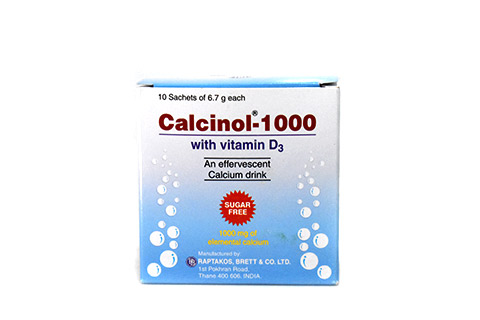
CALCINOL 1000 SACHETS
CALCIUM CARBONATECHOLECALCIFEROL
What it does
Carbonatecholecalciferol is a form of vitamin D that helps maintain healthy bones and teeth.
Commonly used for: Vitamin D deficiency, Osteoporosis, Rickets
Read more in plain English ↓Plain-language summary for general understanding - not medical advice. Always follow your pharmacist/doctor.
Ask about this medicine
Answers come only from this medicine's registration record, BNF monograph and interaction data - not medical advice.
Hard to find? We help patients in Kenya source rare medicines. We don't sell or dispense medicines - licensed pharmacies do.
Source this medicineRegistration & product details
Source: Pharmacy and Poisons Board · fetched 2026-01-28 22:10:08 · updated 2026-03-23 04:55:19
About this medicine
Carbonatecholecalciferol is a form of vitamin D that helps maintain healthy bones and teeth.
What it treats
- Vitamin D deficiency
- Osteoporosis
- Rickets
How it works
It helps the body absorb calcium and phosphorus, which are essential for strong bones.
Who it's for
It is suitable for people who need to increase their vitamin D levels for bone health.
AI-assisted summary grounded in BNF data - general information only, not medical advice. Always confirm with your pharmacist or doctor.
Clinical monograph: carbonatecholecalciferol
Carbonatecholecalciferol is a vitamin D analogue that is used to support calcium homeostasis and bone health. It is particularly important in the management of conditions related to calcium deficiency, such as osteoporosis, rickets, and osteomalacia. Its role in enhancing intestinal absorption of calcium and phosphate plays a critical role in maintaining adequate mineralization of bone and overall skeletal health.
Indications
- Vitamin D deficiency
- Osteoporosis
- Rickets
- Osteomalacia
- Secondary hyperparathyroidism
Dosage
Children: Refer to the BNF for Children for appropriate paediatric dosing information.
Adults: Refer to the specific guidelines and product information for detailed dosing recommendations.
Mechanism of action
Carbonatecholecalciferol is converted to its active form, calcitriol, in the body. Calcitriol binds to vitamin D receptors in target tissues, which modulates the expression of genes involved in calcium and phosphate absorption in the intestines, reabsorption in the kidneys, and mobilization from bones. This action results in increased serum levels of calcium and phosphate, essential for maintaining bone density and health.
Pharmacodynamics
The pharmacodynamic effects of carbonatecholecalciferol include increased intestinal absorption of calcium and phosphate, increased renal tubular reabsorption of calcium, and mobilization of calcium from the bone. These effects help to maintain adequate serum calcium levels, which are crucial for various physiological functions including nerve conduction, muscle contraction, and blood clotting. The drug also plays an important role in the regulation of parathyroid hormone secretion.
Pharmacokinetics
Carbonatecholecalciferol is well absorbed from the gastrointestinal tract, with its bioavailability influenced by the presence of dietary fat. It undergoes hepatic metabolism to form calcidiol, which is then converted to calcitriol in the kidneys. The half-life of calcitriol is approximately 15 hours. The elimination of vitamin D and its metabolites occurs primarily through hepatic and renal pathways, with minimal urinary excretion.
Contra-indications
- Hypercalcemia
- Vitamin D toxicity
- Severe renal impairment
- Malabsorption syndromes
Adverse effects
- Hypercalcemia
- Hypercalciuria
- Nausea
- Vomiting
- Constipation
- Weakness
- Fatigue
- Headaches
- Renal stones
Interactions
- Thiazide diuretics may increase the risk of hypercalcemia
- Anticonvulsants (such as phenytoin) may reduce vitamin D metabolism
- Orlistat may reduce the absorption of fat-soluble vitamins, including vitamin D
- Mineral oil may impair the absorption of vitamin D
Precautions
- Monitor serum calcium and phosphorus levels during therapy
- Use with caution in patients with a history of kidney stones
- Consider adjusting dosage in patients with renal impairment
- Assess for potential interactions with other medications
Pregnancy
Carbonatecholecalciferol can be used in pregnancy if the benefits outweigh the risks, but high doses should be avoided.
Breast-feeding
Vitamin D is excreted in breast milk; supplementation may be necessary for breastfeeding infants if maternal intake is insufficient.
Storage
Store in a cool, dry place, away from direct sunlight. Keep out of reach of children.
Formulations
- Tablets
- Capsules
- Oral solutions
- Syrups
AI-synthesized from BNF references - general information only, not a substitute for professional medical advice or the current BNF. Verify doses with a pharmacist.