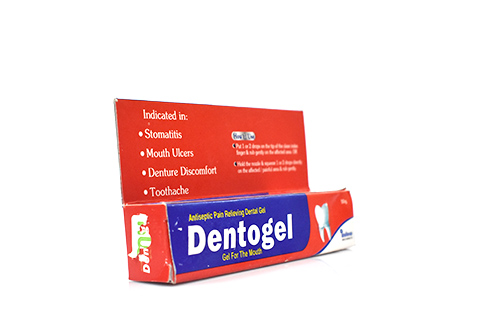
DENTOGEL
CHOLINE SALICYLATELIDOCAINE HYDROCHLORIDE BP
What it does
Choline is a nutrient important for various bodily functions, including brain health and liver function.
Commonly used for: supporting brain health, helping with liver function
Read more in plain English ↓Plain-language summary for general understanding - not medical advice. Always follow your pharmacist/doctor.
Ask about this medicine
Answers come only from this medicine's registration record, BNF monograph and interaction data - not medical advice.
Hard to find? We help patients in Kenya source rare medicines. We don't sell or dispense medicines - licensed pharmacies do.
Source this medicineRegistration & product details
Source: Pharmacy and Poisons Board · fetched 2026-01-28 22:09:44 · updated 2026-03-23 04:54:54
About choline
Choline is a nutrient important for various bodily functions, including brain health and liver function.
What it treats
- supporting brain health
- helping with liver function
How it works
Choline helps produce important substances in the body, like phospholipids, which are essential for cell membranes.
Who it's for
Choline can be beneficial for people needing support for cognitive function and liver health.
AI-assisted summary grounded in BNF data - general information only, not medical advice. Always confirm with your pharmacist or doctor.
About salicylatelidocaine
Salicylate-lidocaine is a medication that helps relieve pain and reduce inflammation.
What it treats
- muscle pain
- joint pain
- pain from injuries
- inflammation
How it works
It works by numbing the area where it's applied and reducing swelling.
Who it's for
This medication is suitable for adults and children who have pain or inflammation.
AI-assisted summary grounded in BNF data - general information only, not medical advice. Always confirm with your pharmacist or doctor.
Clinical monograph: choline
BNF-referencedCholine is an essential nutrient that plays a critical role in various biological processes, particularly in the maintenance of cell membrane integrity, neurotransmitter synthesis, and lipid metabolism. It is a precursor of acetylcholine, a neurotransmitter vital for nerve conduction and cognitive function. Choline also contributes to the synthesis of phosphatidylcholine and sphingomyelin, important phospholipids in cellular membranes. Inadequate choline intake can lead to several health issues, including liver dysfunction and neurological disorders.
Indications
- Choline deficiency
- Support in liver function
- Neurological health, including cognitive function
- Fat metabolism disorders
Dosage
Children: Refer to the BNF for Children for specific dosing guidelines.
Adults: Refer to the BNF for specific dosing guidelines.
Mechanism of action
Choline is a major component of phosphatidylcholine, which is essential for maintaining cell membrane integrity, facilitating information flow, and intracellular communication. It is involved in the synthesis of acetylcholine, a key neurotransmitter in the central nervous system. Choline deficiency can lead to apoptosis by affecting cell membrane composition and increasing ceramide levels, which activates apoptotic pathways. Additionally, choline is a precursor to betaine, which helps regulate homocysteine levels, thus reducing cardiovascular risks.
Pharmacodynamics
Choline is crucial for proper nerve conduction in the central nervous system as it is a precursor for acetylcholine. It supports liver function, gallbladder regulation, and lipid metabolism. Adequate choline levels are associated with the prevention of excessive fat accumulation in the liver and may mitigate conditions such as Parkinsonism and tardive dyskinesia. Deficiencies can lead to serious health problems, including liver dysfunction and stunted growth.
Pharmacokinetics
Choline is absorbed in the intestines and distributed throughout the body, where it is utilized in various metabolic pathways. The liver plays a central role in choline metabolism, converting it into phosphatidylcholine and other metabolites. The half-life and excretion pathways of choline are not well defined but are influenced by dietary intake, physiological state, and individual metabolism.
Interactions
- corticosteroids+cholinesalicylate: Unknown (decreases concentration)
Pregnancy
Choline is generally considered safe during pregnancy, as it is essential for fetal development, particularly for brain development and function. However, it is important to adhere to recommended dietary allowances.
Breast-feeding
Choline is important during breastfeeding as it supports infant brain development. Adequate intake is recommended for nursing mothers.
Storage
Store in a cool, dry place, away from direct sunlight and moisture. Keep out of reach of children.
AI-synthesized from BNF references - general information only, not a substitute for professional medical advice or the current BNF. Verify doses with a pharmacist.
Clinical monograph: salicylatelidocaine
Salicylate-lidocaine is a combination medication that utilizes the analgesic properties of salicylate and the local anesthetic effects of lidocaine. Salicylate is primarily used for its anti-inflammatory effects, while lidocaine provides localized numbness and pain relief. This combination is often used in the management of pain associated with musculoskeletal disorders and minor surgical procedures.
Indications
- Pain relief in musculoskeletal disorders
- Local anesthesia for minor surgical procedures
- Management of post-operative pain
- Treatment of localized pain syndromes
Dosage
Children: Refer to the BNF for Children for appropriate pediatric dosing information, as it may differ significantly from adult doses.
Adults: Refer to specific clinical guidelines or the BNF for dosage recommendations, as it may vary based on the formulation and clinical scenario.
Mechanism of action
Salicylates inhibit the enzyme cyclooxygenase (COX), leading to decreased synthesis of prostaglandins, which are mediators of inflammation and pain. Lidocaine works by blocking voltage-gated sodium channels, thereby inhibiting the initiation and conduction of nerve impulses, which results in local anesthesia.
Pharmacodynamics
The combination of salicylate and lidocaine provides both anti-inflammatory and anesthetic effects. Salicylate reduces pain and inflammation by modulating the biochemical pathways involved in the pain response, while lidocaine provides immediate relief through its local anesthetic properties. This dual action can enhance overall pain management in various clinical settings.
Pharmacokinetics
Salicylates are absorbed from the gastrointestinal tract and metabolized in the liver, with their effects lasting several hours depending on the formulation. Lidocaine is also rapidly absorbed and distributed throughout the body, with its onset of action occurring within minutes when administered locally. Both agents are excreted primarily through the kidneys, necessitating dose adjustments in patients with renal impairment.
Contra-indications
- Hypersensitivity to salicylates or lidocaine
- Active or history of gastrointestinal bleeding
- Severe hepatic impairment
- Severe cardiac disorders
Adverse effects
- Allergic reactions including rash, urticaria, and anaphylaxis
- Gastrointestinal disturbances such as nausea and vomiting
- CNS effects including dizziness, drowsiness, or confusion
- Cardiovascular effects such as hypotension or bradycardia
Interactions
- Increased risk of bleeding with anticoagulants
- Potential for increased lidocaine levels with CYP3A4 inhibitors
- Salicylates may displace other highly protein-bound drugs
Precautions
- Use with caution in patients with asthma or nasal polyps due to potential for salicylate sensitivity
- Monitor for signs of systemic absorption when used topically
- Caution in patients with a history of seizures due to lidocaine component
Pregnancy
Lidocaine is classified as category B, indicating no proven risk in humans; however, salicylates are typically avoided during pregnancy due to risk of complications.
Breast-feeding
Lidocaine is excreted in breast milk, but generally considered safe in small amounts; salicylates should be used with caution.
Storage
Store in a cool, dry place away from direct sunlight. Keep out of reach of children.
Formulations
- Topical cream or gel containing salicylate and lidocaine
- Ointment formulations for localized application
AI-synthesized from BNF references - general information only, not a substitute for professional medical advice or the current BNF. Verify doses with a pharmacist.
Molecular reference: choline
PubChem CID 305Molecular formula: C5H14NO+
Mechanism of action
Choline is a major part of the polar head group of phosphatidylcholine. Phosphatidylcholine's role in the maintenance of cell membrane integrity is vital to all of the basic biological processes: information flow, intracellular communication and bioenergetics. Inadequate choline intake would negatively affect all these processes. Choline is also a major part of another membrane phospholipid, sphingomyelin, also important for the maintenance of cell structure and function. It is noteworthy and not surprising that choline deficiency in cell culture causes apoptosis or programmed cell death. This appears to be due to abnormalities in cell membrane phosphatidylcholine content and an increase in ceramide, a precursor, as well as a metabolite, of sphingomyelin. Ceramide accumulation, which is caused by choline deficiency, appears to activate Caspase, a type of enzyme that mediates apoptosis. Betaine or trimethylglycine is derived from choline via an oxidation reaction. Betaine is one of the factors that maintains low levels of homocysteine by resynthesizing L-methionine from homocysteine. Elevated homocysteine levels are a significant risk factor for atherosclerosis, as well as other cardiovascular and neurological disorders. Acetylcholine is one of the major neurotransmitters and requires choline for its synthesis. Adequate acetylcholine levels in the brain are believed to be protective against certain types of dementia, including Alzheimer's disease.
Pharmacodynamics
This compound is needed for good nerve conduction throughout the CNS (central nervous system) as it is a precursor to acetylcholine (ACh). Choline is also needed for gallbladder regulation, liver function and lecithin (a key lipid) formation. Choline also aids in fat and cholesterol metabolism and prevents excessive fat build up in the liver. Choline has been used to mitigate the effects of Parkinsonism and tardive dyskinesia. Choline deficiencies may result in excessive build-up of fat in the liver, high blood pressure, gastric ulcers, kidney and liver dysfunction and stunted growth.
Biological pathways
Source: PubChem (NCBI) · pathways from PathBank, Reactome, WikiPathways & PharmGKB.
This drug in other countries
The same active ingredient registered across other registries we cover - including different brands.
- ASHVIT INJECTION · AmbVet Biotech
- BAODING AMINOVIT FORTE LIQUID (Each 1L contains Vitamin A 15,000,000iu/ Vitamin D3 2,500,000iu/ Vitamin E 6,000iu/ Vitamin K3 1.0g/ Pantothenic acid B5 2.8g/ Thiamine B1 2.0g/ Riboflavin B2 1.5g/ Pyridoxine B6 1.5g/ Vitamin B12 2.5mg/ Nicotinamide B3 6.5g/ Choline chloride 100g/ Methionine 120g/ Lysine 50g/ Vitamin C 10g/ Threonine 8g/ Serine 0.42g/ Glycine 0.7g/ Valine 0.5g/ Isoleucine 0.36g/ Leucine 0.5g/ Tyrosine 0.25g/ Histidine 0.2g/ Arginine 0.8g/ Phenylalanine 0.72g/ Tryptophan 0.2g) · Osamed Green Solution
- COMPLET CAN TABLETS · Tav Vertinaria
- HE 30-DAY BEAUTY SECRET TABLETS · Dm Pharma
- HEPAROL PLUS ORAL SOLUTION (Each ml contains: Sorbitol/ L-Carnitine/ Betaine HCL/ Choline Chloride/ D-Panthenol/ Magnesium Sulphate/ DL-methionine/ Vitamin C 200mg/ 50mg/ 12.5mg/ 200mg/ 25mg/ 100mg/ 7.5mg/ 0.5mg ) · Kepro
- KIDLYTE DROPS · Yew Supplements
- B Complex Injection · Hebei New Century Pharmaceutical
- Dentogel · Indoco Remedies
- EGG-BOOST Oral Powder · Teleios Pharma
- Hivit Multivitamin Injection · Zenex Animal Health
- Introvit Injection · Interchemie Werken De Adelaar
- Kaovit Feed Additive · Farmers Centre
- Cosvita WS · Cosmos
- Nat-B · Mega Lifesciences
- Poltricin Chick formula · Cosmos
- Poltricin Mayai Formula · Cosmos
- RAPI-COOL · Lincoln Pharmaceuticals
- Redin Plus · Fourrts Laboratories