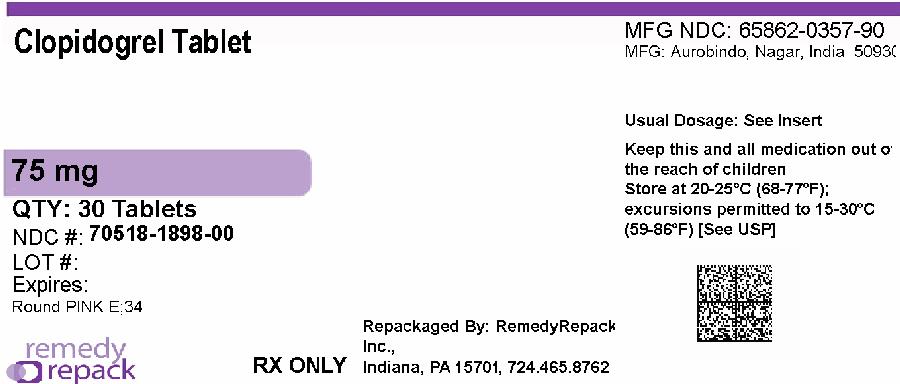
(clopidogrel · DailyMed)
FLAMOGREL 75
CLOPIDOGREL BISUFATE USP
What it does
Bisufate is used to help manage certain medical conditions, but specific details about its use and interactions are not provided.
Read more in plain English ↓Plain-language summary for general understanding - not medical advice. Always follow your pharmacist/doctor.
Ask about this medicine
Answers come only from this medicine's registration record, BNF monograph and interaction data - not medical advice.
Hard to find? We help patients in Kenya source rare medicines. We don't sell or dispense medicines - licensed pharmacies do.
Source this medicineRegistration & product details
Source: Pharmacy and Poisons Board · fetched 2026-01-28 21:53:59 · updated 2026-03-23 04:39:05
Drug Interactions
24Pharmacodynamic Warnings
Clopidogrel appears in TABLE 4: Drugs with antiplatelet effects
Severe (4)
Clopidogrel - decreases efficacy
Voriconazole is predicted to decrease the efficacy of clopidogrel. Avoid.
Clopidogrel - decreases efficacy
HIV-protease inhibitors (ritonavir) might decrease the efficacy of clopidogrel. Avoid.
Clopidogrel - decreases efficacy
Moclobemide is predicted to decrease the efficacy of clopidogrel. Avoid.
Clopidogrel - decreases efficacy
Ritonavirmightdecreasetheefficacyofclopidogrel.Avoid. oTheoretical
Moderate (2)
Pioglitazone - increases exposure
Clopidogrel increases the exposure to pioglitazone. Monitor blood glucose and adjust dose.
Treprostinil - increases exposure
Clopidogrel is predicted to increase the exposure to treprostinil. Adjust dose. Also see TABLE 4 p. 1517
Unknown (18)
Alitretinoin - increases exposure
Clopidogrel is predicted to increase the exposure to retinoids (alitretinoin). Adjust alitretinoin dose, p. 1382.
Anti-Androgens - increases exposure
Clopidogrel is predicted to increase the exposure to anti-androgens (apalutamide) and anti-androgens (apalutamide) are predicted to increase the exposure to the active metabolite of clopidogrel. Avoid
Apalutamide - increases exposure
Clopidogrel is predicted to increase the exposure to anti-androgens (apalutamide) and anti-androgens (apalutamide) are predicted to increase the exposure to the active metabolite of clopidogrel. Avoid
Apalutamide And Apalutamide Is Predicted To Increase The Https - increases exposure
Clopidogrelispredictedtoincreasetheexposureto apalutamideandapalutamideispredictedtoincreasethe https://www.facebook.c (Books-Courses-Medic
Clopidogrel - decreases efficacy
Fluconazoleispredictedtodecreasetheefficacyofclopidogrel. Avoid.rTheoretical
Data from BNF 85 (British National Formulary). This is not a substitute for professional medical advice. Matched via: exact
About bisufate
Bisufate is used to help manage certain medical conditions, but specific details about its use and interactions are not provided.
How it works
Information on how bisufate works is not available.
Who it's for
Bisufate may be prescribed for individuals with specific health conditions as determined by a healthcare provider.
AI-assisted summary grounded in BNF data - general information only, not medical advice. Always confirm with your pharmacist or doctor.
About clopidogrel
Clopidogrel is a medication that helps prevent blood clots by making your blood less sticky.
What it treats
- prevention of heart attacks
- prevention of strokes
- peripheral artery disease management
How it works
Clopidogrel works by blocking platelets in your blood from sticking together, which helps to keep your blood flowing smoothly.
Who it's for
Clopidogrel is for individuals at risk of blood clots, such as those with heart conditions or a history of strokes.
Cautions
- • Avoid combining with other medications that also prevent blood clots.
AI-assisted summary grounded in BNF data - general information only, not medical advice. Always confirm with your pharmacist or doctor.
Clinical monograph: bisufate
Bisulfate, often in the form of sodium bisulfate, is a salt used primarily for its properties as a pH adjuster and preservative. It is commonly utilized in food processing and as an acidifying agent. In pharmaceuticals, bisulfate can serve as an excipient and is involved in formulations where pH control is crucial for stability and efficacy.
Indications
- pH adjustment in pharmaceutical formulations
- preservative in food and beverages
- antioxidant in certain chemical processes
Dosage
Children: Refer to specific product guidelines and formulations as doses can vary widely based on application.
Adults: Refer to specific product guidelines and formulations as doses can vary widely based on application.
Mechanism of action
Bisulfate acts as a reducing agent and a source of sulfite ions. It functions by donating protons (H+) to the surrounding environment, thereby lowering pH levels. This action is significant in various chemical and biological processes, influencing enzymatic activities and stabilizing certain compounds.
Pharmacodynamics
The pharmacodynamic properties of bisulfate are primarily related to its acidity and its ability to maintain a stable pH in pharmaceutical formulations. It can also act as an antioxidant, which may help in preventing oxidative degradation of sensitive compounds.
Pharmacokinetics
Bisulfate is quickly absorbed and metabolized in the body. It undergoes conversion to sulfate, which is an essential component of many metabolic pathways. The elimination half-life may vary depending on individual metabolic rates and the presence of renal function, as sulfates are primarily excreted via the kidneys.
Pregnancy
Bisufate should only be used during pregnancy if the potential benefit justifies the potential risk to the fetus. Consultation with a healthcare provider is recommended.
Breast-feeding
It is not known whether bisufate is excreted in human milk. Caution should be exercised when administered to nursing mothers.
Storage
Store at room temperature, away from light and moisture. Keep out of reach of children.
AI-synthesized from BNF references - general information only, not a substitute for professional medical advice or the current BNF. Verify doses with a pharmacist.
Clinical monograph: Clopidogrel
BNF-referencedClopidogrel is an antiplatelet medication that belongs to the thienopyridine class. It is primarily used to prevent atherothrombotic events in patients at risk of myocardial infarction, stroke, and other cardiovascular complications. Clopidogrel is administered orally and is known for its ability to irreversibly inhibit platelet aggregation, thereby reducing the risk of clot formation. Its long duration of action and once-daily dosing make it a convenient option in clinical practice.
Indications
- Prevention of atherothrombotic events in patients with acute coronary syndrome
- Secondary prevention of ischaemic stroke
- Prevention of atherothrombotic events in peripheral arterial disease
Mechanism of action
Clopidogrel is activated through a two-step metabolic process to form an active thiol-containing metabolite. This metabolite irreversibly binds to the P2Y12 ADP receptors on platelets, preventing ADP from activating the GPIIb/IIIa complex, which is crucial for platelet aggregation. As a result, clopidogrel inhibits platelet aggregation for the lifespan of the platelets (approximately 7 to 10 days). The inhibition of the P2Y12 receptor reduces platelet activation and aggregation not just from ADP, but also from other agonists.
Pharmacodynamics
Clopidogrel is a prodrug that serves as a potent antiplatelet agent, effectively reducing the risk of myocardial infarction and stroke. Its pharmacological effects are long-lasting, allowing for once-daily dosing. Clopidogrel exhibits a broad therapeutic window, and its dosage ranges from 75 mg to 300 mg per day, depending on the clinical scenario. Its action helps maintain blood flow and prevent occlusive vascular events.
Pharmacokinetics
Clopidogrel is well absorbed in the gastrointestinal tract, with peak plasma concentrations occurring within 1 to 2 hours after oral administration. It undergoes extensive hepatic metabolism, primarily through CYP450 enzymes, which convert it into its active form. The elimination half-life of clopidogrel is approximately 6 hours, but the antiplatelet effect lasts much longer due to the irreversible nature of its action on platelets. It is primarily excreted through urine, with a majority of the dose eliminated as inactive metabolites.
Contra-indications
- Active bleeding
Adverse effects
- Confusion
- Fever
- Gynaecomastia
- Hallucination
- Hepatic disorders
- Hypotension
- Myalgia
- Neutropenia
- Severe cutaneous adverse reactions (SCARs)
- Stomatitis
- Taste altered
- Ulcerative colitis
- Vasculitis
- Vertigo
- Wound haemorrhage
Interactions
- Voriconazole + clopidogrel: Severe (decreases efficacy)
- HIV protease inhibitors + clopidogrel: Severe (decreases efficacy)
- Moclobemide + clopidogrel: Severe (decreases efficacy)
- Ritonavir + clopidogrel: Severe (decreases efficacy)
- Clopidogrel + pioglitazone: Moderate (increases exposure)
- Clopidogrel + treprostinil: Moderate (increases exposure)
- Clopidogrel + apalutamide: Unknown (increases exposure)
- Clopidogrel + enzalutamide: Unknown (increases exposure)
- Fluconazole + clopidogrel: Unknown (decreases efficacy)
- Clopidogrel + anti-androgens: Unknown (increases exposure)
Precautions
- Caution with history of hypersensitivity reactions to thienopyridines
- Caution in moderate hepatic impairment
- Caution in renal impairment
- Discontinue 7 days before elective surgery if antiplatelet effect not desirable
- Patients at risk of increased bleeding from trauma, surgery, or other pathological conditions
Pregnancy
Manufacturer advises avoid-no information available.
Breast-feeding
Manufacturer advises avoid.
Storage
Store in a cool, dry place, away from direct sunlight.
Formulations
- Clopidogrel 75 mg tablet
- Clopidogrel 300 mg tablet
- Clopidogrel oral suspension
AI-synthesized from BNF references - general information only, not a substitute for professional medical advice or the current BNF. Verify doses with a pharmacist.
Molecular reference: Clopidogrel
PubChem CID 60606Molecular formula: C16H16ClNO2S
Mechanism of action
Clopidogrel is activated via a 2 steps reaction to an active thiol-containing metabolite. This active form is a platelet inhibitor that irreversibly binds to P2Y<sub>12</sub> ADP receptors on platelets. This binding prevents ADP binding to P2Y<sub>12</sub> receptors, activation of the glycoprotein GPIIb/IIIa complex, and platelet aggregation. Clopidogrel must be metabolized by CYP450 enzymes to produce the active metabolite that inhibits platelet aggregation. The active metabolite of clopidogrel selectively inhibits the binding of adenosine diphosphate (ADP) to its platelet P2Y12 receptor and the subsequent ADP-mediated activation of the glycoprotein GPIIb/IIIa complex, thereby inhibiting platelet aggregation. This action is irreversible. Consequently, platelets exposed to clopidogrel's active metabolite are affected for the remainder of their lifespan (about 7 to 10 days). Platelet aggregation induced by agonists other than ADP is also inhibited by blocking the amplification of platelet activation by released ADP. The P2Y12 receptor plays a crucial role in the regulation of platelet activation by several agonists, which is irreversibly antagonized by the active metabolite of clopidogrel, a widely used anti-thrombotic drug. In this study, we investigated whether reduction of platelet reactivity leads to reduced inflammatory responses using a rat model of erosive arthritis. We evaluated the effect of clopidogrel on inflammation in Lewis rats in a peptidoglycan polysaccharide (PG-PS)-induced arthritis model with four groups of rats: 1) untreated, 2) clopidogrel-treated, 3) PG-PS-induced, and 4) PG-PS-induced and clopidogrel-treated. There were significant differences between the PG-PS+clopidogrel group when compared to the PG-PS group including: increased joint diameter and clinical manifestations of inflammation, elevated plasma levels of pro-inflammatory cytokines (IL-1 beta, interferon (IFN) gamma, and IL-6), an elevated neutrophil blood count and an increased circulating platelet count. Plasma levels of IL-10 were significantly lower in the PG-PS+clopidogrel group compared to the PG-PS group. Plasma levels of platelet factor 4 (PF4) were elevated in both the PG-PS and the PG-PS+clopidogrel groups, however PF4 levels showed no difference upon clopidogrel treatment, suggesting that the pro- inflammatory effect of clopidogrel may be due to its action on cells other than platelets. Histology indicated an increase in leukocyte infiltration at the inflammatory area of the joint, increased pannus formation, blood vessel proliferation, subsynovial fibrosis and cartilage erosion upon treatment with clopidogrel in PG-PS-induced arthritis animals. In summary, animals treated with clopidogrel showed a pro-inflammatory effect in the PG-PS-induced arthritis animal model, which might not be mediated by platelets.
Pharmacodynamics
Clopidogrel is a prodrug of a platelet inhibitor used to reduce the risk of myocardial infarction and stroke. It has a long duration of action as it is taken once daily and a large therapeutic window as it is given in doses of 75-300mg daily.
Biological pathways
Source: PubChem (NCBI) · pathways from PathBank, Reactome, WikiPathways & PharmGKB.
This drug in other countries
The same active ingredient registered across other registries we cover - including different brands.
- Antiplar · Emcure Pharmaceuticals
- Antiplatt · Troikaa Pharmaceuticals
- CLOPA · Pinnacle Life Science
- CLOPIDOWEL 75 · Akums Drug And Pharmaceuticals
- CLOPIDREL · Lincoln Pharmaceuticals
- Clopact-75 · Ipca Laboratories
- ANTIPLAR TABLETS · Emcure Pharmaceuticals
- CLOPEDO 75 TABLETS (Each film-coated tablet contains Clopidogrel Bisulfate 75mg) · Mars Remedies
- CLOPIDOGREL · Torrent Pharmaceuticals
- CLOPIDOGREL TABLETS · Mars Remedies
- CLOPIDOGREL TABLETS · Mars Remedies
- CORPIDOL TABLETS · Impulse Pharma
- Antiplar · Emcure Pharmaceuticals
- Cadigrel tablets · Cadila Pharmaceuticals
- Clopi - Denk 75 tablets · Artesan Pharma
- Clopi 75 Tablets · Macleods Pharmaceuticals
- Clopikind - 75 tablets · Aurochem Pharmaceuticals
- Deplatt · Torrent Pharmaceuticals
- ASPLADIN · Mylan Lab
- CLOPI 75 · Macleods Pharmaceuticals
- CLOPIDOGREL 75MG PD · Unichem Laboratories
- CLOPIDOGREL IMPACT · Sanofi
- DEPLATT · Torrent Pharmaceuticals
- PLACLOP 75MG · Msn Laboratories