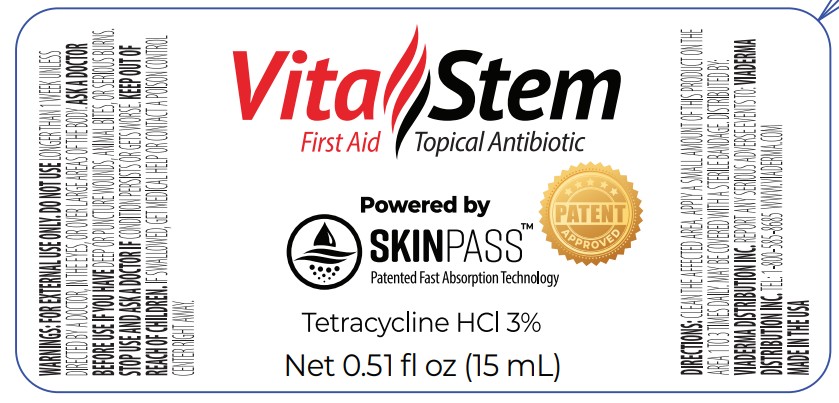
(tetracycline · DailyMed)
TETRACYCLINE 250MG CAPS
TETRACYCLINE
What it does
Tetracycline is an antibiotic that helps fight bacterial infections.
Commonly used for: bacterial infections, acne, respiratory infections
Read more in plain English ↓Plain-language summary for general understanding - not medical advice. Always follow your pharmacist/doctor.
Ask about this medicine
Answers come only from this medicine's registration record, BNF monograph and interaction data - not medical advice.
Hard to find? We help patients in Kenya source rare medicines. We don't sell or dispense medicines - licensed pharmacies do.
Source this medicineRegistration & product details
Source: Pharmacy and Poisons Board · fetched 2026-01-28 19:56:16 · updated 2026-08-03 03:05:28
Drug Interactions
11Pharmacodynamic Warnings
Tetracycline appears in TABLE 1: Drugs that cause hepatotoxicity
Severe (1)
Tetracyclines - decreases absorption
Strontium is predicted to decrease the absorption of tetracyclines. Avoid. Theoretical Sucralfate
Moderate (3)
Lithium - increases risk of lithium toxicity
Tetracyclines are predicted to increase the risk of lithium toxicity when given with lithium. Avoid or adjust dose.
Tetracyclines - decreases concentration
Fosphenytoin is predicted to decrease the concentration of tetracyclines (doxycycline). Adjust dose.
Tetracyclines - decreases exposure
Rifampicin modestly decreases the exposure to tetracyclines (doxycycline). Adjust dose.
Unknown (7)
Antimalarials - decreases concentration
Tetracycline decreases the concentration of antimalarials (atovaquone).
Atovaquone - decreases concentration
Tetracycline decreases the concentration of antimalarials (atovaquone).
Relugolix - increases exposure
Tetracycline is predicted to increase the exposure to relugolix. Avoid or take relugolix first and separate administration by at least 6 hours.
Tetracyclines - decreases exposure
Mitotane is predicted to decrease the exposure to tetracyclines (eravacycline). Adjust eravacycline dose, p. 625.
Tetracyclines - decreases exposure
Rifampicin is predicted to decrease the exposure to tetracyclines (eravacycline). Adjust eravacycline dose, p. 625.
Tetracyclines - decreases exposure
St John's wort is predicted to decrease the exposure to tetracyclines (eravacycline). Adjust eravacycline dose, p. 625.
Tetracyclines - decreases absorption
Oralzincispredictedtodecreasetheabsorptionof tetracyclines.Separateadministrationby2to3hours. oTheoretical https://www.facebook.c (Books-Courses-Medic
Data from BNF 85 (British National Formulary). This is not a substitute for professional medical advice. Matched via: class
About this medicine
Tetracycline is an antibiotic that helps fight bacterial infections.
What it treats
- bacterial infections
- acne
- respiratory infections
How it works
It works by stopping the growth of bacteria in the body.
Who it's for
It is for people who have infections caused by certain types of bacteria.
Drug class
Tetracyclines
Cautions
- • Be cautious if you are taking other medications that can harm the liver.
AI-assisted summary grounded in BNF data - general information only, not medical advice. Always confirm with your pharmacist or doctor.
Clinical monograph: Tetracycline
BNF-referencedTetracycline is a broad-spectrum antibiotic belonging to the tetracycline class of drugs. It is primarily used to treat various bacterial infections by inhibiting protein synthesis in susceptible bacteria. Its efficacy includes treatment for infections caused by organisms such as Chlamydia, Rickettsia, and Mycoplasma. Due to its ability to bind to calcium, it can cause deposition in growing bones and teeth, which is a significant consideration in pediatric use.
Indications
- Bacterial infections such as chlamydia
- Rickettsial infections
- Mycoplasma infections
- Acne vulgaris (off-label use)
Dosage
Children: In children aged 12 to 17 years, the recommended dose for susceptible infections is 100 mg daily, but this can vary based on specific circumstances and should be guided by the BNF for Children
Adults: For susceptible infections, the typical adult dose is 100 mg twice daily for 5 to 14 days, depending on the specific infection. For acne, 500 mg twice daily for 6 to 12 weeks may be used.
Mechanism of action
Tetracycline works by binding to the 30S ribosomal subunit of bacteria, inhibiting the attachment of aminoacyl-tRNA to the ribosomal acceptor site. This effectively prevents protein synthesis, which is essential for bacterial growth and replication.
Pharmacodynamics
The pharmacodynamics of tetracycline involves its bacteriostatic action, meaning it stops bacteria from multiplying rather than killing them outright. Its spectrum of activity covers a wide range of gram-positive and gram-negative bacteria, as well as some atypical pathogens. Resistance can develop through various mechanisms, including efflux pumps and ribosomal protection.
Pharmacokinetics
Tetracycline is well-absorbed from the gastrointestinal tract, although its absorption can be decreased by the presence of divalent and trivalent metal ions (such as calcium, magnesium, and iron). It is distributed widely in body tissues and fluids, with a volume of distribution of approximately 0.5-1.0 L/kg. Tetracycline is largely excreted unchanged in the urine, with a half-life ranging from 6 to 12 hours. Renal impairment can increase its half-life, necessitating caution in dosing.
Contra-indications
- Children under 12 years due to deposition in growing bone and teeth, causing staining and occasionally dental hypoplasia
Adverse effects
- Gastrointestinal disturbances
- Hearing impairment
- Discoloration of teeth
- Photosensitivity
- Dizziness
- Vertigo
- Skin reactions such as rash or pruritus
- Allergic reactions including anaphylaxis
- Esophagitis
- Stomatitis
- Pseudomembranous colitis
Interactions
- Strontium and tetracyclines: Severe (decreases absorption)
- Fosphenytoin and tetracyclines: Moderate (decreases concentration)
- Tetracyclines and lithium: Moderate (increases risk of lithium toxicity)
- Rifampicin and tetracyclines: Moderate (decreases exposure)
- Mitotane and tetracyclines: Unknown (decreases exposure)
- St John's Wort and tetracyclines: Unknown (decreases exposure)
- Tetracycline and antimalarials: Unknown (decreases concentration)
- Tetracycline and atovaquone: Unknown (decreases concentration)
- Tetracycline and relugolix: Unknown (increases exposure)
Precautions
- Use with caution in patients with renal impairment, as dose adjustments may be necessary
- Monitor for hepatotoxicity, pigmentation, and systemic lupus erythematosus in long-term use
- Avoid concurrent use with medications that may affect absorption or increase toxicity
- Advise patients to remain upright for at least 30 minutes after taking to prevent esophageal irritation
Pregnancy
Tetracyclines are generally not recommended during pregnancy due to the risk of dental staining and skeletal abnormalities in the developing fetus.
Breast-feeding
Tetracyclines can be excreted in breast milk and may affect the infant's dental development; caution is advised.
Storage
Store in a cool, dry place, away from direct sunlight and moisture. Keep out of reach of children.
Formulations
- Tablets: 250 mg, 500 mg
- Oral suspension
AI-synthesized from BNF references - general information only, not a substitute for professional medical advice or the current BNF. Verify doses with a pharmacist.
Molecular reference: Tetracycline
PubChem CID 54675776Molecular formula: C22H24N2O8
Biological pathways
Source: PubChem (NCBI) · pathways from PathBank, Reactome, WikiPathways & PharmGKB.
This drug in other countries
The same active ingredient registered across other registries we cover - including different brands.
- CYCLINE 250MG CAPSULE
- ELYTETRA 250MG CAPSULE
- MAXACYCLINE 250MG CAPSULE
- METACYCLINE 1% EYE OINTMENT
- OCUCYCLINE 1% EYE OINTMENT
- RACYCLINE 1%W/W EYE OINTMENT
- Infutetra · Selvok Pharmaceutical
- Mastijet® Forte · Intervet International
- Ocucycline · Centaur Pharmaceuticals Pvt. Ltd
- TETRACYCLINE HYDROCHLORIDE · Alferez
- TX Eye Ointment · Galentic Pharma
- Tetra 250 capsules · Vardhman Exports
- AB-Tetra 250 · Jiangsu Pengyao Pharmaceutical
- Ocucycline · Centaur Pharmaceuticals
- Racycline · Laboratories And Allied
- TETRAGEN · Nem Laboratories
- TETRAGEN OINTMENT · Nem Laboratories
- Teterous · Lincoln Pharmaceuticals
- LAVINA TETRACYCLINE HCL OINTMENT ( Tetracycline Hydrochloride Ophthalmic USP 1%) · Brassica Pharma
- NARCOX PLUS SOLUBLE POWDER · Shijiazhuang Zdhf
- T-CYCLINE · Oa&j Phamaceuticals Ltd
- TCN WSP WATER SOLUBLE POWDER · Hebei Pangovet
- TETRACYCLINE 250MG CAPSULES · Letap Pharmaceuticals
- TETRACYCLINE HYDROCHLORIDE OPHTHALMIC OINTMENT · NairBaug